
Maritime Lawsuit Deadline for Unsecured Cargo Crash Accidents
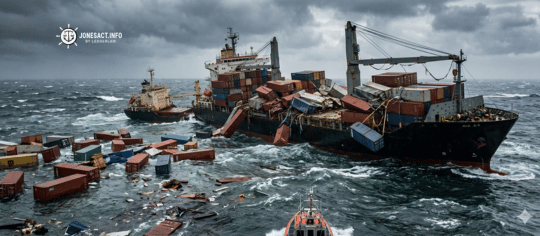
Key Takeaways: Most maritime unsecured cargo crash and debris impact claims must be filed within three years under federal law, but some deadlines are as short as 30 days for notice or one year for filing. The legal clock usually starts on the date the cargo crash occurred or the date the injury occurred and was reasonably discovered. Different deadlines apply depending on whether the claim falls under the Jones Act, unseaworthiness, DOHSA, LHWCA, or OCSLA, and these laws can overlap in a single cargo accident. Multiple liable parties may share fault, including vessel owners, cargo loaders, stevedoring companies, equipment manufacturers, and non-maritime third parties like trucking companies and a freight broker. Delaying action risks losing most critical evidence and permanently forfeiting your right to pursue compensation, so contact an accident lawyer for a free consultation immediately. This article uses concrete dates, examples, and timelines so readers can quickly understand their legal options and legal limits after a maritime cargo crash. Maritime Lawsuit Deadline for Unsecured Cargo Crash Accidents: An unsecured maritime cargo crash occurs when improperly secured containers, deck loads, or cargo gear break loose, fall, or shift aboard a vessel or at a dock, causing debris impact, personal injury, or death. Unsecured cargo crashes happen aboard container ships, barges, oil platforms, and during port loading operations. Cargo accidents can result in traumatic brain injuries and paralysis, and falling cargo can cause severe vehicle damage and injuries to anyone in the impact zone. The statute of limitations for maritime lawsuits generally falls under three years, but the actual deadline depends on who you are, where the injury occurred, and which statute applies. Missing the lawsuit deadline permanently bars recovery of damages, regardless of how strong your evidence may be. The sections below break down every major deadline by claim type so you can act before time runs out. What Counts as an Unsecured Maritime Cargo Crash? Unsecured maritime cargo crashes include a wide range of incidents where cargo securement fails at sea or in port: Falling cargo from container ship decks during heavy seas. Cargo shifts inside vessel holds due to improper stowage or overloaded vehicles. Loose deck cargo on barges striking crew members. Debris impact from cranes, spreader bars, or cargo gear during loading and unloading. Falling objects from elevated container stacks onto longshore workers below. On land, similar cargo securement concepts apply to commercial trucks and dump trucks hauling freight along interstate highways, but different legal regimes control at sea. Over 200,000 unsecured cargo crashes occurred from 2011 to 2014, and unsecured cargo caused 715 deaths and 16,595 injuries in one year. Cargo must be secured to prevent shifting or falling during transport, whether aboard a vessel or a motor carrier on the highway. These numbers demonstrate why accidents happen far more often than most people assume. General Three-Year Maritime Tort Deadline (46 U.S.C. § 30106): Under General Maritime Law, personal injury claims generally have a three-year statute of limitations. This uniform federal rule under 46 U.S.C. § 30106 applies to negligence, unseaworthiness, and most debris impact claims involving unsecured cargo on navigable waters. It applies regardless of which U.S. state the vessel was in because it is a federal maritime rule, not a state personal injury deadline. Key exceptions to keep in mind: Claims against U.S. government vessels carry a shorter two-year limit. OCSLA claims on offshore platforms may borrow state deadlines as short as one year. Contractual time limits in tickets or bills of lading can override the three-year period. When the Maritime Statute of Limitations Clock Starts Running: For most unsecured cargo crashes, the three-year clock starts on the calendar date of the accident. For example, if a container falls and crushes a seaman on September 6, 2026, the deadline to file is September 6, 2029. The statute of limitations may not start until the injured party discovers their injury. This discovery rule applies in latent injury scenarios, such as when exposure to hazardous materials in cargo causes symptoms months later. Courts may also delay the start date when an employer conceals conditions, but these exceptions are narrow. Do not assume you will receive extra time. If your injury occurred more than two years ago, treat your case as urgent. Shorter Deadlines When the U.S. Government Is a Liable Party: If the vessel is owned by the U.S. government, the filing deadline for claims is typically two years. This applies when unsecured cargo or debris impact involves a U.S. Navy, Coast Guard, or other government vessel, governed by the Suits in Admiralty Act or Public Vessels Act. The two-year deadline is strictly enforced. Administrative claim steps may be required before filing suit. Missing the two-year window can completely bar the claim. If a government contractor was involved, treat the deadline as two years at most. How Contractual Time Limits Can Shorten Your Cargo Claim: Passenger tickets, cargo bills of lading, and carriage contracts often contain very short time limits. Cruise ship passenger claims often have a reduced filing timeframe of one year, and some require written notice within six months. Lawsuits against ocean carriers for cargo damage must be filed within one year under COGSA. Written notice of claims for hidden damages under COGSA must be submitted within 3 days of delivery. For example, a cruise passenger injured by falling luggage containers from a crane during embarkation could face a one-year contractual deadline, even though the federal statute allows three years. The shorter period usually controls. Save all tickets, booking confirmations, and shipping documents, and let an attorney review them promptly for hidden time bars. The carrier’s insurer will enforce these provisions aggressively. Why Delays Are Especially Dangerous in Unsecured Cargo Crash Cases: Evidence in cargo crash cases disappears quickly after an accident. Victims of maritime accidents must preserve evidence immediately after an incident because cargo, securing gear, and logbooks are often repaired, moved, or discarded shortly after an unsecured cargo crash. Vessel owners and the insurance company often conduct internal investigations without
Top 10 World’s Biggest Cargo Ship Accidents You Should Know About

Cargo vessels are the lifeline of the global economy. Cargo ships move trillions of dollars in goods across the oceans annually. However, over the past few decades, we have seen some of the world’s biggest cargo ship accidents. It has impacted human lives, caused massive financial losses, and inflicted severe environmental damage. From the Ever Green blocking the Suez Canal to the SS Grandcamp blast killing hundreds, cargo ship accidents have shaken the world from time to time. Following this, various safety precautions have been implemented by other nations and authorities to minimize casualties. Top 10 World’s Biggest Cargo Ship Accidents: Cargo ships, despite their gigantic size, have encountered many accidents. Some have caused billions of damages and others have taken away lives of hundreds. Let’s take a look at the top 10 such accidents of cargo ships. Ship Name Year Location Primary Cause Key Impact / Loss of Life SS Grandcamp 1947 Texas City, USA Ammonium Nitrate Explosion Worst U.S. industrial disaster; 580+ deaths. Ever Given 2021 Suez Canal, Egypt Grounding (Blocked Waterway) Halted 12% of global trade for 6 days; billions in economic loss. SS Marine Sulphur Queen 1963 Florida Keys, USA Disappearance/Structural Failure All 39 crew members lost; led to regulatory changes. SS El Faro 2015 Off the Bahamas Sank in Hurricane Joaquin Worst U.S. maritime loss in decades; all 33 crew members lost. SS Marine Electric 1983 Off Virginia coast, USA Capsized during storm 31 crew members lost; led to major safety reforms, including survival suits. SS Edmund Fitzgerald 1975 Lake Superior, USA Sank in powerful storm All 29 crew members lost; famous Great Lakes mystery. MV Dali 2024 Baltimore, USA Collision with Bridge Pier Caused the Francis Scott Key Bridge collapse; massive infrastructure and port shutdown. ONE Apus 2020 Pacific Ocean Extreme Rolling in Storm Loss of 1,816 containers Felicity Ace 2022 Atlantic Ocean Fire (carrying 4,000 cars) Sank with a cargo of 4,000 high-value luxury cars Maersk Honam 2018 Arabian Sea Massive Fire in Cargo Hold 5 crew members killed; major scrutiny on Hazmat cargo stowage. Ever Given – Blocked the Suez Canal (2021): Ever Given became grounded on March 23, 2021. Its grounding is one of the most commercially impactful maritime incidents in modern history. The Panama-flagged ultra-large container (ULC) ship ran aground diagonally in the Suez Canal, a crucial waterway linking the Mediterranean Sea to the Red Sea. Although the ship didn’t face any damage, it blocked the entire Suez Canal. It took six consecutive days to straighten Ever Green and reopen the Suez Canal. the risks associated with the increasing size of container ships. The larger the ship, the more difficult it becomes for the ship to navigate narrow passage. The salvage operations included dredging and tugboats. After a relentless rescue operation of 6 days, the vessel was refloated on March 29, So, the backlog of hundreds of ships finally cleared and world trade started fully once again. Nonetheless, the blockade of the Suez Canal marked an unprecedented moment of disruption in international commerce. SS Grandcamp – Texas City Disaster (1947): The SS Grandcamp exploded in Texas City, Texas, on April 16, 1947. Till date, it is regarded as the worst industrial disaster in U.S. history. The French-flagged vessel was docked. It was carrying approximately 2,300 tons of ammonium nitrate. The ammonium nitrate is a highly volatile chemical compound. It is used for fertilizer and explosives. A fire ignited in the cargo hold caused the massive explosion. It eventually leveled the port area, destroying hundreds of buildings. The explosion even ignited fires on other ships. The initial blast killed hundreds of people instantly, including many firefighters and rescue personnel. What’s worse, the blast started a chain reaction. It also resulted in the explosion of the nearby SS High Flyer. Official counts placed the death toll at over 580. Also, thousands more were injured. SS Marine Sulphur Queen – Disappeared at Sea (1963): SS Marine Sulphur Queen sank and disappeared in February 1963. It still remains one of the most enduring mysteries of U.S. maritime history. The cargo ship was actually a converted T2 tanker. It was carrying highly corrosive molten sulfur. However, the vessel vanished without a trace near the Florida Keys. The ship was traveling from Beaumont, Texas, to Norfolk, Virginia. While everything seemed fine, the rescue team suddenly heard a final distress call on February 4, 1963. Search efforts were launched immediately. Sadly, the rescuers found only a few life preservers and fragments of wreckage. All 39 crew members were lost. The investigation concluded that the ship was unseaworthy. It included: Poor maintenance Unattended corrosion Structural weakness All these led to likely breaking apart of the ship in rough seas. Following the disaster, US authority brought significant regulatory changes for vessel design and inspection. SS El Faro – Sank During Hurricane Joaquin (2015): One of the US maritime losses in the decade was the SS El Faro. It sank on October 1, 2015 while traveling from Jacksonville, Florida, to San Juan, Puerto Rico. Unfortunately, it sailed directly into the path of Hurricane Joaquin off the coast of the Bahamas. There were several weather forecasts and warnings given to the captain. Yet the captain chose the route, exposing the ship to extreme weather conditions. The ship lost propulsion, took on water, and ultimately sank in deep waters. All 33 crew members aboard were lost unfortunately. The National Transportation Safety Board (NTSB) immediately began the investigation. It found that the captain’s poor decision-making was the principal region. Also, the vessel’s inadequate stability and lack of communication were among other major factors. It led to a thorough review of weather reporting and safety protocols for U.S.-flagged vessels. Also, different cargo ship authorities and weather channels updated their weather forecast system, following it. SS Marine Electric – Capsized During Storm (1983): The capsizing of the SS Marine Electric on February 12, 1983 was a major cargo ship accident. It was so serious that it led to one of the most significant changes
Baltimore Cargo Ship Accident – MV Dali (Motor Vessel Dali) Collision with The Francis Scott Key Bridge

On March 26, 2024, the world was shocked as the MV Dali hit the Francis Scott Key Bridge. It is among the top infrastructure failures in modern American history and a major maritime accident. The event happened at night, and as Americans woke up, they saw that the 1.6-mile-long bridge had been broken into pieces in the middle of the Patapsco River. The Baltimore cargo ship accident was on the headline for the next few days, resulting in 6 deaths and a total collapse of the bridge. Following it, firstly, people suspected a terror attack. However, later it was found that the Singapore-owned ship lost control of the propulsion system and hit the Francis Scott Key Bridge. Baltimore Cargo Ship Accident (MV Dali) – The Francis Scott Key Bridge Collapse: The Baltimore Cargo Ship accident was not only a maritime event; it had multiple consequences. It disrupted the supply chain in the entire region; the Maryland port was virtually at-stop for the next few days. Also, it raised big questions about the cargo ship transportation and its safety features. Motor Vessel Dali (MV Dali) Ship Details The MV Dali is a Neopanamax container ship, built in 2015. Hyundai Heavy Industries built the ship as an ultra-large cargo vessel. It had an overall length of nearly 984 feet (300 meters) and a beam of approximately 158 feet (48 meters). It weighs 91,128 tons and has a capacity of 9,971 twenty-foot equivalent units (TEU). With such a huge capacity, the Dali is a powerhouse of international logistics. The vessel was fully carrying approximately 4,700 containers, weighing 56,675 metric tons, during the collision. The global shipping giant Maersk had chartered MV Dali at that time. Also, the ship owner was Grace Ocean Private Ltd., and Marine Group was managing it. Since both were Singapore-based companies, the vessel carried the Singapore flag. Previously, in 2016, the vessel struck a berth in the Port of Antwerp. So, the vessel had faced maneuvering difficulties earlier, too. Detail Specification Type Neopanamax Container Ship Flag Singapore Length (LOA) 984 feet (approx. 300 meters) Beam (Width) 158 feet (approx. 48 meters) Gross Tonnage 91,128 GT Deadweight Tonnage 116,851 DWT Container Capacity 9,971 TEU Propulsion Single Low-Speed Diesel Engine Built 2015 Owner Grace Ocean Private Ltd. Manager Synergy Marine Group Cargo at Incident Approx. 4,700 containers MV Dali Accident Details: The MV Dali accident event follows a one-way timeline. So, let’s break down what happened that night and what led the ship to hit the monster bridge. The Beginning Point: MV Dali began its voyage at midnight on March 26, 2024. The cargo vessel departed Baltimore’s Seagirt Marine Terminal bound for Colombo, Sri Lanka. There were two local pilots aboard and the failure began at approximately 1:24 AM EDT. There was a complete electrical blackout. The NTSB later found that the tripping of high- and low-voltage electrical breakers (HR1 and LR1) caused the power loss. As a result, the ship had a total power cut. So, it’s all essential machinery, including the main engine, steering gear, and lighting lost power. Propulsion Losing Control: The ship had a single 55,626 hp diesel engine. The engine requires continuous electrical support to cool water and lubricate oil pumps. Since there was no power, the engine automatically shut down. The NTSB investigation revealed a few important observations: There was loose wiring in the control circuit for the HR1 breaker. Most likely, previous vibrations had damaged the wiring. The loose wiring interrupted the flow and caused undervoltage. It triggered the first blackout. However, there was a temporary restoration of power. Another power cut happened almost immediately. The loss of power put the engine at a stop. The crews failed to restart the main engine or regain steering. As a result, the ship became an unpowered and uncontrolled projectile. As the propulsion stopped working, it was moving with enormous momentum. Issuing Mayday and Striking on Francis Scott Key Bridge: The navigating pilots immediately recognized the impending disaster. So, they issued a Mayday alert at 1:27 AM. They further notified the Maryland Department of Transportation (MDTA) that MV Dali had lost all control. So, the collision with the bridge was imminent. The crew made a last-minute, desperate attempt to control the vessel’s movement. So, they dropped the port anchor as a heroic effort. Also, MDTA police effectively closed the bridge traffic. The speed of MV Dali was approximately 6.8 to 8 knots (about 8-9 mph) at that time. So, it couldn’t change its trajectory. At 1:28:45 AM, the MV Dali struck the southwest main support pier of the Francis Scott Key Bridge. The structural failure was immediate. The pier collapsed almost instantly, leading to domino-like failure. Thus, the central truss spans started falling off like cards. Following it, a large section of the bridge’s superstructure fell onto the ship’s forward deck. Then, into the Patapsco River. The authorities detected a minor oil sheen. It was a leak from a bow thruster. Also, 13 of the vessel’s 4,700 containers were damaged. Thankfully, most containers, including some carrying hazardous materials, were safe. How Many Died And Were Injured in the MV Dali Accident? The most tragic consequence of the Baltimore cargo ship accident was the human cost. As per the report, eight construction workers were on the span when MV Dali struck the Francis Scott Key Bridge. The Brawner Builders and a subconsultant had employed the workers. They were filling potholes in the southbound lanes. Following the impact, six of these construction crewmembers were killed. They plunged into the frigid river waters. They succumbed to blunt force trauma or drowning. Thankfully, the pilot of MV Dali had called an immediate Mayday. So, the authorities got just enough time to stop all other traffic from entering the bridge. It saved potentially dozens of lives. One inspector among the eight workers escaped unharmed. Also, the authority rescued one construction worker with serious injuries. Additionally, one of the 23 crew members aboard the MV Dali sustained minor injuries. The rescue