Cargo vessels are the lifeline of the global economy. Cargo ships move trillions of dollars in goods across the oceans annually. However, over the past few decades, we have seen some of the world’s biggest cargo ship accidents.
It has impacted human lives, caused massive financial losses, and inflicted severe environmental damage. From the Ever Green blocking the Suez Canal to the SS Grandcamp blast killing hundreds, cargo ship accidents have shaken the world from time to time. Following this, various safety precautions have been implemented by other nations and authorities to minimize casualties.
Top 10 World’s Biggest Cargo Ship Accidents:
Cargo ships, despite their gigantic size, have encountered many accidents. Some have caused billions of damages and others have taken away lives of hundreds. Let’s take a look at the top 10 such accidents of cargo ships.
Ship Name | Year | Location | Primary Cause | Key Impact / Loss of Life |
SS Grandcamp | 1947 | Texas City, USA | Ammonium Nitrate Explosion | Worst U.S. industrial disaster; 580+ deaths. |
Ever Given | 2021 | Suez Canal, Egypt | Grounding (Blocked Waterway) | Halted 12% of global trade for 6 days; billions in economic loss. |
SS Marine Sulphur Queen | 1963 | Florida Keys, USA | Disappearance/Structural Failure | All 39 crew members lost; led to regulatory changes. |
SS El Faro | 2015 | Off the Bahamas | Sank in Hurricane Joaquin | Worst U.S. maritime loss in decades; all 33 crew members lost. |
SS Marine Electric | 1983 | Off Virginia coast, USA | Capsized during storm | 31 crew members lost; led to major safety reforms, including survival suits. |
SS Edmund Fitzgerald | 1975 | Lake Superior, USA | Sank in powerful storm | All 29 crew members lost; famous Great Lakes mystery. |
MV Dali | 2024 | Baltimore, USA | Collision with Bridge Pier | Caused the Francis Scott Key Bridge collapse; massive infrastructure and port shutdown. |
ONE Apus | 2020 | Pacific Ocean | Extreme Rolling in Storm | Loss of 1,816 containers |
Felicity Ace | 2022 | Atlantic Ocean | Fire (carrying 4,000 cars) | Sank with a cargo of 4,000 high-value luxury cars |
Maersk Honam | 2018 | Arabian Sea | Massive Fire in Cargo Hold | 5 crew members killed; major scrutiny on Hazmat cargo stowage. |
Ever Given – Blocked the Suez Canal (2021):
Ever Given became grounded on March 23, 2021. Its grounding is one of the most commercially impactful maritime incidents in modern history.
The Panama-flagged ultra-large container (ULC) ship ran aground diagonally in the Suez Canal, a crucial waterway linking the Mediterranean Sea to the Red Sea. Although the ship didn’t face any damage, it blocked the entire Suez Canal. It took six consecutive days to straighten Ever Green and reopen the Suez Canal.
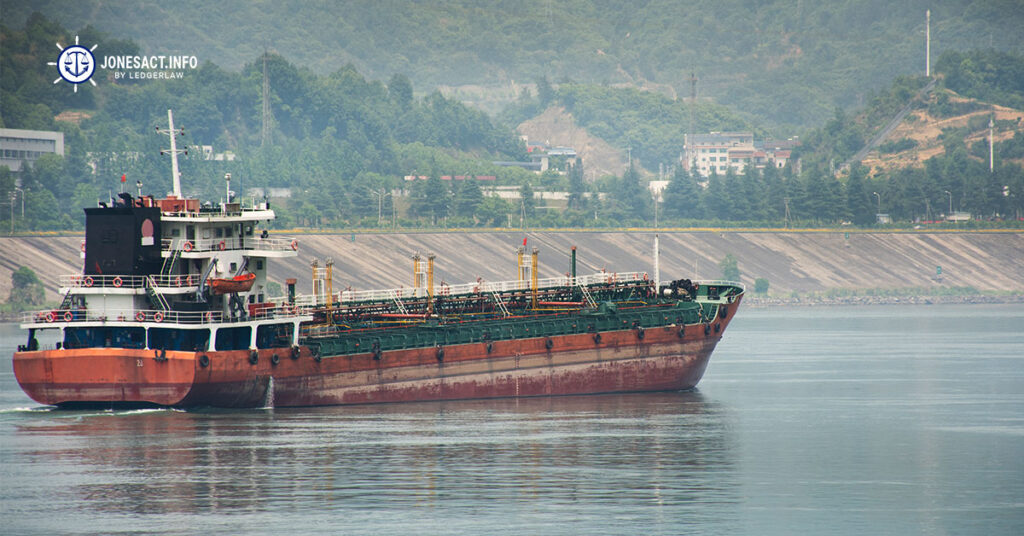
the risks associated with the increasing size of container ships. The larger the ship, the more difficult it becomes for the ship to navigate narrow passage. The salvage operations included dredging and tugboats. After a relentless rescue operation of 6 days, the vessel was refloated on March 29, So, the backlog of hundreds of ships finally cleared and world trade started fully once again. Nonetheless, the blockade of the Suez Canal marked an unprecedented moment of disruption in international commerce.
SS Grandcamp – Texas City Disaster (1947):
The SS Grandcamp exploded in Texas City, Texas, on April 16, 1947. Till date, it is regarded as the worst industrial disaster in U.S. history. The French-flagged vessel was docked. It was carrying approximately 2,300 tons of ammonium nitrate.
The ammonium nitrate is a highly volatile chemical compound. It is used for fertilizer and explosives. A fire ignited in the cargo hold caused the massive explosion. It eventually leveled the port area, destroying hundreds of buildings. The explosion even ignited fires on other ships. The initial blast killed hundreds of people instantly, including many firefighters and rescue personnel.
What’s worse, the blast started a chain reaction. It also resulted in the explosion of the nearby SS High Flyer. Official counts placed the death toll at over 580. Also, thousands more were injured.
SS Marine Sulphur Queen – Disappeared at Sea (1963):
SS Marine Sulphur Queen sank and disappeared in February 1963. It still remains one of the most enduring mysteries of U.S. maritime history. The cargo ship was actually a converted T2 tanker. It was carrying highly corrosive molten sulfur.
However, the vessel vanished without a trace near the Florida Keys. The ship was traveling from Beaumont, Texas, to Norfolk, Virginia. While everything seemed fine, the rescue team suddenly heard a final distress call on February 4, 1963.
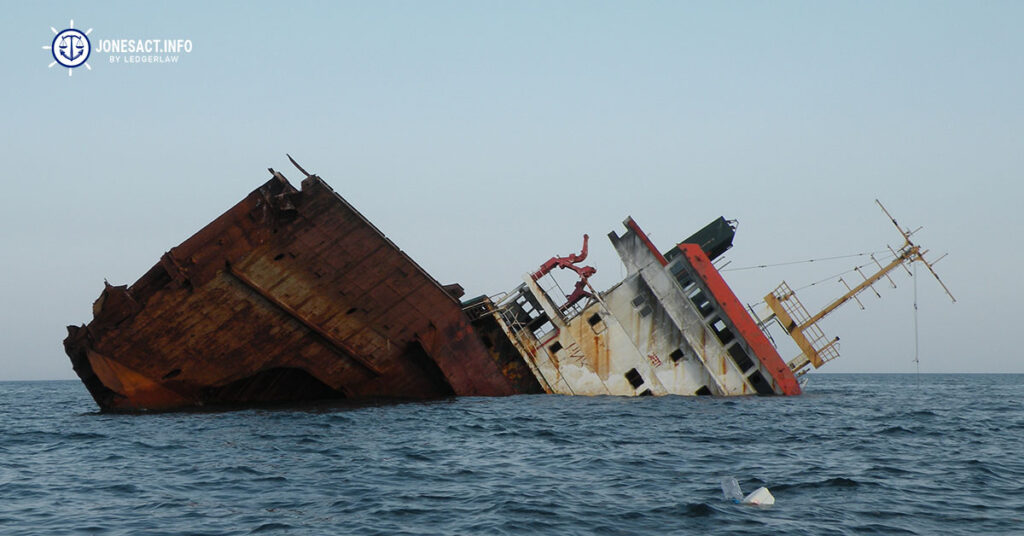
Search efforts were launched immediately. Sadly, the rescuers found only a few life preservers and fragments of wreckage. All 39 crew members were lost. The investigation concluded that the ship was unseaworthy. It included:
-
Poor maintenance
-
Unattended corrosion
-
Structural weakness
All these led to likely breaking apart of the ship in rough seas. Following the disaster, US authority brought significant regulatory changes for vessel design and inspection.
SS El Faro – Sank During Hurricane Joaquin (2015):
One of the US maritime losses in the decade was the SS El Faro. It sank on October 1, 2015 while traveling from Jacksonville, Florida, to San Juan, Puerto Rico. Unfortunately, it sailed directly into the path of Hurricane Joaquin off the coast of the Bahamas.
There were several weather forecasts and warnings given to the captain. Yet the captain chose the route, exposing the ship to extreme weather conditions. The ship lost propulsion, took on water, and ultimately sank in deep waters.
All 33 crew members aboard were lost unfortunately. The National Transportation Safety Board (NTSB) immediately began the investigation. It found that the captain’s poor decision-making was the principal region. Also, the vessel’s inadequate stability and lack of communication were among other major factors. It led to a thorough review of weather reporting and safety protocols for U.S.-flagged vessels. Also, different cargo ship authorities and weather channels updated their weather forecast system, following it.
SS Marine Electric – Capsized During Storm (1983):
The capsizing of the SS Marine Electric on February 12, 1983 was a major cargo ship accident. It was so serious that it led to one of the most significant changes and updates in the U.S. maritime safety regulations.
The bulk carrier was going to Norfolk, Virginia, carrying coal. The vessel encountered a fierce winter storm off the coast of Virginia. The investigation later determined that the ship’s cargo hatches were poorly maintained and failed.
As a result, the cargo hold flooded rapidly. The vessel went down quickly in the frigid waters. Of the 34 men aboard, only three survived; 31 crew members died. There was subsequent public outcry that initiated the official investigation.
It found widespread deficiencies in vessel inspection. Also, the investigation exposed poor and irregular maintenance practices in the maritime industry. So, the maritime authority reformed the law and maintenance procedure. Also, the U.S. Coast Guard brought more rigorous survival suit mandates and vessel safety checks.
SS Edmund Fitzgerald – Great Lakes Sinking (1975):
The SS Edmund Fitzgerald faced a tragic and infamous sinking on November 10, 1975. It is the most talked-about Great Lakes disaster. The SS Edmund Fitzgerald was an ore freighter. It was sailing on Lake Superior.
Suddenly an immense, powerful storm with hurricane-force winds caught the freighter. The wind was supported by massive waves. The ship, laden with taconite pellets, broke radio contact.
In fact, the ship sank so suddenly that it couldn’t issue a distress call. All 29 crew members were lost. The cause of the sinking remains officially inconclusive. However, experts claim that structural failure and improper cargo loading were the major cause of the biggest cargo ship accident. The “Fitzgerald” became an enduring legend. Later, it was immortalized in a song that symbolized the unforgiving nature of the Great Lakes.
Maersk Honam – Fire on Container Ship (2018):
The Maersk Honam caught fire in March 2018. It was transiting the Arabian Sea while going from Singapore to the Suez Canal. At that time, a massive blaze broke out in a cargo hold containing dangerous goods.
The fire spread rapidly, supported by the dangerous goods. The fire engulfed the forward section of the vessel. The brave crew members started a quick rescue. Also, quick and subsequent salvage operations started immediately.
However, the fire raged for weeks. Tragically, five crew members were killed in a cargo ship accident. The disaster brought critical scrutiny to the industry’s practices. It included:
-
Declaration process of the goods
-
Stowage system
-
Handling of hazardous materials (Hazmat) cargo
The fire destroyed thousands of containers. Following it, Maersk retired the heavily damaged ship. The insurance and compensation resulted in one of the largest marine insurance losses in history.
ONE Apus – Container Loss (2020):
The ONE Apus incident in November 2020 was a tragic one. As the ship faced a storm, it showed how vulnerable even the larger cargo ships are to rough weather. It was one of the largest non-collision-related container losses ever recorded.
The vessel was sailing from China to Long Beach, California. Suddenly, an extremely severe storm cell in the Pacific Ocean northwest of Hawaii caught the ship. It caused massive rolling, leading to the dramatic collapse of the ship. Also, 1,816 containers were lost, including 64 containing dangerous goods.
Although no lives were lost, the environmental impact was huge. Thousands of tons of cargo and plastic debris entered the ocean. Hence, the environmental impact was significant. The financial cost ran into hundreds of millions of dollars. The Japanese-flagged cargo ship and insurer bore it. Also, industry re-evaluated the following things:
-
Ship’s structural integrity
-
Container tacking methodology
-
Dynamic forces affecting ultra-large container ships
After that new container stacking measures were taken. So, the One Apus accident brought prompt changes in the cargo ship and maritime world.
Felicity Ace – Fire & Sinking (2022):
Felicity Ace sank in 2022 resulting in the loss of a massive, high-value cargo. The ship was transporting approximately 4,000 luxury and expensive cars—including models from Porsche, Audi, Bentley, and Lamborghini.
Felecity Ace was heading from Germany to Rhode Island. However, a fire broke out in the ship when it was on the Atlantic Ocean near the Azores archipelago (Portugal). The 22 crew successfully abandoned the burning vessel.
The fire likely originated in the cargo deck. The presence of numerous electric vehicles (EVs) in the ship supported the fire. These EVs had lithium-ion batteries that may have combusted. After burning for days, the severely damaged ship sank on March 1, 2022.
MV Dali – Francis Scott Key Bridge Collapse (2024):
The MV Dali disaster in March 2024 resulted in critical infrastructure failure. The ship collision left behind profound societal and economic impact. The large container ship was under charter by Maersk.
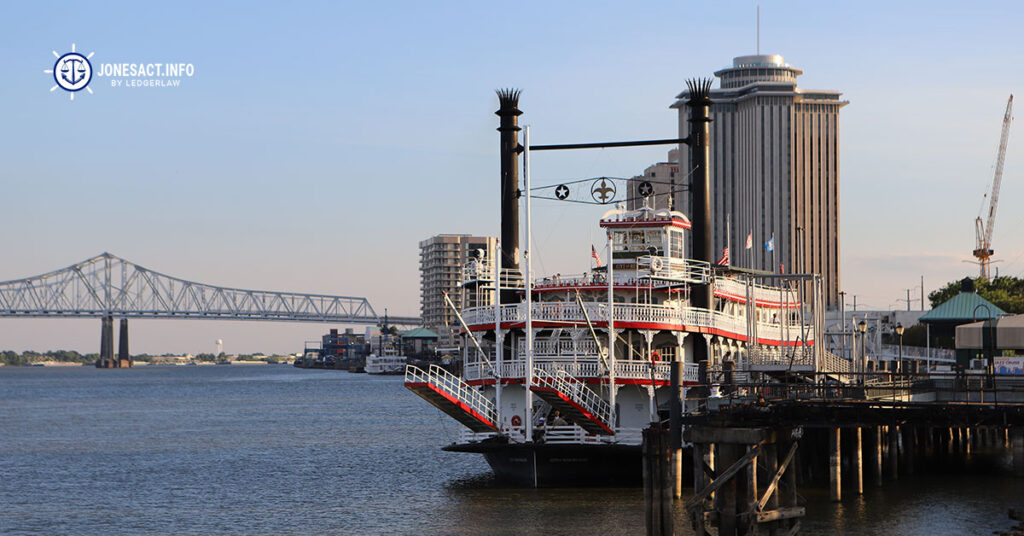
It lost power and maneuverability while departing Baltimore, Maryland. As a result, it collided directly with a support pier of the Francis Scott Key Bridge. Thus, a major section of the bridge collapsed instantly into the Patapsco River. The accident immediately shut down the Port of Baltimore.
The collapse halted traffic and required a prolonged and costly recovery effort. Grace Ocean Private Limited and Synergy Marine Group filed a petition in the U.S. District Court. The company tried to limit its compensation at $43.7 million. But it was denied.
The United States Department of Justice (DOJ) seek compensations for the response, salvage, and clean-up operation of the federal and state authorities. The U.S. jury settled its claim with the shipowners for nearly $102 million.
However, the State of Maryland is seeking over $1.7 billion in compensation.
Legal Implications and Support: How We Can Help:
Cargo ship accidents can leave severe impact on cargo ship companies, container carriers and on the actual owner of the goods. And it can result in millions of losses for each party. On top of it, cargo shop accidents involves both domestic and international law.
Jones Act Info offers comprehensive legal services in maritime, casualty, and admiralty law, including cargo ship accidents. We assist victims, cargo owners, and insurers in negotiation and complex litigation. Our expert maritime attorneys will work to ensure limitation of liability actions, cargo subrogation, and marine insurance claims.
Our expertise includes detailed accident reconstruction, regulatory compliance like safety reforms following the Marine Electric etc. Also, we ensure clients achieve just compensation after devastating cargo accidents.
FAQ
Frequently Asked Questions

Liability in canal blockage is complex. It includes the ship's owner, operator, charterer, and their insurance underwriters. The claims usually fall under admiralty law, involving massive claims for salvage costs, environmental damage, and economic losses from delayed cargo.
The primary concern is ocean pollution from thousands of tons of plastic and other materials. It could include dangerous goods (Hazmat), too. It can further cause microplastic pollution, poses physical hazards to marine life and navigation.
The SS Marine Electric disaster exposed systemic failures in U.S. Coast Guard inspections. It also exposed the inadequate crew safety training. Thus, immediate changes were made. The U.S. sailors now required to carry survival suits for use in cold water. Also, authorities enforced stricter, more frequent inspections of older bulk cargo vessels.
Conclusion:
The world’s biggest cargo ship accidents show how vulnerable the world trade and these large vessels were. Even in the 21st century, we regularly see ultra-large cargo ship accidents resulting in billions of economic losses each year.
If you suffer from such cargo ship accidents, the Jonesact Info is ready to fight for your justice. We evaluate the case scenario, prepare document and negotiate with the insurer to ensure your cargo ship accident claims.