Key Takeaways:
-
Every passenger must wear a U.S. Coast Guard–approved life jacket at all times, especially children under 13, since 85% of drowning victims were not wearing one.
-
Plan your route, float plan, and fireworks viewing spot early because Independence Day is one of the busiest times for boating and ramps, slips, and rentals fill up fast.
-
Boating under the influence is illegal in all 50 states, so designate a sober operator before you leave the dock.
-
Follow navigation rules, obey posted no-wake zones, and maintain a safe distance of several hundred feet or more from fireworks barges and display areas.
-
Carry all required emergency gear and verify navigation lights are working so you are prepared before any night-time fireworks cruise.
-
After the fireworks show ends, wait 10–20 minutes for traffic to thin, then return to shore at slow speed with extra lookouts scanning for unlit vessels.
-
If a serious boating accident occurs, contact JonesAct.info promptly to learn about your rights and protect time-sensitive evidence.
Independence Day boating safety tips start with the basics that prevent the most common holiday accidents: wear a U.S. Coast Guard-approved life jacket, plan your route and fireworks viewing spot early, choose a sober operator, follow navigation rules and no-wake zones, keep a safe distance from fireworks barges, carry required emergency gear, and prepare for the trip back after dark. Independence Day is one of the busiest times for boating in the United States, and with the 2026 fourth of july falling on a Saturday, millions of families, friends, loved ones, first-time boaters, and multi-generational groups will spend the entire day on lakes, rivers, and coastal waterways – cruising through the afternoon, rafting up for barbecues, and anchoring out to watch the fireworks show after dark. That extended Saturday timeline means more hours on the water, more boats crowding into the same areas, and a sharply higher risk of boating accidents.
The numbers confirm how dangerous things can get. According to the U.S. Coast Guard’s Recreational Boating Statistics 2024, there were 3,887 reported incidents resulting in 556 deaths, 2,170 injuries, and nearly $88 million in property damage across the year. Drowning was the leading cause of boating fatalities, and among those who drowned, 87% were not wearing a life jacket. Open motorboats accounted for 46% of deaths, and four of every five boaters who drowned were aboard vessels under 21 feet.
What makes the holiday uniquely risky is the combination of operator inexperience, alcohol use, crowded waterways, and the transition from daylight to dark navigation that happens mid-trip. This article provides practical, easy-to-follow independence day boating safety tips for anyone heading out this July, including guidance on life jackets, float plans, sober operation, fireworks safety, night boating, emergency gear, weather and crowd management, child and guest safety, environmental responsibility, and what to do after an accident. Whether you are on a lake in the Midwest, a river in the South, or a coastal bay on the East Coast, these safety tips will help you protect your family, keep your mind on safety, and return to the dock with only good memories.
Independence Day Boating Safety Tips for a Safe 4th July:

Before diving into detailed gear lists, crowd management, and legal considerations, here are the core fourth of July–specific safety tips every boater needs. These cover the full arc of a holiday outing – from planning your day to arriving home safely after the last firework fades.
Plan Your Fourth of July Boating Day Early:
Reserve your boat well in advance for July 4th. Slips, ramp parking, and rental boats book up weeks ahead in popular areas, so secure yours at least two to three weeks before the holiday. Fuel docks and marinas may also close early on the holiday, so confirm hours and fuel availability before you leave.
Create a simple float plan and share it with a friend or family member on shore. A float plan should be filed to inform someone about your boating trip. It does not need to be complicated – include your departure time, intended route, fireworks viewing area, expected return time, and the number of passengers aboard. If something goes wrong, this document helps rescuers find you faster.
Before heading out, check local july 4th schedules and restrictions:
- City fireworks start times (often around 9:00–9:30 p.m.).
- Temporary navigation restrictions and safety zones near fireworks barges.
- State-specific rules for the holiday weekend, such as increased BUI enforcement or expanded no-wake areas.
Check local fireworks restrictions before boating, because temporary closures and exclusion zones can change your route entirely. Pack enough water and snacks for a full day on the water – high temperatures and sun exposure can lead to fatigue while boating, and dehydration sneaks up faster than most people expect.
Arriving 60–90 minutes before the fireworks start helps you secure a safe anchoring position before congestion and low light make maneuvering more difficult.
Wear the Right Life Jacket All Day and All Night:
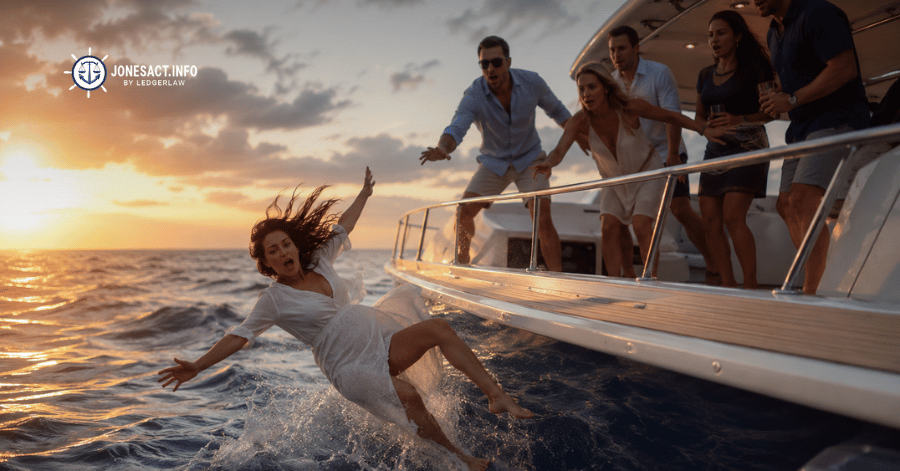
Most Independence Day drowning victims were not wearing a life jacket. That single fact should change behavior more than any other statistic in this article. Life jackets must be worn to be effective in saving lives – having them stowed under a seat does nothing if someone falls overboard unexpectedly.
Federal law requires a U.S. Coast Guard–approved wearable PFD for every person onboard. Have enough life jackets for everyone onboard, including extras for guests and children of different sizes. Children under 13 must wear a life jacket when underway in most states, and some states impose stricter age requirements or mandate wear even at anchor.
When choosing life jackets:
- Select properly sized jackets based on chest measurement or weight.
- Use infant and toddler jackets with crotch straps and head support for young children.
- Consider inflatable belt-pack or vest-style PFDs for adults who find traditional foam jackets uncomfortable – but note these are not approved for weak swimmers or children.
- Discard any jacket that is faded, torn, waterlogged, or has a broken buckle.
Life jackets are especially important at night, when falls overboard are harder to detect and rescue times stretch dramatically. Put them on before dusk and keep them on until you are back at the dock.
Follow Navigation Rules and Slow Down in Holiday Traffic:
Independence Day brings many new and occasional boaters onto the water. Boating traffic increases the risk of collisions during busy holidays, which makes strict attention to navigation rules even more critical than on an ordinary weekend.
Know navigation rules including right-of-way and no-wake zones. The basics every operator should follow:
- Keep right in channels – treat it like driving on a road.
- Understand stand-on vs. give-way vessels – the give-way vessel must alter course early and substantially; the stand-on vessel holds course unless action is needed to avoid collision.
- Obey no-wake zones without exception, especially near marinas, swimming areas, and anchored boats.
- Watch for kayaks, paddleboards, and swimmers – they sit low in the water and are easy to miss in glare or chop.
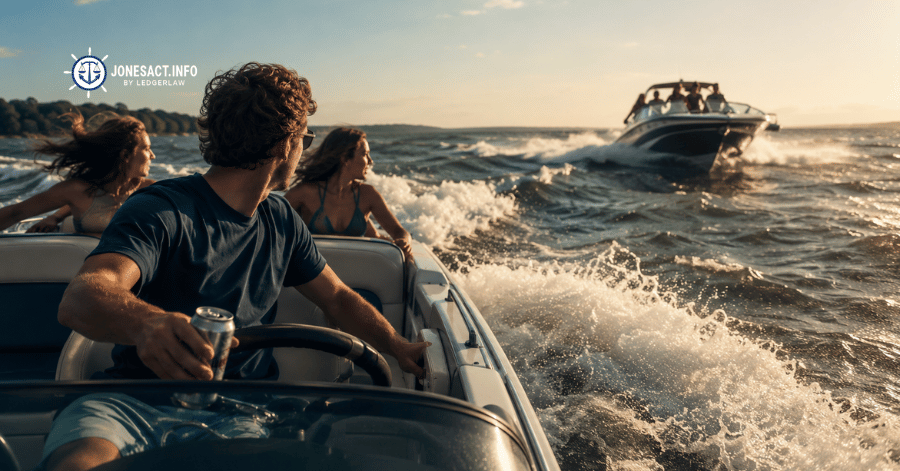
Slow down to avoid collisions with other boats or swimmers. In crowded areas before and after fireworks, reduce speed well below posted speed limits. Improper lookout is one of the leading causes of collisions in the Coast Guard’s annual report, so assign at least one dedicated lookout during busy periods – someone whose only job is scanning for hazards, not watching the fireworks.
Be aware of local boating regulations and no-wake zones during holidays. Compare distracted boating to distracted driving: a momentary lapse of attention at even moderate speed can turn a fun day into a tragedy.
After sunset, turn on navigation lights and keep them on. Turn off bright interior or cockpit lights that can ruin the operator’s night vision or blind nearby boaters.
Manage Alcohol Use and Designate a Sober Skipper:
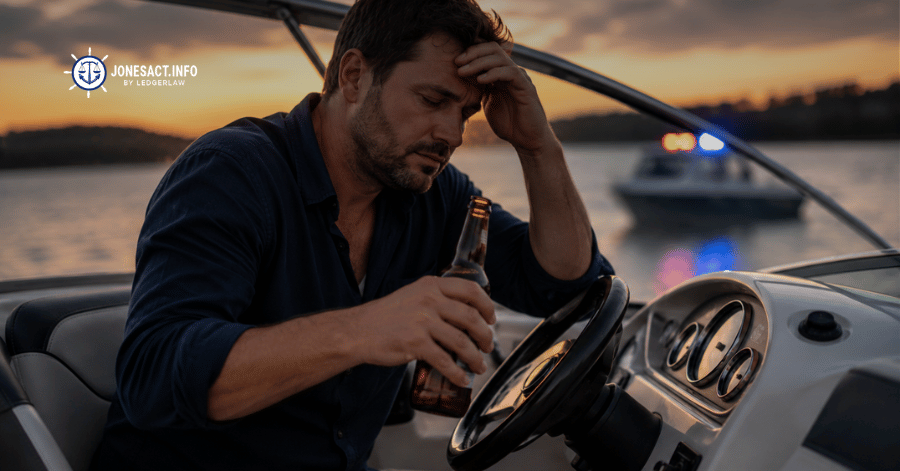
Operating a boat under the influence of alcohol or drugs is illegal in all 50 U.S. states. The legal blood alcohol content threshold is generally 0.08%, matching that for motor vehicles, and enforcement ramps up dramatically over the fourth of July weekend. Boating under the influence is illegal and dangerous – there is no gray area here.
Alcohol impairs decision-making while boating. But the effects go further than most people realize. Alcohol effects are heightened by sun, heat, and motion on the water. Wind, wave vibration, glare, and dehydration all amplify impairment, meaning two drinks on a boat can feel like four drinks on land. Alcohol use while boating is a leading contributing factor in approximately 20–35% of fatal boating incidents.
Designating a sober operator is essential for boating safety. Choose that person before you leave the dock, and make it clear they will not drink for the entire trip – not even “just one.” Limit alcohol to passengers only, if at all, and consider keeping consumption moderate until everyone is safely back at the dock.
A BUI can carry penalties similar to a DUI:
- Substantial fines.
- Suspension of boating or driving privileges.
- Potential jail time.
- Criminal charges if an accident results in injuries or death.
Encourage plenty of water, sports drinks, and food on board to reduce dehydration and heat-related fatigue that can mimic or worsen intoxication.
Stay Safe Around Fireworks Shows and Fireworks Barges:
Commercial fireworks are typically launched from barges anchored offshore or from restricted shoreline areas, with clearly marked safety zones enforced by the Coast Guard and local marine patrols. These exclusion zones exist for a reason – falling debris, unexploded shells, and dense smoke create real hazards for any vessel that wanders too close.
Maintain a safe distance from fireworks displays while boating. Check local fireworks restrictions and safety zones before boating – many jurisdictions post exclusion zones of several hundred feet (200–500 feet is common, though some areas require more). Check local Notices to Mariners or city event pages for specific standoff distances and time windows.
Practical tips for fireworks viewing from a boat:
- Anchor upwind and upstream of the fireworks when possible to reduce smoke and ember exposure.
- Stay well outside posted exclusion zones, even if the view seems better closer in – law enforcement boats patrol perimeter lines and will issue fines or order you to leave.
- Avoid launching fireworks from a boat to prevent fire hazards – private fireworks on board are dangerous and frequently illegal due to fuel vapors, crowding, and fire risk.
- Enjoy official displays instead of trying to mix your own pyrotechnics with a vessel full of passengers.
After the finale, wait 10–20 minutes before heading back. The immediate rush of boats departing in the dark is when collision risk spikes. Keep engines idling, re-enter traffic lanes slowly, and yield to other boats already underway.
Prepare for Night-Time Fireworks Cruises and Return Trips:
Many Independence Day trips begin in bright daylight and end in complete darkness. That transition catches unprepared boaters off guard every year.
Ensure navigation lights are working before nighttime boating. Before you leave the dock, run through these checks:
Check Item | Why It Matters |
Red/green bow lights and white stern light | Required by law after sunset; makes your vessel visible to other boats |
Fuel level | Running out of fuel in the dark among crowded boats is a serious emergency |
Battery charge | Dead batteries mean no lights, no radio, no bilge pump |
Bilge pump operation | Water intrusion in the dark can go unnoticed until it is too late |
Anchor and rode | You may need to anchor quickly if conditions deteriorate |
Use extra lookouts when navigating at night for safety. Assign at least one extra person to scan for unlit or poorly lit vessels, floating debris, and navigation markers.
Mark navigation hazards and your route home on your chartplotter or boating app while it is still light. Avoid unfamiliar waters after dark – this is not the night to explore a new channel or shortcut.
A waterproof flashlight or headlamp is useful for cockpit tasks, but shield it from other boats to avoid blinding nearby operators or destroying your own night vision.
Essential Gear, Checklists, and Emergency Prep for the Fourth of July:

Proper equipment and a written checklist reduce panic and confusion during busy july 4th outings. When dozens of boats are jostling in the dark after fireworks, knowing exactly where your first-aid kit, fire extinguisher, and VHF radio are stored makes all the difference.
This section covers required safety gear, suggested extras for a full holiday day, and basic emergency planning.
Build a Fourth of July Boating Safety Checklist:
Create a one-page, written checklist that you tick off before leaving the dock every time. Laminate it or keep it in a waterproof sleeve near the helm. Here is a starting place:
Boat condition:
- Fuel level topped off.
- Engine oil checked.
- Navigation lights tested.
- Horn or whistle operational.
- Bilge pump functional.
- Registration and insurance documents aboard.
Safety equipment:
- Life jackets counted – one per person, properly sized.
- Fit verified for every child aboard.
- Throwable flotation device accessible (not buried under coolers).
- Fire extinguisher charged and within reach.
- First-aid kit stocked and accessible.
Planning:
- Weather forecast checked for afternoon and evening – watching for thunderstorms or high wind advisories.
- Float plan shared with someone on shore.
- Passenger headcount recorded.
- Route and fireworks viewing area identified.
Avoid overcrowding boats beyond their maximum capacity. The capacity plate on your vessel exists for a reason – exceeding it compromises stability, especially in choppy holiday traffic.
Revisit your checklist before sunset if you are staying out for the fireworks show. Conditions change, batteries drain, and gear shifts around during a long day.
Must-Have Life-Saving and Emergency Equipment On Board
Emergency equipment should include a first-aid kit and communication devices. Beyond that baseline, here is what belongs on every boat heading out for the fourth:
Core required gear:
- USCG-approved life jackets for every person.
- Throwable flotation device (Type IV) for vessels 16 feet and longer.
- Fire extinguisher(s) appropriate for vessel size and type.
- First-aid kit with bandages, antiseptic, seasickness medication, and sunburn relief.
- Anchor and adequate rode.
- Sound-producing device (horn, whistle, or air horn).
July 4th extras:
- Extra flashlights and spare batteries.
- Glow sticks for children (visibility and fun).
- Fully charged VHF marine radio (Channel 16 for emergencies).
- Cell phone in a waterproof case as backup.
- Engine cutoff device (kill switch) – the operator should wear the lanyard or pair the wireless fob.
Nice to have:
- Basic tool kit and spare fuses.
- Emergency paddle or backup propulsion for getting out of crowded coves if the engine fails.
- Reef-safe sunscreen, wide-brim hats, and polarized sunglasses.
Store all emergency gear in clearly labeled, quickly accessible locations. Walk guests through where everything is before departure so everyone on board knows where to find it in an emergency.
Handling Crowds, Fireworks Traffic, and Changing Weather:

Independence Day combines crowd density, fireworks distractions, and unpredictable summer storms into a single evening on the water. Any one of these factors raises risk. Together, they can quickly create dangerous situations that even experienced operators struggle to manage.
This section focuses on collision avoidance, spacing near fireworks, storm preparation, and timing your return to shore after the show.
Avoid Collisions in Crowded Holiday Waters:
Boating accidents increase during holidays due to higher traffic. The single most effective thing you can do is slow down. Operate at no-wake or very low speeds when approaching anchorages, marinas, and fireworks viewing areas.
Assign a dedicated lookout at the bow or beside the operator. Their job is to scan for other boats, swimmers, paddlecraft, and floating debris – not to watch fireworks. Improper lookout remains one of the top contributing factors in collision reports year after year.
Additional collision-avoidance tactics:
- Maintain generous spacing between boats at anchor – use plenty of scope on your anchor line so wind shifts do not swing you into a neighbor.
- Avoid rafting up with unknown boaters in strong wind or current.
- Turn on navigation lights early, before sunset, and assume some nearby vessels may lack proper lighting or have an inexperienced operator at the helm.
- Use short, calm horn signals and clear hand gestures when maneuvering in tight quarters near ramps and fuel docks after the fireworks finale.
Operator inexperience is a factor in a significant share of holiday incidents. Give every other boat on the water more room than you think you need.
Stay Well Clear of Fireworks Barges and Display Zones:
The Coast Guard and local agencies usually establish regulated navigation areas around fireworks barges with posted minimum distances. Crossing into these zones can result in fines, being ordered to leave the area, or worse – injury from falling debris.
How to stay safe near fireworks operations:
- Check local Notices to Mariners or city event pages for specific standoff distances, which are often several hundred feet or more.
- Anchor upwind and upstream when possible to avoid smoke and falling embers.
- Respect law enforcement patrol boats marking perimeter lines – they are there to protect you.
- Once fireworks end, keep engines idling and re-enter traffic lanes slowly, yielding to vessels already underway.
Safe Distances, Traffic Flow, and Weather Awareness:

Watch the Weather and Time Your Return to Shore:
Checking weather conditions before boating is crucial for safety. July often brings afternoon thunderstorms, gusty wind, and sudden visibility changes, especially on lakes and open coastal waters. According to NOAA climate normals, increased precipitation is common in July across much of the southern and central United States.
Weather preparation steps:
- Check hourly forecasts, radar apps, and marine weather channels before departure.
- Re-check in late afternoon before committing to staying out for fireworks.
- Leave early if thunderstorms, fog, or strong wind are approaching – do not try to “wait it out” on open water in a crowded anchorage.
- Monitor dark clouds building on the horizon, sudden temperature drops, and increasing wind – all signs a storm is close.
For timing your return to shore, you have two good options:
- Leave just before the finale if your passengers are comfortable missing the last few minutes – you will have clearer waterways and better visibility.
- Wait 10–20 minutes after the show ends to let the first wave of traffic clear, then proceed at slow speed with navigation lights on and extra lookouts posted.
Use pre-saved GPS routes and navigation aids when approaching dark shorelines and crowded ramps at night. This is not the time to rely on memory alone.
Protecting Children, Guests, and the Environment on July 4th:
Independence Day boating often includes multi-generational families, first-time guests, and passengers who have never been on a boat before. A little preparation goes a long way toward keeping everyone safe and comfortable through a long holiday on the water.
Keep Children Safe and Comfortable on the Water:
Children should wear properly fitted life jackets at all times on deck, with crotch straps and head support where appropriate for younger kids. Children under 13 must wear a life jacket while underway – this is federal law, and many states apply it more broadly.
Assigning a dedicated adult to supervise children around water is important. That person should not be the operator and should not be distracted by cooking, socializing, or watching fireworks.
Practical child safety tips:
- Limit kids’ movement while the boat is underway – designate safe seating areas and set clear rules about staying seated.
- Keep hands and feet inside the boat, especially near docks and other vessels.
- Apply SPF 30+ sunscreen every two hours, provide wide-brim hats and shade, and offer frequent water breaks – high temperatures and sun exposure can lead to fatigue.
- Bring ear protection for sensitive children during loud fireworks.
- Have a quiet indoor or cabin space available if possible for overwhelmed or tired kids.

Brief First-Time Passengers and Holiday Guests:
Before leaving the dock, give every guest a short pre-departure safety talk. It does not need to be long – two minutes covers the essentials:
- Where life jackets are stored and how to put them on.
- What to do if someone falls overboard (shout, point, throw a flotation device).
- Where the fire extinguisher and first-aid kit are located.
- How to use the VHF radio or call 911 from a cell phone.
- Rules about staying clear of the helm, not blocking the operator’s view, and not distracting the skipper in tight traffic.
Discuss alcohol expectations upfront. Clarify that the operator will remain sober and that safety comes before partying. It is an easy conversation to have before departure and an awkward one to have after someone is already impaired.
Make sure at least one other trusted adult knows how to start the engine, steer, and operate basic controls in case the skipper is injured or falls overboard. This is a simple precaution that could save lives.
Respect Wildlife and Reduce Environmental Impact:
Heavy july 4th traffic can stress wildlife and damage shorelines and seagrass beds if no-wake rules are ignored. The same waterways families hope to enjoy every future independence day depend on responsible behavior today.
Environmental best practices for holiday boating:
- Observe posted manatee, turtle, or wildlife protection zones and avoid high speeds in shallow or sensitive areas.
- Use reef-safe sunscreen to reduce chemical runoff.
- Secure all trash and bring reusable drink containers to reduce plastic debris.
- Never throw fireworks debris, food waste, or cigarette butts overboard.
- Clean the boat thoroughly at the dock before heading home.
Respecting the environment is not separate from safety – it is part of it.
Contact JonesAct.info for Boating Accident–Related Issues:
Despite careful planning and following every safety tip in this article, boating accidents can still occur on the fourth of july due to another operator’s negligence, unsafe operations, defective equipment, or simply being in the wrong place when someone else makes a dangerous mistake.
JonesAct.info focuses on maritime and boating injury information, including rights under maritime law for crew members and passengers injured on U.S. waters. If you or a family member suffers injuries in a collision, onboard accident, or any incident involving another vessel, understanding your legal rights early can make a significant difference in the outcome of any potential claim.
After a serious Independence Day boating incident:
- Preserve evidence immediately – photographs, video, witness statements, and boat maintenance records.
- Document the conditions, including weather, lighting, and the actions of other boats involved.
- Seek medical attention, even for injuries that seem minor at first.
- Contact JonesAct.info promptly to learn about potential claims, evidence preservation, and next legal steps.
Early consultation helps protect time-sensitive information and ensures you understand your options. Do not wait weeks to reach out – evidence disappears and memories fade.
Conclusion: Enjoy a Safer Fourth of July on the Water
Independence Day boating can be one of the best experiences of summer – there is nothing quite like watching fireworks light up the sky from the water with your family and friends. But that fun depends entirely on coming home safely. Every year, preventable accidents turn celebrations into tragedies, and nearly every one of those incidents involves a risk factor someone chose to ignore.
The formula is straightforward. Wear your life jacket. Follow navigation rules. Keep a sober operator at the helm. Stay well clear of fireworks operations. Prepare your boat and your crew for the transition from day to night. These are not complicated steps, but they require intention. Make safety planning part of your annual july 4th tradition so the people you love can return to the dock with nothing but good memories.
If the worst does happen and you or someone you care about is injured in a boating incident this Independence Day, remember that you have rights. Contact JonesAct.info to learn about possible next steps and to protect time-sensitive evidence while it is still available. We hope you never need to make that call – but if you do, do not wait.
Related: Boating Accidents
FAQ
Frequently Asked Questions

Wear a life jacket at all times, designate a sober operator, follow navigation rules, maintain a safe distance from fireworks zones, and plan a safe route and return time before you leave the dock.
A properly fitting, U.S. Coast Guard–approved life jacket must be available for every person onboard, and many states require children under 13 to wear one whenever the vessel is underway.
Launching fireworks from a boat is often illegal and always risky due to fire hazards, fuel vapors, and crowded conditions - it is far safer to enjoy official shore or barge displays.
Slow down, keep a sharp lookout, follow right-of-way rules, maintain extra space around other boats, and avoid distractions during fireworks.
Ensure constant adult supervision, require properly fitted life jackets at all times, set clear rules about staying seated and inside the boat, provide sun protection, and consider an early return if children become tired or overwhelmed.
Alcohol amplifies impairment on the water due to sun, heat, wind, and motion, and boating under the influence is illegal nationwide with penalties similar to DUI and increased enforcement on holiday weekends.
Carry life jackets for every person, a throwable flotation device, fire extinguishers, a first-aid kit, an anchor, a sound-producing device, a VHF radio, and working navigation lights.
Stay outside posted exclusion zones and follow local Coast Guard or marine patrol guidance - generally, keep several hundred feet or more away from the launch area.
Check marine forecasts and radar regularly, put on life jackets at the first sign of changing conditions, secure loose gear, and head for the nearest safe harbor before a storm arrives.
Either leave a few minutes before the finale or wait 10–20 minutes afterward to let traffic clear, then proceed slowly with navigation lights on and an extra lookout posted.
Verify fuel level, battery charge, navigation lights, engine condition, anchor and rode, life jackets for every person, and communication devices before departing.
A working VHF marine radio is the priority, backed up by fully charged cell phones in waterproof cases and, if you are heading offshore, additional signaling devices like flares.
Cover boat systems (fuel, oil, lights, bilge pump), safety gear (PFDs, extinguisher, first-aid kit), weather and route review, passenger count, and a float plan shared with someone on shore.
Many boats are legally required to have engine cutoff devices, and wearing the lanyard or using a wireless fob adds a vital layer of safety if the operator is thrown from the helm.
Obey speed limits and no-wake zones, ensure all required safety equipment and current registration are on board, stay sober at the helm, and follow directions from patrol boats without argument.