Key takeaways:
-
Barge accidents are common. The design of a barge increases the risk of accidents occurring.
-
These long and flat-bed ships are critical transportation tools. They are heavily used in rivers and canals.
-
Common causes of barge accidents include frayed and weak lines. Operator error is another reason.
-
You have the right to seek compensation if you’re a worker hurt on a barge. Having an attorney can help with that process.
A barge is a long, flat-bed vessel. It moves all sorts of goods across canals and rivers. Tugboats typically tow this vessel from one location to the next. The design and overall function of these vessels make them critical, but also dangerous. The accidents that can happen on these vessels can be treacherous and life-changing. There are many different factors to take into account as far as what may or may not happen. These vessels are dangerous by themselves, not including outside factors that may affect them.
What Is a Barge Accident?
Barge accidents are any type of incident in which a barge causes damage to other property. It can also lead to a worker suffering an injury. There are dozens of reasons and ways these can happen. Many factors can contribute to these incidents occurring.
10 Common Types of Barge Accidents
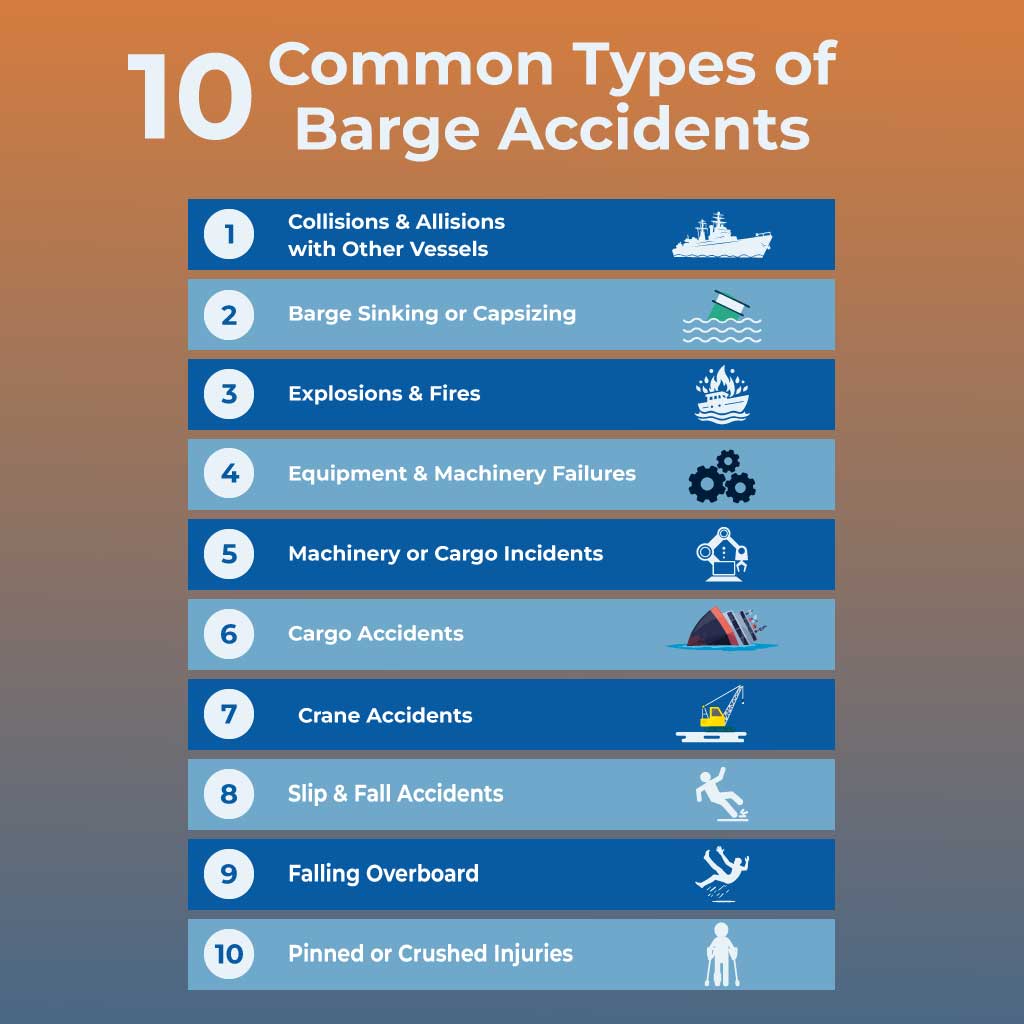
Accidents are preventable. That’s what makes many of these frustrating. You’re hurt due to no fault of your own. Look at the following common types of barge accidents and why they happen.
1. Collisions and Allisions with Other Vessels:
It’s not hard to see why this happens. It’s often the result of inexperienced operators. Reckless operation can also lead to collisions. It doesn’t take much for a problem to occur on open waters.
2. Barge Sinking or Capsizing:
A barge may capsize due to uneven loads. They can lose buoyancy. This typically happens when water enters the hull. Collisions can cause this, as can grounding. Overtopping from waves can also be a reason barges sink.
3. Explosions and Fires:
The type of equipment on board a barge can easily cause it to be set on fire. Explosions can also occur. This often happens with poor management and maintenance of systems.
4. Equipment and Machinery Failures:
Equipment on board can be dangerous. They also need heavy machinery on board. This is to move cargo. Proper maintenance can reduce the risk of accidents.
5. Machinery or Cargo Incidents:
Any time cargo or machinery moves on the barge, there’s a risk of an accident. The reason? That shifts the balance of the vessel. It’s hard for any operator to control a barge in situations like this.
6. Cargo Accidents:
Some worker injuries happen when cargo falls on them. That’s also due to poor alignment and balance. Cargo accidents result in lacerations, falls, and crushing accidents.
7. Crane Accidents:
Inexperienced operators or unmaintained equipment fail when crane operators lack experience. Mistakes with cranes can lead to a serious risk to life for anyone using them or nearby.
8. Slip and Fall Accidents:
All vessels carry some risk of slips and falls. However, barges have a much higher risk for several reasons. They are not designed to protect passengers. And what’s on them tends to be messy. Poor maintenance leads to accidents.
9. Falling Overboard:
Barges lack many of the safety features other vessels have to protect humans. They aim to use up as much usable floor space for cargo instead. That creates risks for those on board.
10. Pinned or Crushed Injuries:
Falling equipment and cargo mishaps often lead to crushing injuries. Much of what’s on board these boats is huge and heavy. That makes devastating accidents like this common.
5 Common Causes of Barge Accidents:
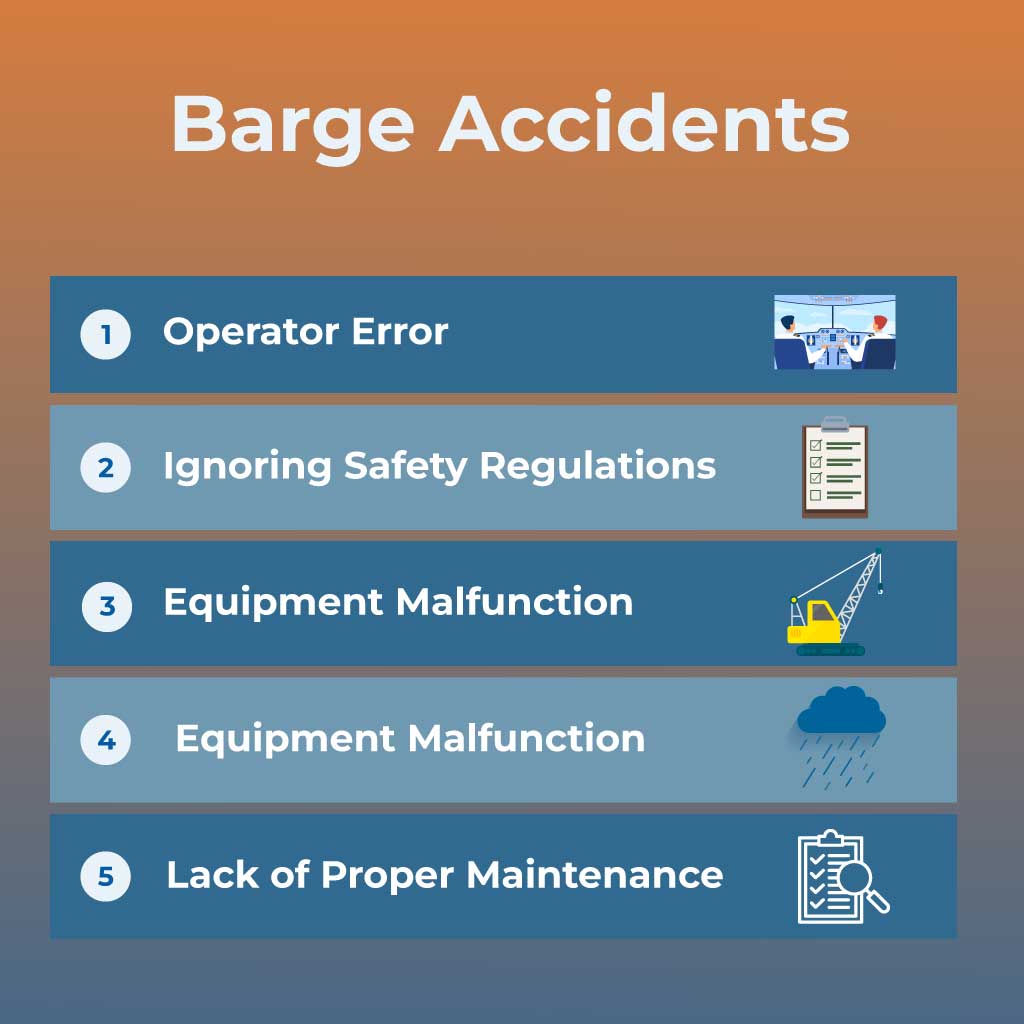
Understanding the cause helps you avoid such injuries. A duck boat barge accident is avoidable when these risks don’t happen.
1. Operator error:
The most common reason for injuries is human mistakes. Specifically, this focuses on operators being inexperienced or unskilled for the work. That makes it hard for those individuals to control barges when conditions are challenging. You can expect accidents to be significant when the operator is intoxicated or impaired in any way as well.
2. Ignore safety regulations:
Safety regulations are there for a reason. The problem? They require more time and effort. Mistakes happen. More commonly, operators don’t follow these regulations because it puts them behind. Time lines and labor costs can lead to cutting corners. When regulations aren’t met, injuries are likely to occur.
3. Malfunction of equipment:
Workers need to know how to use equipment properly. Companies that manufacture it need to design and build it to be reliable. Any breakdown in these areas leads to an increased risk of accidents and injuries. Malfunctions don’t typically just happen. There’s often a reason they occur.
4. Weather conditions:
It’s true that the weather is a factor. However, this doesn’t excuse liability. If the weather is too bad to operate, the company that gets onto the waterway is liable for the injuries that happen. Style of operation needs to adjust to the weather conditions.
5. Lack of proper maintenance:
Every component of a barge or duck boat requires maintenance. That’s what keeps it operationally sound. This includes preventive maintenance tasks. There’s also the need to keep working surfaces in good order. Mistakes here often cause unnecessary and even deadly outcomes.
What are the most common barge accident injuries?
Imagine the incredible weight of cargo falling onto a person. A sudden wave crashes into the vessel, causing people to fall. Or, think about the risks of falling from heights. There are plenty of reasons these accidents happen. Injuries can occur in a serious barge accident
Traumatic Brain Injuries (TBI):
Blows to the head result in brain damage. Traumatic brain injuries can range in severity. Some result in cognitive function loss. Others result in serious concussions.
Fractures:
Broken bones are quite common. Victims often suffer broken arms, legs, hips, and ribs from blows and falls.
Spinal Cord Injuries:
Damage to the spinal column can result in incredible pain. Some also suffer cord damage. This can lead to incredibly costly injuries. Some people suffer catastrophic losses from these accidents. That may include total paralysis or chronic pain.
Burns:
Heavy and hot equipment can cause burns. Fires and explosions are also quite common. This can lead to smoke and respiratory conditions as well.
Amputations:
Crushing accidents often result in amputations. The damage to legs and arms, or digits, can be so severe that healing isn’t possible. This hampers a person’s life for years to come.
Drowning and Near-Drowning:
Falls overboard are a very real risk on board these vessels. A barge duck boat accident can cost a person their life if they go over in cold water.
Legal Rights and Compensation After a Barge Accident:
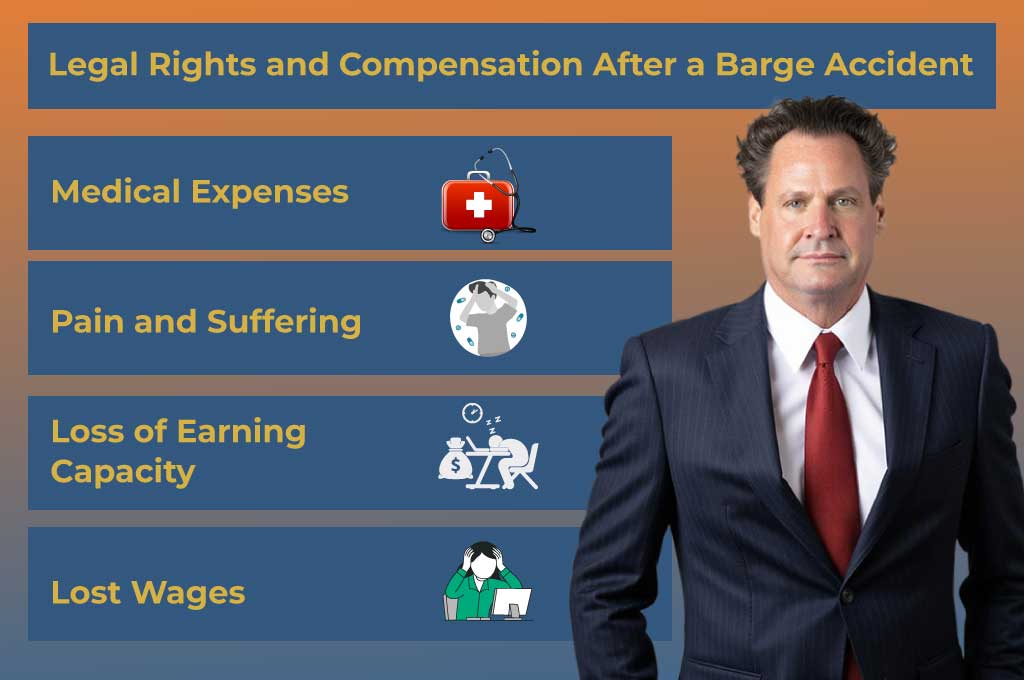
If you’re hurt, you have rights. Your role in the accident matters. Employees may need to file workers’ compensation claims. Victims of premises liability claims need to file a liability claim. Here’s a look at what you can expect.
Medical Expenses:
You may be owed compensation for all losses you sustained. Emergency medical care, hospitalization, treatment, rehabilitation, and future medical care are very common.
Lost Wages:
Compensation for missed time at work is also very important. That includes missed bonuses or benefits you no longer qualify for.
Pain and Suffering:
It’s hard to imagine the pain you could feel. That pain happens at the time of the accident. The suffering can carry on for years. You should receive compensation for those losses.
Loss of Earning Capacity:
You may be unable to go back to work at all. That’s when this type of claim may apply.
Punitive Damages:
Some cases allow for punitive damages. These are damages to punish the person who caused your accident.
Barge Accident Liability
Determining liability is a critical process. It requires assessing all factors leading up to the injury. Let your barge accident lawyer help you with that process.
Contact JonesAct.Info For Tugboat Accident Lawyer:
We are here to help you. Our barge accident attorney brings years of experience to your case. We will work with you to get the results you deserve and to provide the information and support you need.
If you were hurt in an accident on a barge, contact Jonesact.info to learn more about your rights.
Final Verdict:
When you are hurt in a barge accident, you should contact us. We are able to help and have the resources and experience you need to get the results you are looking for. We will work with you and provide the help you need to get the compensation you deserve.
FAQ
Frequently Asked Questions
Always. Barges are inherently dangerous vessels.
Data ranges widely. In 2023, 1304 accidents happened.
They must ensure the vessel is safe for operation. That includes following all waterway regulations. Employers have a responsibility to their employees to create a safe environment.
The Occupational Safety and Health Administration plays a big role. They work to create laws to protect workers from safety risks.
Fall prevention happens on multiple levels. That includes wearing the right footwear and using harnesses. It means proper use of ladders and keeping the decks clear of debris.
Various essential pieces of equipment are required. That includes personal flotation devices for all members. It may also include sound-protection and visual distress signal tools. That’s just the start.
Immediately get help. Document what occurred with photos. Report the incident to management. Then, get medical care.
You can. This depends on the cause and what was happening at the time.
The Jones Act provides workers with the right to sue their employers for negligence.
It allows seamen to request more than workers’ compensation claims. That includes pain and suffering.
You can seek compensation through filing a claim. Your claim should document all of the losses you have.
Maritime injury lawsuits rarely go to trial.
It is worth the value you can prove you lost. That includes medical costs, lost wages, and pain and suffering.
Most attorneys operate on a contingency fee basis. You pay nothing up front. You only pay when you win your case.
Our experience and specialized legal focus make us a solid choice.