Key Takeaways:
-
Tampa boating accidents often involve negligence, complex maritime laws, and strict filing deadlines that demand quick legal action.
-
The Mazolla v. Lazy Bones Charter Inc. case illustrates how charter boat negligence leads to boating accident lawsuits in Tampa Bay.
-
Victims can seek compensation for medical expenses, lost wages, pain and suffering, property damage, and wrongful death.
-
A Tampa boating accident lawyer can investigate fault, deal with insurers, and build a strong claim on your behalf.
-
Both Florida law and federal maritime laws may apply, especially for charter boats, ferries, and commercial vessels.
-
Contact JonesAct.info for a free consultation about your Tampa boating accident legal options.
Boating Accidents in Tampa Bay and Your Legal Options:
Tampa Bay’s waterways-Hillsborough Bay, Garrison Channel, Clearwater Ferry routes, and Gulf approaches-see heavy traffic year-round. With over 1.03 million registered vessels in Florida, the risk of a boating accident is real. In 2025 alone, Florida recorded 694 reportable boating accidents with 51 fatalities. Under section 327.30 of the Florida Statutes, a boating accident with damage of at least $2,000 must be reported, and boating accident claims involve state and federal maritime laws that set them apart from car accident claims. A Tampa boating accident lawyer plays a critical role in investigating the crash, proving negligence, and protecting victims’ rights under both Florida and admiralty law.
Tampa Boating Accidents Lawsuit – Mazolla v. Lazy Bones Charter Inc:
Background of the Mazolla v. Lazy Bones Charter Inc Case:
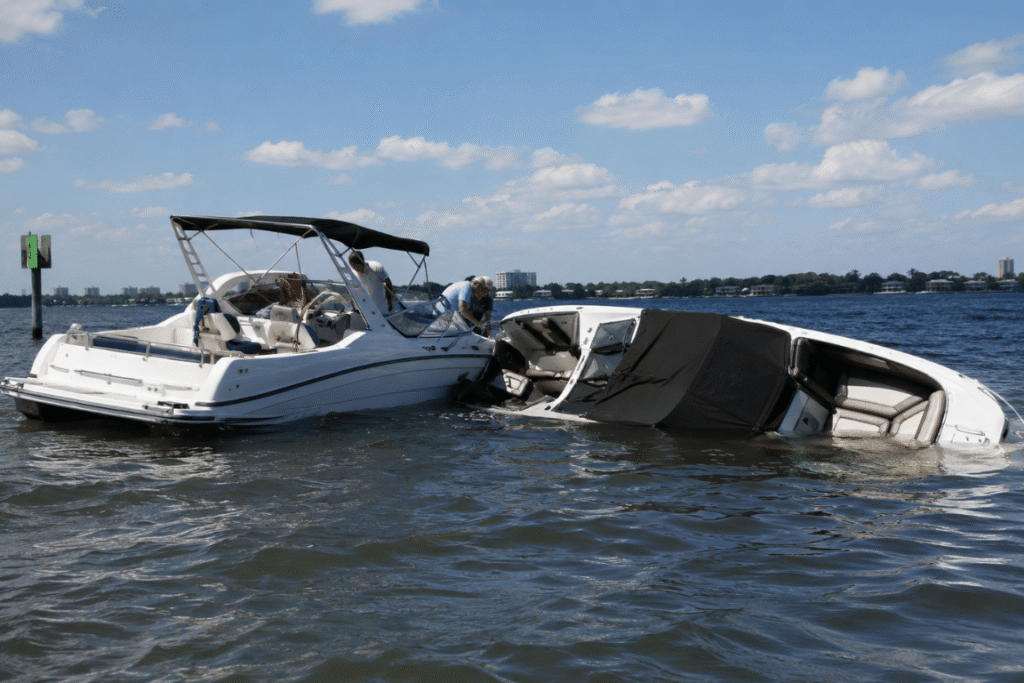
In the summer of 2024, the “Lazy Bones,” a 40-foot sightseeing charter vessel, departed from Tampa Bay harbor with approximately 28 passengers aboard for an evening tour. As darkness fell, the vessel collided with an unlit navigational marker in a congested channel near Clearwater Beach. The boat crash left multiple passengers injured, some seriously. Because it involved a commercial charter operating on navigable waters, federal maritime law may apply for accidents like this, affecting jurisdiction and the legal claim available to victims. The lawsuit was filed in federal court under admiralty jurisdiction.
Allegations of Negligence Against Lazy Bones Charter Inc:
Mazolla alleged that Lazy Bones Charter Inc. failed in its duty of care toward paying passengers. Specific claims included failure to maintain working navigation lights on the vessel, inadequate crew training, failure to keep a proper lookout, and ignoring known hazards in Tampa Bay waters. The boat operator was accused of operating in a dangerous manner by not reducing speed in poor visibility. Negligence requires proving a duty of care was breached, and a Florida boating accident claim must prove operator negligence to succeed. Prior maintenance records and safety violations played a key role in strengthening the allegations.
Legal Issues: Maritime Laws vs. Florida Law in the Case:
The Mazolla case turned on maritime laws because the charter operated on navigable waters as a commercial vessel. Under Florida’s Vessel Safety Law (Chapter 327), boat operators must adhere to specific safety standards. However, federal admiralty law imposed additional duties regarding unseaworthiness and crew competency. Florida uses comparative negligence, meaning compensation may be reduced if the passenger was partially at fault-something the defense attempted to argue. This case illustrates how choosing between Florida law and maritime law in a tampa boating accidents lawsuit directly impacts available remedies and damages.
Evidence Used to Build a Strong Claim:
Evidence of negligence includes accident reports and eyewitness testimony, both of which proved essential here. Key evidence included:
-
Witness statements from passengers and nearby boaters.
-
Coast Guard and Florida Fish and Wildlife Conservation Commission reports.
-
GPS data and vessel navigation logs.
-
Photos of the vessel's faulty lighting and safety equipment.
-
Expert testimony from maritime safety and accident reconstruction specialists.
Accident reports are essential for building a boating accident claim. An experienced attorney can gather evidence to prove liability, and investigating a boating accident can reveal multiple liable parties-including the operator, owner, and maintenance providers.
Outcome and Lessons for Tampa Boating Accident Victims:
The case was resolved through a settlement in which Mazolla recovered financial compensation for medical expenses, lost wages, and pain and suffering. The outcome reinforced critical lessons: passengers aboard charter vessels should document everything immediately, and hiring an experienced attorney familiar with charter and ferry cases is essential. Similar scenarios-injuries on sightseeing charters, fishing trips, and Clearwater Ferry operations-arise regularly across Tampa Bay.
How JonesAct.info Would Approach a Case Like Mazolla:
JonesAct.info’s legal team would handle a case like this through immediate investigation: securing the vessel, obtaining maintenance records, interviewing crew, and coordinating with federal and state agencies. Their focus on maritime cases and Jones Act claims means they understand how to navigate overlapping jurisdictions. If you were injured on a Tampa Bay charter or ferry, JonesAct.info offers a free consultation to evaluate your legal options.
Common Causes of Tampa Bay Boating Accidents:
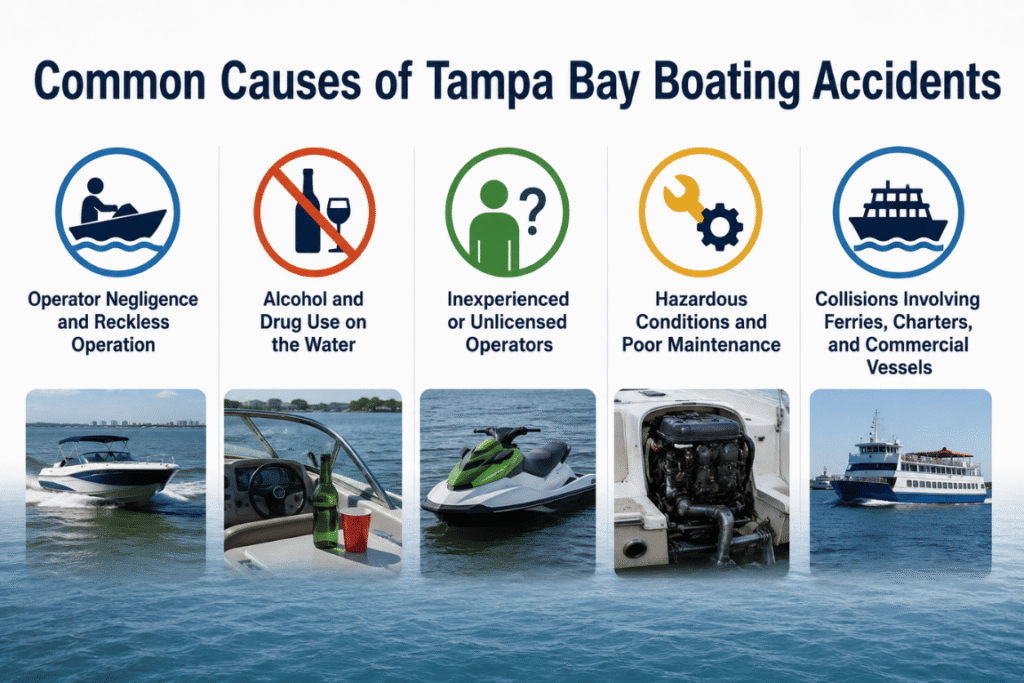
Operator Negligence and Reckless Operation:
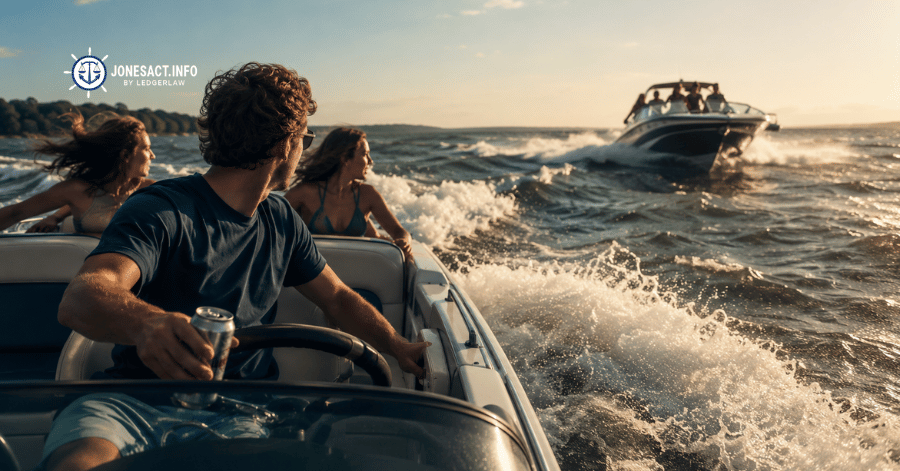
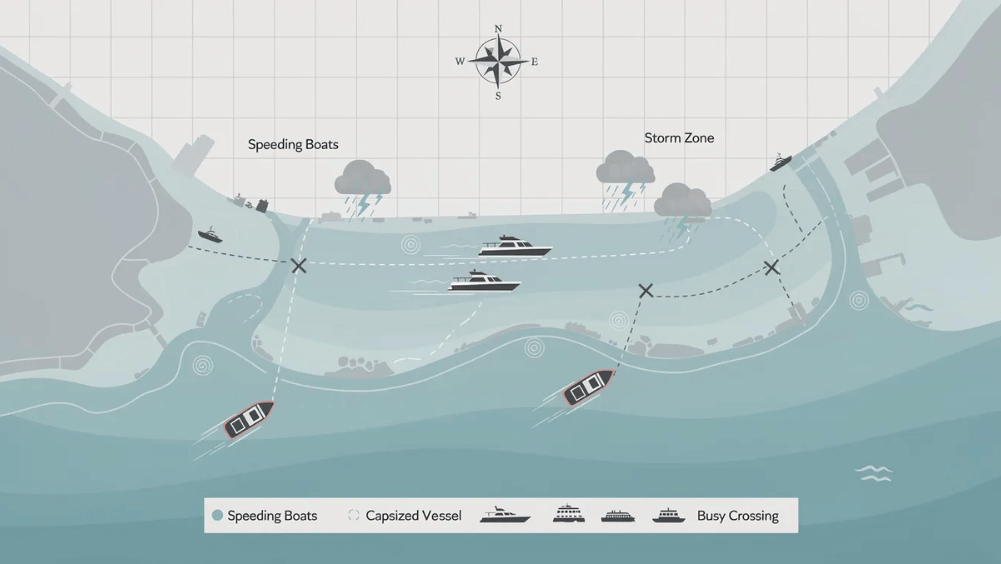
Operator negligence causes most boating accidents in Tampa Bay. Negligence claims can arise from reckless behavior, speeding, or intoxication by other boaters. Common behaviors include excessive speed near Davis Islands, failure to maintain a proper lookout in busy channels, and ignoring navigational rules. Collisions with fixed objects accounted for 243 incidents statewide in 2025-the single largest accident category. Negligent boat operators can be held liable for injuries resulting from these failures.
Alcohol and Drug Use on the Water:
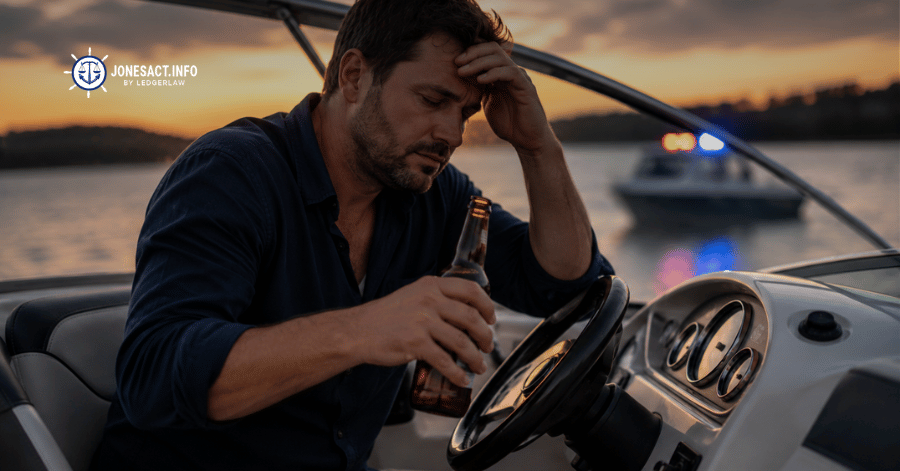
Boating under the influence of alcohol remains a leading cause of watercraft accidents. Holidays like Gasparilla and the Fourth of July see spikes in alcohol-related incidents on Florida waterways. Victims in egregious cases may pursue enhanced damages. Proving impairment through witness statements, field sobriety tests, and blood alcohol evidence creates a dangerous situation for defendants in court.
Inexperienced or Unlicensed Operators:
Inexperienced operators often lead to collisions in crowded waters, particularly tourists renting jet skis or pontoons near Clearwater Beach and St. Pete. Rental companies that fail to verify qualifications or provide training can share fault. Operators with engines of 10 horsepower or more must complete a Boater Safety Education Course under Florida law. Jet ski accidents can result in serious injuries or wrongful death.
Hazardous Conditions and Poor Maintenance:
Equipment failures can also contribute to boating accidents-engine breakdowns, steering malfunctions, and faulty safety gear have all caused collisions in Tampa Bay. Boat owners, marinas, and charter companies may be liable when maintenance failures create a dangerous situation. Even the Clearwater Ferry and other passenger services must adhere to strict inspection standards. Sudden Gulf storms and shallow sandbars add further risk.
Collisions Involving Ferries, Charters, and Commercial Vessels:
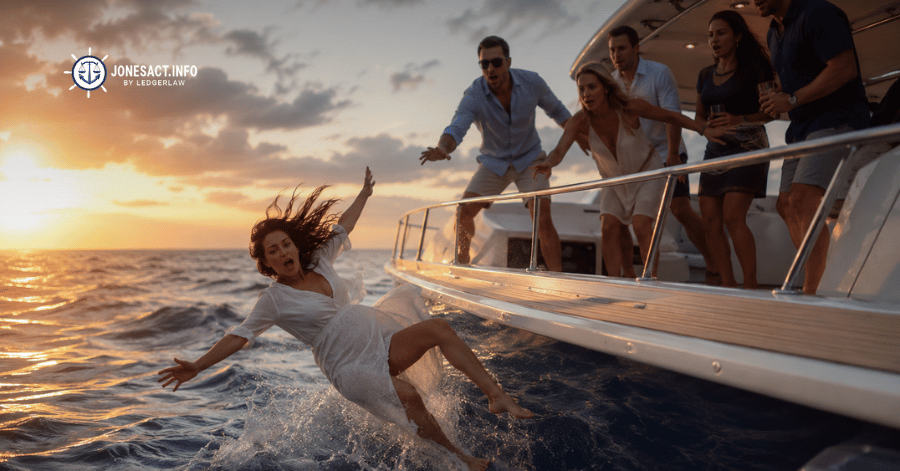
When a boating accident involves a ferry, charter, or commercial vessel, multiple parties may share liability. The Clearwater Ferry crash of April 2025 demonstrated this clearly-a powerboat struck a ferry carrying 45 passengers, killing one and injuring ten. Navigation rules, speed zones, and traffic separation schemes all factor into fault. Boat operators, employers, and corporate owners can all face a personal injury lawsuit.
Compensation Available in a Tampa Boating Accident Lawsuit:
Victims can pursue compensation for injuries from negligent parties in boating accidents. Here is what you may recover:
Damage Type | Examples |
Economic | You can claim current and future medical bills, lost wages, and diminished earning capacity |
Non-Economic | You can claim physical and emotional pain and suffering, plus compensation for non-economic damages like mental anguish and emotional distress |
Property | Compensation includes costs to repair or replace your boat, gear, and personal belongings |
Wrongful Death | Loss of financial support, funeral costs, loss of companionship |
A thorough claim illuminates all ways the accident impacted you. Cases involving ferries, charters, or commercial vessels often reach higher values due to corporate insurance policies. An experienced tampa boating accident lawyer can provide realistic value ranges after a full case review to help you seek fair compensation.
Legal Process: From Tampa Boating Accident to Lawsuit:
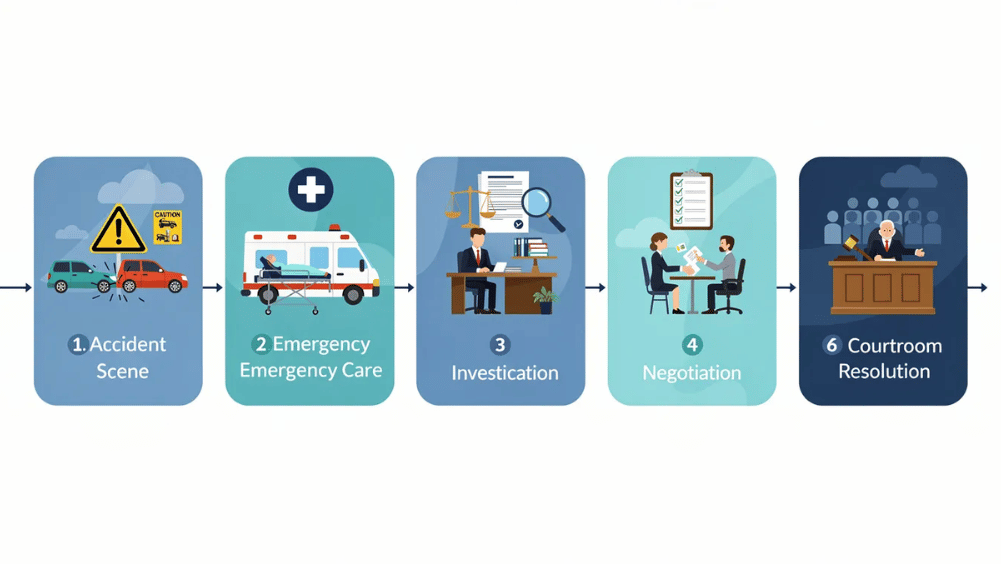
Immediately after the accident: Get to safety, call 911 or the Coast Guard, report to the wildlife conservation commission (FWC), and seek medical care. Take photos of vessels, injuries, and conditions. Avoid admitting fault or giving recorded statements before consulting a lawyer.
Investigation: Your attorney will obtain FWC and law enforcement reports, review vessel maintenance logs, GPS data, and interview witnesses. This deep investigation is what transforms facts into a strong claim.
Insurance and negotiation: Your legal team will present demand packages with medical records, lost income documentation, and expert reports. Many Tampa boating accident cases settle, but readiness for trial improves settlement offers and helps you seek justice.
Filing a lawsuit: You have two years to file a boating accident lawsuit in Florida under state law. Some maritime claims allow three years, but claims against government vessels have shorter timelines for filing. If a fair settlement cannot be reached, your attorney files in Hillsborough County Circuit Court or federal court in Tampa.
Trial: At trial, witness testimony, expert evidence, and documentary proof are presented to a jury. Either side may appeal in complex maritime cases. Preparation as if for trial is critical to obtaining fair compensation, even when most cases resolve before a verdict.
Common Causes and Locations of Tampa Bay Boating Accidents:
Steps in a Tampa Boating Accident Lawsuit:
Contact JonesAct.info For Tampa Boating Accident Related Lawsuit Issue:
JonesAct.info focuses on maritime and boating accident lawsuits, including Tampa Bay, Clearwater Ferry, and charter boat cases. Their experience with the Jones Act, maritime laws, and Florida negligence law means they understand the overlapping legal frameworks that apply to your situation. They work diligently to build a strong claim for every client and offer a free consultation with no obligation.
What to Have Ready for Your Free Consultation:
Before your call, gather:
-
FWC, Coast Guard, or police reports.
-
Medical records and bills.
-
Photos or video from the scene.
-
Insurance policy information.
-
Names and contact details of witnesses.
-
A brief written timeline of the boating accident.
You can also prepare questions about Florida law, maritime laws, and your potential case value. Consultations are confidential and focused on helping you protect your rights and seek justice.
FAQ
Frequently Asked Questions

It is a legal claim filed by someone injured in a boating accident on Tampa Bay or surrounding Florida waterways, seeking fair compensation from negligent parties.
Any person injured in a boating accident-passengers, crew members, other boaters, or even swimmers-can file a personal injury claim if someone else's negligence caused their injuries.
Potentially liable parties include the boat operator, boat owners, charter companies, rental companies, manufacturers of defective equipment, and operators of other vessels involved in the crash.
Yes. You can sue any party whose negligence was a direct cause of your injuries, including the owner, operator, or rental company that failed to ensure reasonable care.
Absolutely. If another vessel's operator caused the collision through reckless behavior or failure to take evasive action, you can file a lawsuit against them and their insurer.
You can recover medical expenses, lost wages, pain and suffering, property damage, and in fatal cases, wrongful death damages.
Yes. You can claim current and future medical bills as well as lost wages and diminished earning capacity resulting from serious injuries.
Yes. Florida law allows surviving family members to file a wrongful death lawsuit seeking compensation for loss of support, funeral costs, and loss of companionship after a fatal boating accident.
Yes. Negligence must be proven to succeed in a boating accident claim, which means showing the at-fault party breached a duty of care that was the direct cause of your injuries.
Key evidence includes accident reports, witness statements, photos, GPS data, vessel maintenance logs, and medical records documenting your injuries.
Florida law allows two years to file a boating accident lawsuit. Some federal maritime claims may allow three years, but acting quickly is critical to protect evidence and meet all deadlines.
It depends on the circumstances. Accidents on navigable waters involving commercial vessels or charters often fall under federal maritime law, while recreational incidents may be governed by Florida law-or both may apply.
Yes. Accidents involving a ferry or charter boat often trigger maritime laws that impose heightened safety duties on operators and owners, strengthening your legal claim.
Most boating accident cases settle through negotiation, but having an attorney prepared for trial significantly increases your leverage for a fair settlement.
Seek medical care, call 911 or the Coast Guard, report the accident to FWC, photograph everything, exchange information with all parties, and contact a Tampa boating accident lawyer before giving any recorded statements.