Key Takeaways:
-
Recent Orlando boating accident cases, including the 2022 Lake Fairview lightning strike that killed two youth rowers, demonstrate how quickly recreational boating turns deadly on Central Florida lakes.
-
Injured boat accident victims in Orlando, FL can file negligence lawsuits under florida law to recover boating accident damages including medical bills, lost wages, and pain and suffering.
-
Florida follows a modified comparative negligence system, meaning you can still recover compensation if you were 50% or less at fault for the accident.
-
Orlando boating accident attorneys investigate liability against operators, owners, boat rental companies, and tour operators while identifying all available insurance policies.
-
The statute of limitations for boating accident claims is two years in Florida, making early consultation with a boating accident lawyer critical to protecting your rights.
-
You may pursue compensation through personal injury claims or wrongful death lawsuits, depending on the severity of the outcome.
-
Many maritime injury lawyers work on a contingency fee, a percentage of what is recovered, with no fee if there is no recovery. Ask any lawyer about costs before you hire them.
Florida law allows victims to seek compensation for negligence, and understanding how these cases work can make the difference between a fair recovery and getting nothing.
Two Major Cases Involving Orlando Boating Accidents Lawsuit:
The following two cases illustrate how boating accident lawsuits arise in Florida and the legal issues that shape their outcomes. Both highlight negligence, weather risk, vessel safety duties, and damage claims under Florida law.
Overview of Recent High‑Profile Orlando Boating Accident Lawsuits:
Florida has the highest number of registered boats in the U.S. and leads the nation in boating incidents. In 2022, Florida reported 723 boating accidents and 65 people died in Florida boating accidents that year, while California had 454 boating accidents in 2022 by comparison. In 2020, Florida reported 836 boating accidents and 79 people died in Florida boating accidents.
Among recent central Florida incidents, the September 2022 Lake Fairview rowing tragedy in Orlando and several commercial tour boat and personal watercraft cases stand out. These lawsuits are typically filed in Florida state courts, though cases on navigable waters sometimes involve overlapping federal maritime law issues. The cases consistently focus on operator decisions, safety planning, and weather monitoring responsibilities.
Common Legal Themes in Orlando Boating Accident Cases:
Recurring negligence allegations in Orlando boating cases include failure to monitor weather, inadequate proper safety equipment, improper training, and ignoring Florida boating safety regulations. Many boating accidents stem from operators, schools, or tour companies failing to put passenger safety ahead of schedules or profits.
Orlando boating accident lawyers use these themes to frame liability arguments and settlement negotiations. The two detailed case studies below show exactly how these themes play out in real lawsuits.
How These Lawsuits Influence Orlando Boating Safety Practices?
High-profile lawsuits pressure schools, clubs, and tour operators to revise safety protocols. After the Lake Fairview tragedy, local rowing programs adopted stricter lightning policies, mandatory weather monitoring apps, and clear evacuation thresholds. Civil lawsuits complement FWC and coast guard enforcement by holding negligent parties financially accountable, driving improved practices across Orlando waterways.
Lake Fairview Lightning Strike Rowing Boating Accident Case:
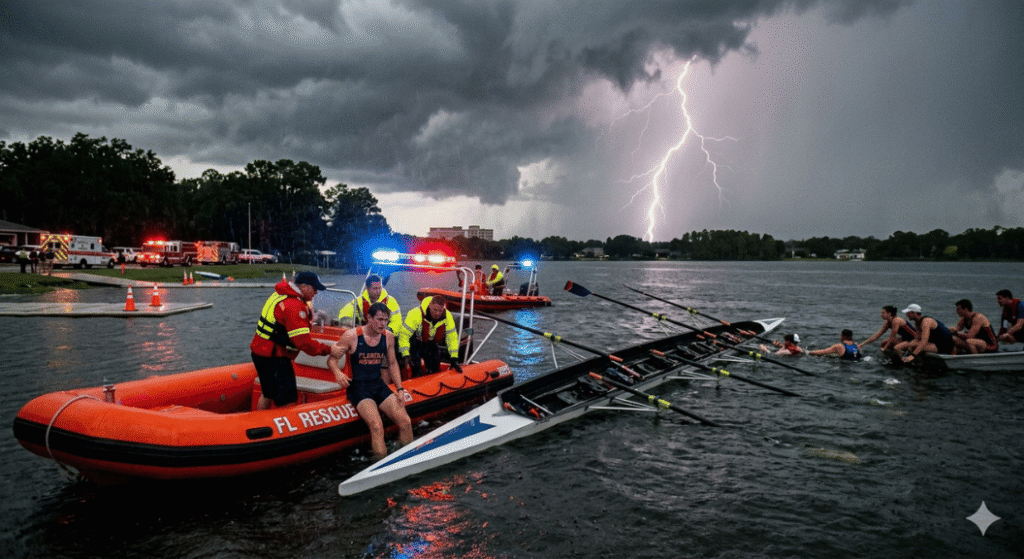
On September 15, 2022, a youth rowing team practicing on Lake Fairview in Orlando was struck by lightning, capsizing their rowing shell. Two children died, including one boy on his 12th birthday. Lawsuits filed in early 2023 alleged negligent weather judgment and catastrophic failures in safety planning.
Timeline of the Lake Fairview Rowing Accident:
Five students from area schools were rowing on Lake Fairview near North Orange Blossom Trail and Lee Road at approximately 5:50 p.m. when storms approached. Lightning struck the shell, overturning it into the water. One child’s body was recovered from the lake; another died later at the hospital from drowning. Coaches remained on the dock rather than in a safety boat on the water. The Orlando Fire Department and first responders arrived to a scene of chaos.
Allegations of Negligence and Safety Failures:
Plaintiffs alleged that the North Orlando Rowing Club, College Park Lions Club, and USRowing failed to monitor weather, failed to evacuate, and failed to warn rowers despite approaching storms. Other rowing teams reportedly stayed indoors that day. Allegations included lack of swim proficiency testing, absent life jackets, and no coach presence on the water. Discovery focused on emails, weather alert policies, and practice-day communications.
Injuries, Losses, and Types of Damages Sought:
Lightning strikes and near-drowning events can cause cardiac arrest, burn injuries, traumatic brain injuries, and potential spinal cord injuries. Families sought wrongful death damages including medical expenses, funeral costs, loss of companionship, counseling, and pain and suffering. Because the victims were minors, long-term economic damage projections-reflecting lifetime earning impacts and medical costs-significantly increase the case value.
Role of Orlando Boat Accident Lawyers in the Lake Fairview Case:
Boating accident lawyers investigating this case would collect weather records, lightning alert data, practice logs, and FWC reports. Expert witnesses including meteorologists and rowing safety specialists evaluate whether decisions were reasonable. Negotiations with clubs, insurers, and organizational defendants can lead to settlement, though some claims may proceed to trial in Orange County courts. Experienced legal representation helps families navigate media coverage and complex insurance claim disputes after such a high-profile boating accident.
Impact of the Lake Fairview Lawsuit on Orlando Boating Policies:
After the tragedy, Orlando rowing programs and youth sports organizations began revising safety protocols. Changes include stricter lightning delay rules, mandatory weather monitoring, clear evacuation thresholds, and requirements that coaches maintain safety boats on the water. Civil litigation pushes organizations beyond minimal regulatory requirements, building broader public awareness about boating safety on Central Florida lakes like Lake Conway and the Butler Chain.
Florida Tour Boat Collision Boating Accident Case:
Commercial tour boat collisions illustrate how special duties apply to operators carrying paying passengers. In cases like Fox v. Sunset Waverunner Tours, Inc., plaintiffs rented personal watercraft and collided with mangroves, raising questions about waiver enforceability when statutory safety duties are violated. These legal principles apply directly to Orlando boating accident cases involving commercial operators.
Facts and Circumstances of the Tour Boat Collision:
In the Fox case, renters on WaveRunners in Key West collided shortly after launch. In a separate Florida incident, passengers aboard an Everglades airboat tour sustained serious injuries and quickly filed suit. These cases involve crowded waterways, speed, visibility issues, and inadequate passenger safety briefings. Detailed incident reports and passenger statements become critical evidence in later lawsuits.
Liability Issues for Tour Companies and Boat Operators:
Potential defendants include the tour company, boat operator, vessel owner, and sometimes another boat operator. Common negligence theories include excessive speed, failure to maintain a proper lookout, overloading, and ignoring navigational rules. Under Florida’s dangerous instrumentality doctrine, companies face vicarious liability for their employees’ negligent operation. Waiver forms often cannot fully shield operators in serious boating accident cases-courts have found that waivers are unenforceable when statutory safety duties were breached.
Passenger Injuries and Medical Consequences:
Tour boat collision injuries include concussions, facial fractures, jaw injuries, whiplash, spinal cord damage, and internal organ damage. Passengers may be thrown against railings or into the water, increasing drowning risk. Long-term complications from spinal or facial trauma drastically increase the value of a personal injury lawsuit. Immediate medical attention and documentation for each injured victim is essential.
Boating Accident Damages in a Tour Boat Lawsuit:
Economic damages include emergency transport, hospitalization, surgery, rehab, and lost wages. Non-economic damages cover pain and suffering, emotional distress, loss of enjoyment of life, and disfigurement. In egregious cases involving reckless operation or intoxication, punitive damages may apply. Multiple injured passengers mean significant overall exposure for the tour operator’s insurers. Victims can claim damages for long-term rehabilitation costs as well.
How Orlando Boat Accident Lawyers Approach Tour Boat Collision Claims:
Attorneys secure passenger lists, onboard video, GPS data, maintenance records, and crew training files. Maritime experts reconstruct collisions and determine whether state or federal maritime law applies. Strategies include filing suit in Florida state court, pursuing mediation, and negotiating with multiple insurance companies. Orlando boat accident lawyers also represent Orlando residents hurt on tour boats elsewhere in Florida.
Common Causes of Orlando Boating and Jet Ski Accidents:
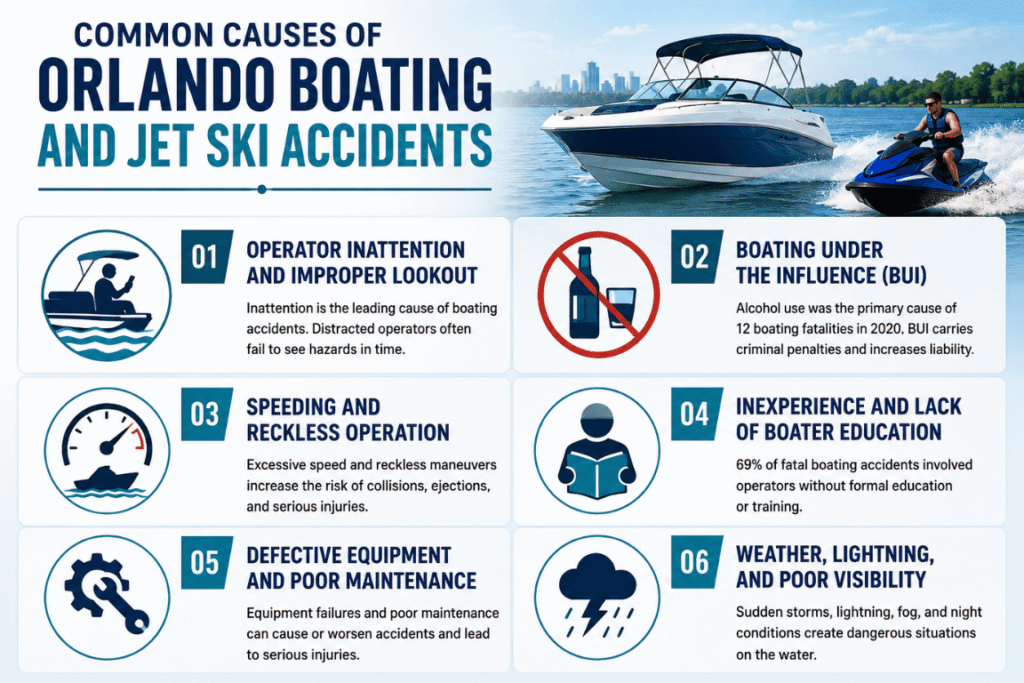
Many boating accidents on Orlando lakes involve rental boats and jet ski accidents driven by preventable human error. Florida has the highest number of registered boats in the U.S., and understanding these causes helps injured victims and lawyers pinpoint negligence.
Operator Inattention and Improper Lookout:
Inattention caused 240 boating accidents in Florida in 2020, making it the single largest contributing factor. An improper lookout-whether from phone use, loud music, or sightseeing-violates basic safety obligations and establishes negligence. A pontoon operator distracted by passengers on an Orlando lake striking a kayaker is a common scenario.
Boating Under the Influence (BUI):
Alcohol use was the primary cause of 12 boating fatalities in 2020. BUI is treated similarly to DUI under Florida law, carrying criminal penalties that also strengthen civil liability. Evidence of intoxication can support punitive damages claims. Holiday weekends on Orlando lakes see elevated BUI risk.
Speeding and Reckless Operation:
Reckless operation is a common cause of boating accidents. Excessive speed near crowded marinas, sandbars, or no-wake zones increases collision and ejection risks. Wake jumping, weaving through traffic, and ignoring navigational rules all qualify. FWC citations for reckless operation become powerful evidence in civil boating accident cases.
Inexperience and Lack of Boater Education:
69% of fatal boating accidents involved operators without formal education. Florida’s boater education requirements exist to prevent exactly these incidents. Rental companies and tour operators share fault if they fail to provide proper safety equipment or adequate instruction to inexperienced renters.
Defective Equipment and Poor Maintenance:
Defective equipment like steering failures, engine fires, or stuck throttles can cause or worsen accidents. Boat rental companies can be liable for unsafe vessel conditions. A jet ski throttle sticking open near an Orlando resort could lead to a high-speed crash into a dock, opening product liability and negligence claims against manufacturers and rental operators.
Weather, Lightning, and Poor Visibility:
As the Lake Fairview case shows, sudden summer storms and lightning are a major Orlando boating hazard. Negligent decisions to remain on the water despite radar alerts are actionable. Operating at night without proper lighting or in heavy fog compounds risk. Attorneys obtain weather data and radar histories to evaluate whether operators acted reasonably.
Common Injuries in Orlando Boating Accidents:
Boating accidents cause devastating injuries that require long-term treatment and shape lawsuit value. In Florida in 2020, lacerations were the most common boating injury with 150 reported, broken bones accounted for 90 boating accident injuries, contusions were the third most common injury with 83 reported, head injuries including concussions totaled 61, and there were 20 burn injuries reported.
Spinal Cord Injuries and Paralysis:
High-impact collisions and falls overboard can cause spinal cord injuries leading to partial or complete paralysis. Being thrown from a speeding boat and striking water head-first is a common scenario. Long-term needs include surgery, rehab, wheelchairs, home modifications, and lost earning capacity-all of which significantly increase boating accident damages.
Traumatic Brain Injuries and Drowning‑Related Harm:
Traumatic brain injuries result from blows to the head against decks, railings, or other boats. Near-drowning causes anoxic brain injuries affecting memory, speech, and motor skills. Brain injuries may not be obvious at the scene, making prompt evaluation critical. Neuropsychological testing and expert opinions prove cognitive damage in personal injury cases.
Jaw Injuries, Facial Fractures, and Dental Damage:
Sudden deceleration can slam a victim’s face into consoles or railings, causing jaw injuries and dental damage. Treatment includes surgery, jaw wiring, dental implants, and cosmetic reconstruction. Visible facial injuries support disfigurement and emotional distress claims while impairing eating and speech.
Lacerations, Amputations, and Propeller Injuries:
Propeller strikes cause severe cuts, scarring, and sometimes amputations. Plaintiffs seek compensation for permanent disability, prosthetics, and loss of enjoyment of life. These common injuries often prompt investigations into operator inattention, BUI, or lack of engine shut-off switches.
Psychological Trauma After a Serious Boating Accident:
Survivors may experience PTSD, anxiety, depression, and water-related phobias. Mental health treatment costs are recoverable damages. Psychological injuries can be especially severe after fatal or near-fatal Orlando boating incidents, and therapist records help document non-economic harm.
Boating Accident Damages and Compensation Under Florida Law:
“Damages” refers to all financial and personal losses victims can claim. Florida law allows recovery of both economic damages and non-economic damages when another party’s negligence caused the accident.
Economic Damages: Medical Bills and Lost Income:
Compensation covers medical bills, lost wages, and pain. Key economic damages include emergency care, hospitalization, surgery, rehab, medications, and future medical costs. Reduced earning capacity and lost business opportunities are also compensable. Orlando personal injury lawyers work with medical providers and economic experts to project future costs.
Non‑Economic Damages: Pain, Suffering, and Loss of Enjoyment:
Non-economic damages include physical pain and suffering, emotional distress, and loss of enjoyment of recreational activities. Severe injuries like spinal cord damage or jaw injuries justify higher awards. Personal statements and testimony from family illustrate these impacts for juries and insurers.
Wrongful Death Damages After a Fatal Orlando Boating Accident:
Surviving family members can seek damages in wrongful death claims under Florida’s Wrongful Death Act. Damages include funeral expenses, loss of financial support, loss of companionship, and emotional suffering. These claims are time-sensitive and require careful calculation of future support.
How Comparative Negligence Affects Boating Accident Recoveries:
Florida follows a modified comparative negligence system in boating accidents. Your compensation is reduced by your percentage of fault, and if you are more than 50% at fault, you may be barred from recovery. For example, a jet ski rider speeding without a life jacket may share fault but can still recover if the other boat operator was primarily negligent. Insurance companies often overstate victim fault, making legal representation crucial for fair compensation.
Insurance Coverage and Gaps in Florida Boating Accidents:
Florida does not require boat insurance for recreational boaters, creating coverage gaps. Potential recovery sources include boat insurance, homeowners’ policies, rental company coverage, and tour operator policies. Uninsured situations push injured victims to file direct lawsuits. Understanding policy limits is a key task for Orlando boating accident attorneys.
Florida Law, Statute of Limitations, and Filing an Orlando Boating Accident Lawsuit:
Florida law governs most Orlando boating accident lawsuits, though maritime rules occasionally apply. Understanding filing deadlines and procedural steps is critical to preserving your right to seek compensation.
Statute of Limitations for Boating Injury and Wrongful Death Claims:
Florida’s statute of limitations for personal injury is two years from the accident date. Wrongful death claims also carry a two-year deadline. Missing this window usually means permanently losing your right to pursue compensation. Act quickly-legislative changes under House Bill 837 reaffirmed these deadlines.
Negligence and Liability Standards in Florida Boating Cases:
You must prove the at-fault party was negligent to pursue a lawsuit. Negligence requires proving a duty of care and a breach of that duty, plus causation and damages. Typical defendants include the boat operator, property owner, rental company, tour companies, and sometimes equipment manufacturers. Negligence must be proven to recover damages in boating accidents through witness testimony and expert analysis.
Reporting Requirements After a Florida Boating Accident:
Under section 327.30 of the Florida Statutes, the operator must report a boating accident without delay to the Florida Fish and Wildlife Conservation Commission, the county sheriff or the city police chief when it involves a death, a disappearance, an injury that needs medical treatment beyond immediate first aid, or damage to vessels or other property of at least $2,000. Operators must remain at the scene and render aid. Incident reports become key evidence, so accuracy matters. Seek legal advice before giving detailed recorded statements.
When Federal Maritime Law May Apply:
If the accident occurred on navigable waters, federal maritime law might apply, affecting jurisdiction and damages rules. Many Orlando accidents on inland lakes are governed primarily by Florida law. Tour boat or cruise-related injuries may involve both state and federal frameworks. Hiring counsel familiar with both systems matters.
Steps to File an Orlando Boating Accident Lawsuit:
The basic process includes: free initial consultation, investigation, pre-suit negotiations, and filing a complaint in Orange County court if needed. The complaint names defendants and asserts claims. Subsequent phases include discovery, depositions, mediation, and potential trial. Most personal injury cases settle before trial but should be prepared for court.
How Orlando Boat Accident Lawyers Help Your Case:
Working with experienced accident lawyers makes a significant difference in complex boating cases. From investigation to trial, a skilled legal team protects your interests.
Investigating the Orlando Boating Accident:
Lawyers gather evidence including FWC reports, 911 recordings, photos, GPS tracks, and vessel data. They interview witnesses and first responders while memories are fresh. Accident reconstruction experts analyze speed, visibility, and navigation. Thorough investigation rebuts claims that the accident was a “freak event.”
Identifying All Liable Parties and Insurance Policies:
Liability extends beyond the person driving the boat to owners, rental operators, tour companies, and manufacturers. Lawyers track every relevant insurance policy. Identifying every liable party and negligent parties increases chances of full compensation, especially in catastrophic injury cases.
Handling Insurance Companies and Settlement Negotiations:
Attorneys challenge lowball offers and prevent insurance companies from twisting victim statements. They prepare demand packages summarizing liability evidence, medical records, and damages. Skilled negotiation can secure fair settlements.
Proving Medical Injuries and Long‑Term Damages:
Personal injury lawyers collaborate with treating physicians, surgeons, and life-care planners. Experts project future medical costs for spinal cord injuries, brain injuries, and jaw reconstruction. Photos, imaging reports, and daily-life impact statements present evidence of the human cost. Strong medical proof maximizes boating accident damages.
Representing Jet Ski and Rental Boat Accident Victims:
Many Orlando boating accident cases involve rented jet ski watercraft and small powerboats used by tourists. Lawyers examine rental contracts, safety briefings, and equipment conditions to determine rental company liability. Rental operators may be responsible for failing to provide proper safety equipment or screening for intoxication.
Contingency Fees and Access to Justice for Injured Boaters:
Many maritime injury lawyers work on a contingency fee, a percentage of what is recovered, with no fee if there is no recovery. Ask any lawyer about costs before you hire them. Initial consultations are typically free, and representation agreements detail the fee percentage. This model levels the playing field against large insurance companies and corporate defendants. Any orlando boating accident lawyer on the Florida bar should explain their fee structure clearly.
What to Do Immediately After an Orlando Boating Accident:
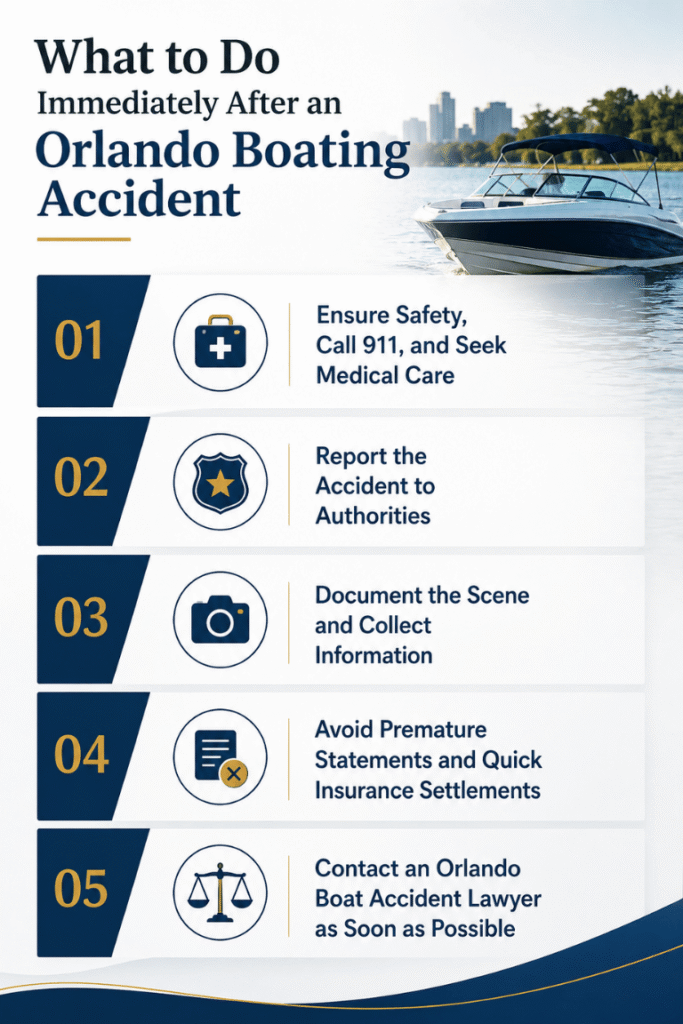
Your actions in the minutes and days after a crash affect both safety and any future lawsuit. Collecting evidence documenting injuries after a boating accident is important-here is what to do step by step.
Ensure Safety, Call 911, and Seek Medical Care:
Account for all passengers, move from danger, and call 911 for serious injuries. Even minor-seeming injuries deserve medical attention, as boating trauma can be deceptive. Timely treatment creates critical medical records for personal injury claims.
Report the Accident to Authorities:
Florida law requires reporting to FWC, the Orange County Sheriff’s Office, or local police when there is death, serious injury, or significant damage. Provide accurate, factual information without speculating about fault. Request the incident report number.
Document the Scene and Collect Information:
Take photos and videos of vessel damage, injuries, and weather conditions. Collect names, contact details, and insurance information from all operators, owners, and witnesses. Preserve physical evidence like damaged life jackets or broken parts.
Avoid Premature Statements and Quick Insurance Settlements:
Do not give recorded statements to insurance companies without first consulting a personal injury attorney. Insurers use casual remarks to minimize or deny valid claims. Never sign releases before understanding the full scope of your injuries and medical costs.
Contact an Orlando Boat Accident Lawyer as Soon as Possible:
Reach out to an Orlando boating accident lawyer shortly after the incident to protect your rights and meet Florida deadlines. Early legal help ensures evidence preservation and proper medical documentation. Many firms offer a free consultation and only collect fees if they recover damages.
Conclusion:
Orlando boating accidents on lakes and rivers cause devastating injuries every year, and Florida law gives victims a clear path to recover damages through negligence and wrongful death lawsuits. Understanding common causes-from operator inattention to defective equipment-and recognizing how injuries like spinal cord damage, traumatic brain injuries, and jaw injuries affect lawsuit value puts you in a stronger position.
If you or a loved one has been hurt in an Orlando boating or jet ski accident, seek prompt medical care, document everything, and consult an experienced personal injury attorney who understands Central Florida waterways and Florida’s two-year filing deadlines. Holding negligent parties accountable does more than secure fair compensation-it pushes the entire community toward safer practices so Orlando’s lakes remain places for recreation, not tragedy.
FAQ
Frequently Asked Questions

Liability can fall on the boat operator, owner, rental company, tour operator, or manufacturer if defective equipment contributed to the crash, depending on who was negligent.
Yes, injured victims may bring a personal injury lawsuit in Florida when someone else's negligence or reckless conduct caused the boating accident.
Most boating injury and wrongful death claims must be filed within two years of the accident. Waiting too long can permanently bar recovery.
You can claim medical bills, lost wages, pain and suffering, property damage, and in fatal cases, wrongful death damages including funeral costs and loss of support.
Under Florida's modified comparative negligence rule, you may recover if you were 50% or less at fault, but your award is reduced by your share of responsibility.
An attorney investigates the crash, identifies all liable parties and insurance policies, calculates your damages, and negotiates or litigates to pursue full compensation.
Consult a lawyer in any case involving injuries, disputed fault, or significant bills. Insurers routinely try to minimize or deny valid claims from accident victims.
Get everyone to safety, call 911, seek medical attention, report the accident to authorities, document the scene, and contact a boating accident lawyer before giving detailed statements to insurers.
Yes, you can pursue compensation from negligent operators, rental companies, or others whose conduct or equipment failures contributed to your injuries.
Rental companies may be liable if they rented to an obviously unsafe operator, failed to provide safety gear or instruction, or supplied a poorly maintained vessel.
Yes, certain surviving family members can file a wrongful death lawsuit to recover financial and emotional losses caused by a loved one's fatal boating accident.
Examples include BUI, speeding, failing to keep a proper lookout, ignoring weather warnings, overloading the vessel, and not providing required safety equipment.
Both personal injury and wrongful death boating claims are generally subject to a two-year statute of limitations from the date of the accident or death.
You must report a boating accident to FWC or local law enforcement if there is death, disappearance, serious injury, or property damage above statutory thresholds.
Florida does not require private boat owners to carry liability insurance, though lenders and marinas may impose their own requirements.
Many maritime injury lawyers work on a contingency fee, a percentage of what is recovered, with no fee if there is no recovery. Ask any lawyer about costs before you hire them.
Simple cases may settle in a few months, while complex cases involving serious injuries can take a year or more, especially if they proceed to trial.
Your lawyer can investigate other recovery sources such as the boat owner, rental company, tour operator, or your own insurance policies, and may file a lawsuit directly against the negligent party.
You may have a claim if the boat operator towed you unsafely, ignored conditions, or failed to follow safety rules, leading to your injuries.
Many boating accident claims settle out of court, but you should be prepared to testify if a fair settlement cannot be reached and your attorney recommends filing a lawsuit.