Key Takeaways:
-
You can claim salvage rights for a boat. Prove the vessel was in some type of marine peril to do so.
-
There are three parts to meeting a salvage award on a boat. That starts with marine peril, voluntary service, and success.
-
Your legal rights depend on numerous factors. And marine time law isn’t simple to understand.
-
Learn how the marine salvage law applies to your situation. Hire an attorney to help you with the process.
-
Protect your rights and your financial well-being with the guidance of an attorney.
Maritime law allows for salvage claims. A salvage claim is a demand for compensation by the salvor who voluntarily rescues a marine vessel. That vessel is in some form of peril. Salvage claims don’t follow a finder-keepers rule. Instead, the salvor receives a claim for successfully rescuing the vessel.
These are critical services after a fire ravages a boat. Perhaps a boat sank. A grounded vessel also benefits from this service. You can seek a salvage claim. But you have to prove the rights to it. That’s the hard part in the process.
What Is A Salvage Claim?
A salvage claim is a legal action to seek compensation for rescuing a boat in peril. That’s a super simple definition, but it provides clarity. Salvage is the process that a salvor takes. They voluntarily save the life or property at sea of another. They then seek a claim against the boat’s owner for the costs involved.
An Overview On Boat Salvage and Marine Salvage Law:
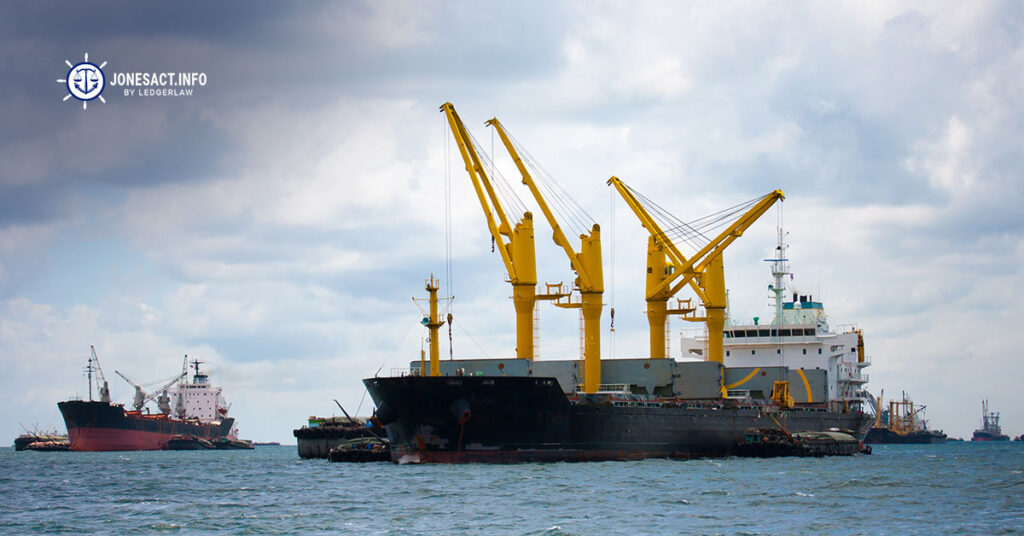
You can claim salvage rights on a boat that’s in peril that you save. You’ll have to prove the ship was in marine peril and that the actions you took were voluntary. You also have to show that the actions you took were successful. Let’s dig into what the law says about these rights.
Meaning of Salvage Rights in Maritime Law:
Salvage rights are a maritime law that lets someone who voluntarily saves a vessel from marine peril recoup some of their losses. It’s a reward for rescuing the vessel or cargo. This law applies only in situations where there is true peril present. The effort must also be voluntary. That means you didn’t have any type of pre-event obligation to the vessel. A pure salvage right is typically an unexpected rescue. These elements must apply:
-
Marine peril is a real danger.
-
The service is voluntary.
-
There is success in rescuing or protecting the vehicle.
Salvage Under Contract in Maritime Law:
Under contract is slightly different. It means that there are pre-arranged services at the place. A salvor is paid regardless of the success of the mission. The terms and conditions of contracts differ widely. These actions often happen with professional salvors. They use high-end technology and equipment. Environmental protections may demand special compensation for their efforts. For example, your actions prevent an oil spill from happening.
7 Steps by Steps Guide: How to Claim Salvage Rights on a Boat?
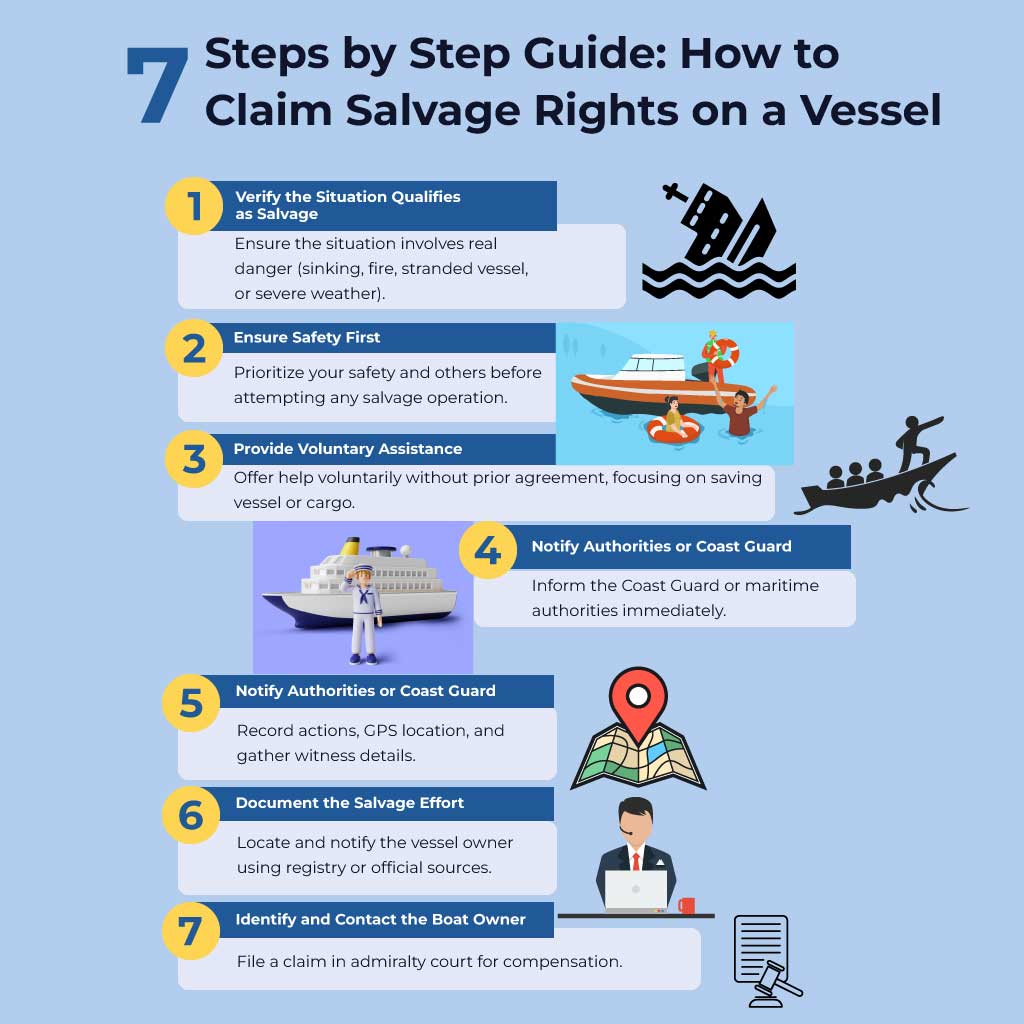
Maritime salvage rights require several steps. Turn to an attorney if you think you have boat salvage rights. This is what you can expect from the process of recovering those damages.
Step 1: Verify the Situation Qualifies as Salvage:
Real danger must be present. Some examples include:
-
The boat is sinking.
-
The boat is stranded.
-
It’s drifting into heavy weather.
-
There’s a fire onboard.
-
Cargo was lost.
The boat is in some way disabled. Your efforts are to save it.
Step 2: Ensure Safety First:
Never put your safety after protecting a boat. Prioritize acting in a way that’s safe for you and any other person. Always focus on protecting a person’s life over saving the boat. That applies to any person on either ship.
Step 3: Provide Voluntary Assistance:
You see a ship at risk. So you act. That’s voluntary. The actions you take are specifically meant to protect the boat or cargo. It’s voluntary in that you don’t have any previous agreement with the owner to save the boat. You may tow the vessel out of grounding, for example.
Step 4: Notify Authorities or Coast Guard:
Contact the U.S. Coast Guard immediately. You may need to contact other maritime authorities applicable to the situation. This is like calling the police after a car accident. The Coast Guard arrives, documents what happened, and creates evidence you can use later. That helps ensure your legal efforts are recognized.
Step 5: Document the Salvage Effort:
Next, document everything. Maintain records of what you did, where it happened, and what was involved. Write down the GPS coordinates. Get timestamps in place on videos and photos you take. Also, get the name and contact information for any witnesses.
Step 6: Identify and Contact the Boat Owner:
The Coast Guard may help you with this process. You need to determine who the owner is after taking the vessel or the cargo to a safe port. You can also use the vessel registry or an insurer to seek information about the owner. Let them know what happened.
Step 7: Request Salvage Compensation:
File a salvage claim. That’s done in the U.S. Admiralty Court or a tribunal abroad. You’ll need to show proof of the peril, your rescue, and the value protected. Your attorney can help you calculate these losses. You’ll need to consider factors related to the value of the property, skill and effort, and the degree of danger involved.
How the Salvage Claim Process Works in Maritime Law?
Here’s another look at how the salvage claim process works. This falls under the Salvage Convention of 1989. Other laws may also apply.
Establish Voluntary Act and Maritime Peril:
Show the vessel was in peril of some type. The vessel was in immediate danger. Examples include grounding, fires, or sinking.
Report Authorities:
Contact the U.S. Coast Guard as soon as possible. That’s typically during or after you act to save the vessel.
Securing, Protecting, and Documenting the Property:
Take steps to secure and protect the vessel. Document all steps you take. Take photos and get witness statements to help you demonstrate what occurred.
Transporting to Safety and Owner Notification:
Get the boat to a safe port when possible. Then, contact the owner to let them know what happened. Explain the actions you took.
Filing and Processing the Salvage Claim:
File a claim for the losses you have. That includes time, expenses, and risks you sustained from the actions.
Contact Maritime Lawyer For Salvage Claim:
The process is challenging. Proving the value of your claim isn’t easy to do. A maritime lawyer can help you create and secure recovery of the losses you have. Contact us for help with the entire process.
Final Words:
Let our team be the guidance you need in these situations. When you help someone in need, you deserve support. Our maritime lawyer can help you get the damages you suffered to help others.
FAQ
Frequently Asked Questions
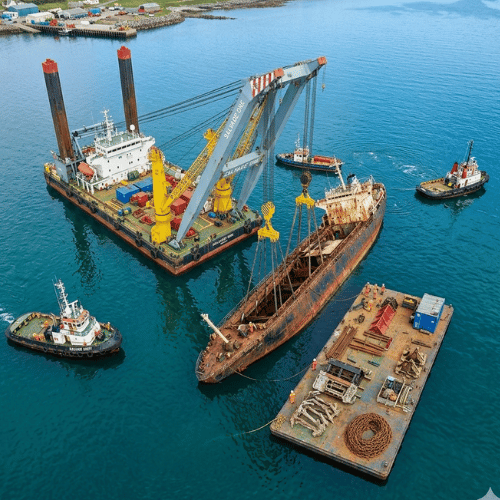
Any type of water vessel can be salvaged. It can also include cargo on board a vessel.
The value of a salvage award is dependent on what you claim. That means you need to document all of the losses you have. This might include factors related to:
- The value of the property saved
- The degree of success
- The environmental protections provided
- Time and expenses involved
- Your skill and effort
- The amount of danger involved
In some situations, yes. However, there are limits based on whether their actions go above and beyond what their actual contractual duty calls for.
The statute of limitations for most maritime salvage claims is two years. That starts the date the salvage operation stops. You cannot file a claim if it’s been that long since you took action. Don’t wait.
There are many factors that play a role in this. Typically, the process can take as little as 3 months. Most of the time, it takes 6 months to 1 year. The more complex the case is, the longer it takes.