Costa Concordia Sank - Key Takeaways:
-
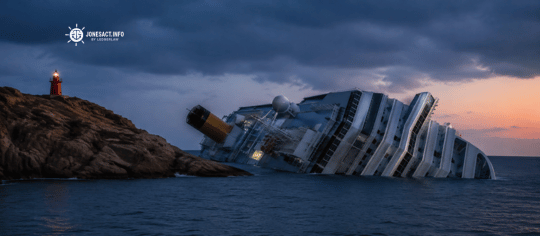
Tragic Event Summary: On January 13, 2012, the Costa Concordia struck a reef near Italy's Giglio Island. So, the ship capsized.
-
Cause: Unauthorized Maneuver: Captain Schettino's unauthorized "sail-by salute" maneuver caused the vessel to strike an underwater reef.
-
Human Cost & Fatalities: There were 32 deaths due to the grounding, delayed evacuation, and ensuing panic.
-
Captain's Legal Censure: Captain Schettino was convicted and sentenced to 16 years for manslaughter and abandoning the sinking ship.
-
$2 Billion Salvage Cost: The complex recovery and wreck removal operation was one of history's most expensive, costing over $2 billion.
The Costa Concordia cruise ship sinking was a major maritime tragedy in the 21st century. It once again raised questions about cruise ship safety. The accident turned a routine Mediterranean cruise into a nightmare scenario.
On the night of Friday, January 13, 2012, Costa Concordia, operated by Costa Crociere, ran aground off the coast of Tuscany, Italy. The disaster exposed severe shortcomings in safety protocols, emergency response, and leadership.
Plus, the actions of the Costa Concordia captain, Francesco Schettino, shook everyone as his misjudgment was the main reason for the accident. He even fled the scene. The cruise ships that sank were among the most technologically advanced ones. Still, it fell, raising some key observations.
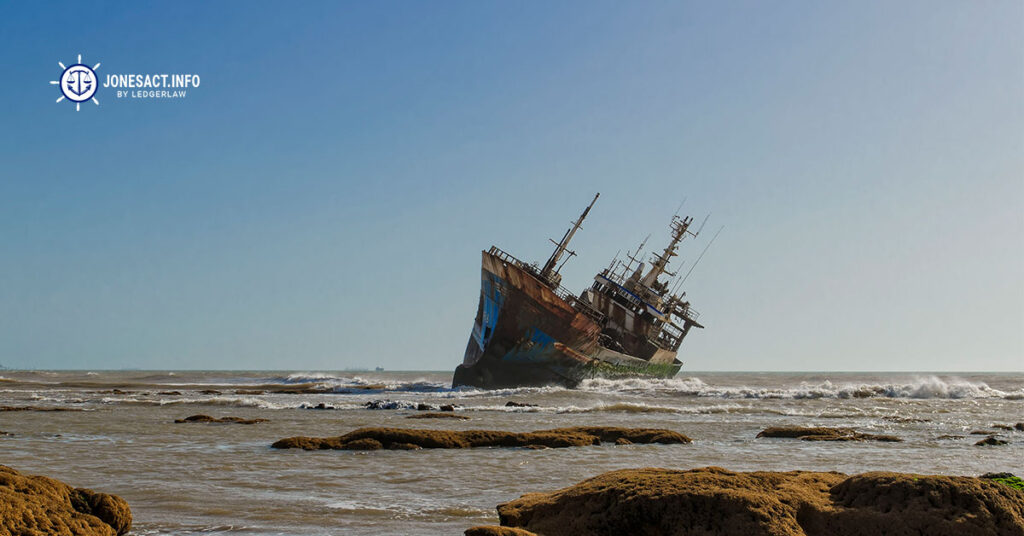
Details About Concordia Ship
The Costa Concordia was the flagship of the Costa Crociere fleet. It was also the first of the Concordia-class ships, a pinnacle of early 21st-century cruise design. Since its first voyage, the world has been attracted to its gigantic structure, luxury cruises, and advanced technologies.
Construction and Maiden Voyage
Fincantieri in Genoa, Italy, constructed Costa Concordia. The construction order was placed in 2004. The Concordia Ship was launched on September 2, 2005, and the cost was approximately €450 million (US$570 million). The ship’s name, Concordia, meaning “harmony” and “peace,” symbolized unity among European nations.
After the construction and safety checks, Costa Cruises received the ship in June 2006. In July 2006. She went on her first voyage. Notably, during the traditional christening ceremony, an unusual event took place.
The champagne bottle didn’t break against the hull. Since medieval times, seafarers considered it a highly unfortunate omen. Many think it was a dark foretelling of the disaster that would hit the ship and shake the world six years later.
Costa Concordia Inside Details
The Costa Concordia was a large cruise ship. It could carry 3,780 passengers and 1,100 crew members. At 114,147 gross tons and 290 meters (952 feet) in length, it is a monster that roamed around the sea.
The ship was known for its luxurious and innovative amenities. It had 1,500 cabins, many with private balconies. Its interior included:
-
The two-level, 6,000 m² (64,600 sq ft) Samsara Spaone; one of the largest exercise facilities at sea.
-
Five international restaurants with all types of food cuisine.
-
There were thirteen bars.
-
A three-level theatre able to host 500+ audience simultaneously.
-
There was a large casino and a futuristic disco.
For entertainment, the ship featured a Grand Prix motor racing simulator. Among four swimming pools, two had retractable roofs.
Costa Concordia Wreck:
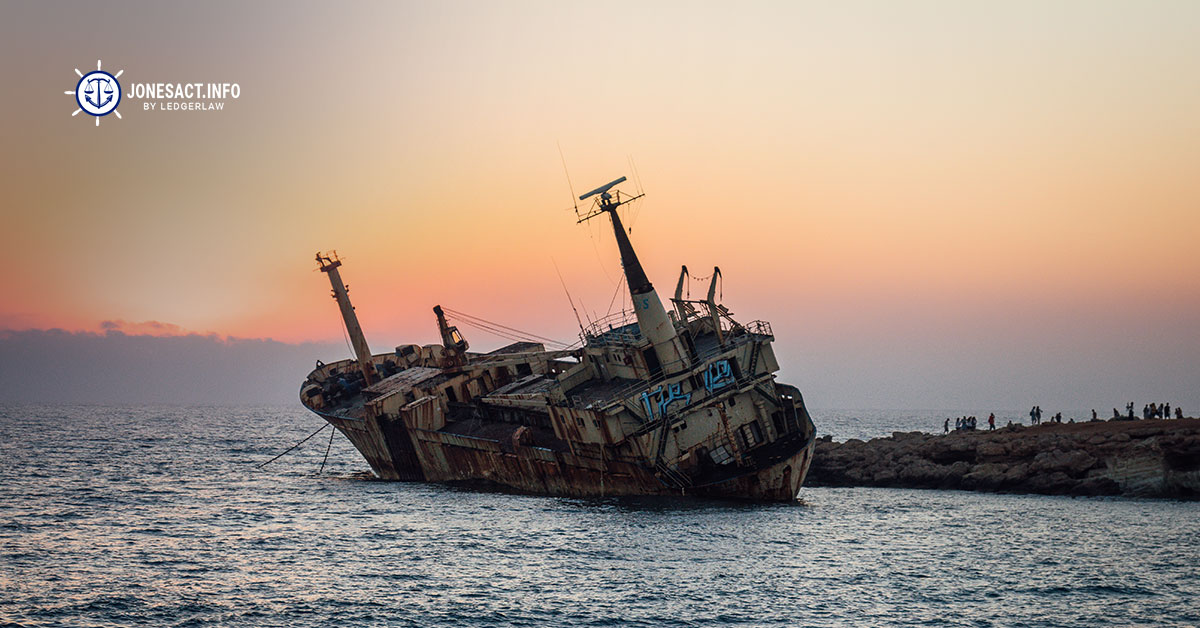
The Costa Concordia wreck was a monumental, multi-year salvage and scrapping operation. The rescue operation is one of the most expensive maritime recovery projects in history. The ship was declared a total construction loss as it capsized.
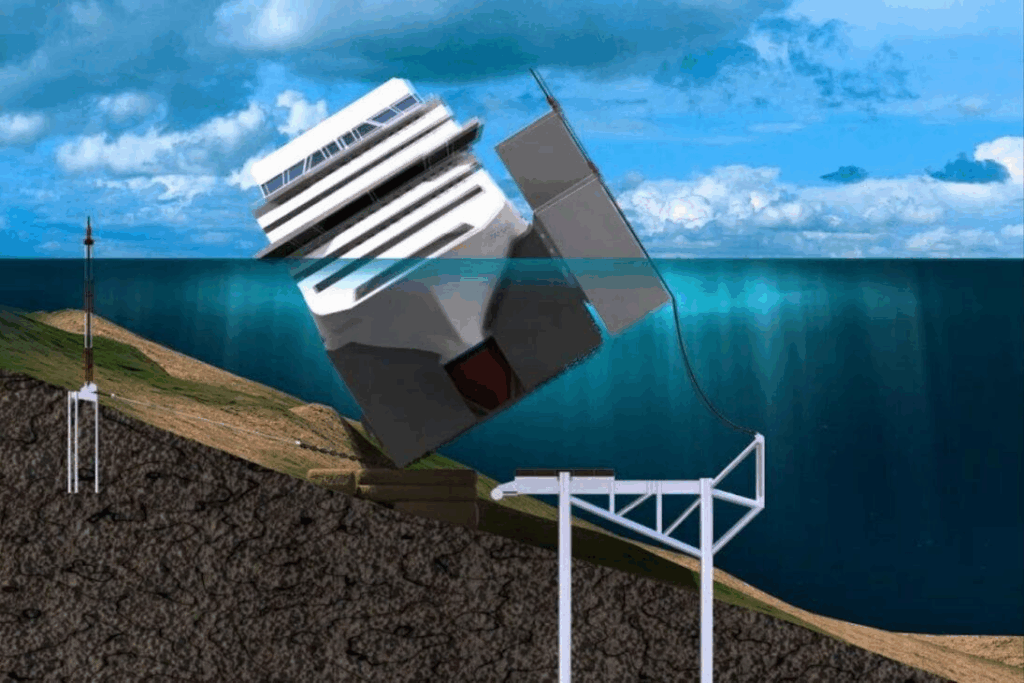
Image Source: Click Petroleoe Gas
The wreck rested on an underwater ledge off Isola del Giglio. Its position was absurd and highly vulnerable. First, the authority focused on removing the fuel to prevent an environmental catastrophe. It was necessary because its fuel was posing a major threat to the regional marine biodiversity.
The highly complex salvage process, known as parbuckling, began in September 2013. Once the fuel spreading was stopped, the rescue team focused on the ship. They successfully rotated the ship upright.
In July 2014, the ship refloated on the sea. Then the rescue team towed the massive hulk 320 km (170 nautical miles) to Genoa for dismantling. Final scrapping was completed in July 2017. The total cost of the disaster, including victim compensation and salvage, soared past $2 billion. So, its rescue and compensation cost took over its original manufacturing cost.
The rescue operation was worth $1-billion alone, the most expensive in maritime history.
Costa Concordia Disaster:
The Costa Concordia disaster involved a critical human error. As the event unfolded, the world saw how a luxury cruise ship experienced its fate.
Collision and Rescue:
The disaster unfolded on the evening of January 13, 2012, as it was sailing dangerously close to Isola del Giglio. Captain Francesco Schettino took a dangerous maneuver, known as a “salute” or inchino (a bow). It was to greet a former captain and the family of a crew member on the island. Schettino deliberately steered the ship far off the established shipping route and went too close to the danger zone.
At approximately 9:45 p.m., the ship’s port side struck a charted underwater granite rock formation known as Le Scole. The impact was a “judgment error,” as Schettino later admitted. The impact tore an approximately 53-meter (174-foot) long gash in the hull below the waterline. The breach quickly flooded several compartments, including the engine room. So, the ship lost its propulsive power and crippled its electrical systems.
The beginning of the rescue operation:
The rescue effort was chaotic and delayed. Schettino, the captain, initially attempted to conceal the truth from the port authorities. Despite the severity of the damage, he reported only an “electrical blackout.”
He delayed the crucial order to abandon ship until 10:50 p.m. It was over an hour after the impact. By the time, the ship had drifted. So, it began listing to the starboard side. So, the lifeboats on the port side could no longer be accessed. There was an extreme tilt, forcing passengers and crew to jump into the freezing waters. However, some of them navigated the steeply angled decks.
Adding to the chaos, Captain Schettino abandoned his post. He disembarked the vessel by 11:30 p.m., without caring about the passengers and crew. He refused to return to command the evacuation repeatedly.
It led to the famous, furious radio exchange with Coast Guard Captain Gregorio de Falco, who repeatedly commanded him:
“Vada a bordo, cazzo!” (Get the f*** back on board!).
However, junior crew members and officers acted bravely. They took their own initiative to assist passengers. It was critical to save lives during the six-hour-long evacuation.
Costa Concordia Death List And Ages:
The Concordia cruise ship deaths were 32, including the passengers and crew members. The main reason for the deaths was drowning due to inaccessible lifeboats.
How many people died on the Costa Concordia?
32 people died in the Costa Concordia accident. It includes 27 passengers and five crew members. An additional fatality occurred during the complex salvage operation in 2014. So, the total number of deaths increased to 33.
The Costa Concordia fatalities were a result of drowning:
-
Some were being sucked into the rushing, violently swirling water as the ship was tilting.
-
A few succumbed to the sea after jumping overboard in a desperate attempt to reach the shore.
Maria Grazia Trecarichi, an Italian passenger, and Russel Terence Rebello, a Filipino waiter, were among the last two recovered bodies. Rebello was last seen helping passengers before being caught by the rising water. So, people lauded him for his bravery and selfless work. The final body was not recovered until November 2014, two years after the sinking.
What happened to the captain of the Costa Concordia?
Costa Concordia captain, Francesco Schettino, was arrested shortly after the sinking. He was charged with multiple counts, including:
-
Manslaughter
-
Causing a maritime disaster
-
Abandoning his ship (Abbandono di nave).
Throughout his trial, Schettino claimed he had “fallen” into a lifeboat. He also argued that he had been coordinating the effort from ashore. With such claims, he was portraying himself as a scapegoat.
Nonetheless, he was convicted in 2015 and sentenced to 16 years in prison. His conviction was upheld by Italy’s highest court in 2017.
Costa Concordia Lawsuit Settlement And Passenger Claims:
The Costa Concordia cruise ship sinking lawsuit was a major maritime disaster in the 21st century. Also, its lawsuit was among the most high-profile cases.
Legal issues:
The Costa Concordia Lawsuit Settlement and passenger claims were complex. The victims were from over 70 nations. Schettino, the captain, was the only person to receive a long prison sentence.
However, five other ship officers and managers received plea bargains with lesser sentences. They were convicted for their chaotic roles. The jury didn’t charge Costa Crociere criminally.
But the cruise company accepted responsibility under a corporate administrative penalty. They paid a €1 million fine. Costa Cruises offered standard compensation packages. They offered non-injured passengers €11,000 each to cover all damages. Plus, there was a reimbursement for the cost of the cruise.
Roughly one-third of the survivors accepted this offer. Others pursued individual claims for higher amounts to cover psychological distress, injury, and loss of life. Thus, the legal accountability for cruise line sinkings took a new shape.
JonesAct.info is ready to deal with such complex cruise ship cases. Whether you are a crew member or a passenger, we will fight for your rights.
Conclusion:
The Costa Concordia disaster was due to human error as the captain failed to perform his duty of care. From his misjudgment to perform a dangerous maneuver to delaying the May Day call and fleeing the ship, he did everything to cause as much damage as possible.
32 passengers faced tragic death, and the owner of the Costa Concordia had to take the burden of over $2 billion in compensation, rescue costs, and other fines.
FAQ
Frequently Asked Questions

Captain Francesco Schettino left the ship prematurely. He claimed he "fell" into a lifeboat due to the ship's angle. However, it was far from the truth, as all evidence and witnesses proved that he intentionally fled the ship. He even tried to hide the major damage at the first attempt.
32 people died in the disaster, including 27 passengers and five crew members. The Costa Concordia death list and ages included elderly individuals, a five-year-old girl, and heroic crew members etc.
The Costa Concordia sank after it struck a charted granite reef called Le Scole during a dangerous maneuver. The impact tore a massive 53-meter gash in the hull. So, the engine room flooded, and eventually the ship sank onto a rocky seabed near Isola del Giglio.
The Costa Concordia crash occurred in the Tyrrhenian Sea. It was just off the eastern shore of the tiny Italian island of Isola del Giglio, Tuscany. The sinking location was approximately 100 kilometers northwest of Rome.
No, the Costa Concordia wreck is no longer there. After the salvage operation in 2014, the wreck was refloated and towed to the port of Genoa. In July 2017, the ship was completely scrapped.