Key Takeaways:
-
Proper lookout: This is mariner's language that encompasses the vessel operator's duty to stay alert and vigilant against accidents.
-
The major responsibilities of a vessel operator: A vessel operator has three main responsibilities , including practicing good seamanship, keeping a proper lookout and maintaining a safe speed.
-
The importance of and how to keep a proper lookout: The vessel operator has to follow specific guidelines that guide them through the lookout process.
-
Steps to keep a proper lookout: Use technology and engage in standard safety routines to improve your awareness.
-
Taking legal action after an accident: Anyone who's a victim of an accident that's the result of an improper lookout can sue to recover an award for their injuries.
The pilot of a boat, also known as the vessel operator, has a duty of care to the people on the boat and everyone in the vicinity. That means keeping a proper outlook, scanning the horizon, and watching the bank and waters for obstacles. The operator is also responsible for keeping an eye on navigation equipment, observing regulations, and keeping track of signals and communications if applicable. The type of boat dictates what the operator has to monitor, but the basic requirement is to be observant of the immediate surroundings.
Three Major Responsibilities of Every Boater
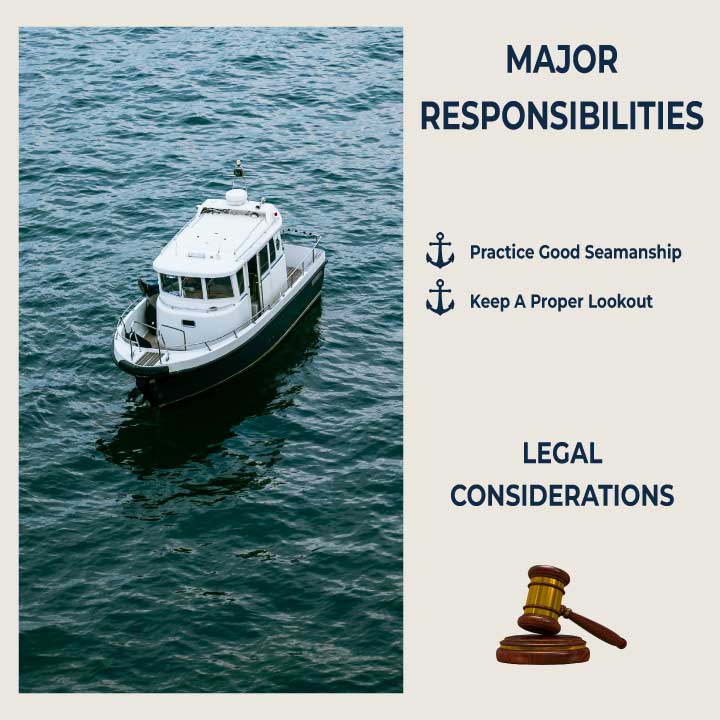
All boat operators have to observe the following three major responsibilities as part of safely piloting their vessels.
Practice good seamanship
Good seamanship is similar to good driving skills, only it’s done on a body of water instead of a road. It starts with observing the right of way of other vessels and taking pains to avoid colliding with another boat or object. Respect has to be given to the way other vessels operate, as some are slow, while others are nimble and capable of speed.
-
Observe the right of way of other vessels as established by the Rules of the Road.
-
Avoid colliding with any other boat or object.
-
Respect the way other vessels operate, including the limited maneuverability of large ships or fishing vessels.
-
Track the current and forecasted weather conditions before and during the voyage.
-
Be familiar with weather signals and changes.
-
Have a sound knowledge of the Rules of the Road (COLREGs).
-
Ensure the vessel is properly equipped and seaworthy for the planned voyage.
-
Operate the vessel with prudence and caution, anticipating potential hazards.
-
Maintain steering and sailing efficiency appropriate to the prevailing circumstances.
-
Assist any person or vessel in distress if it is safe to do so.
Keep a proper lookout
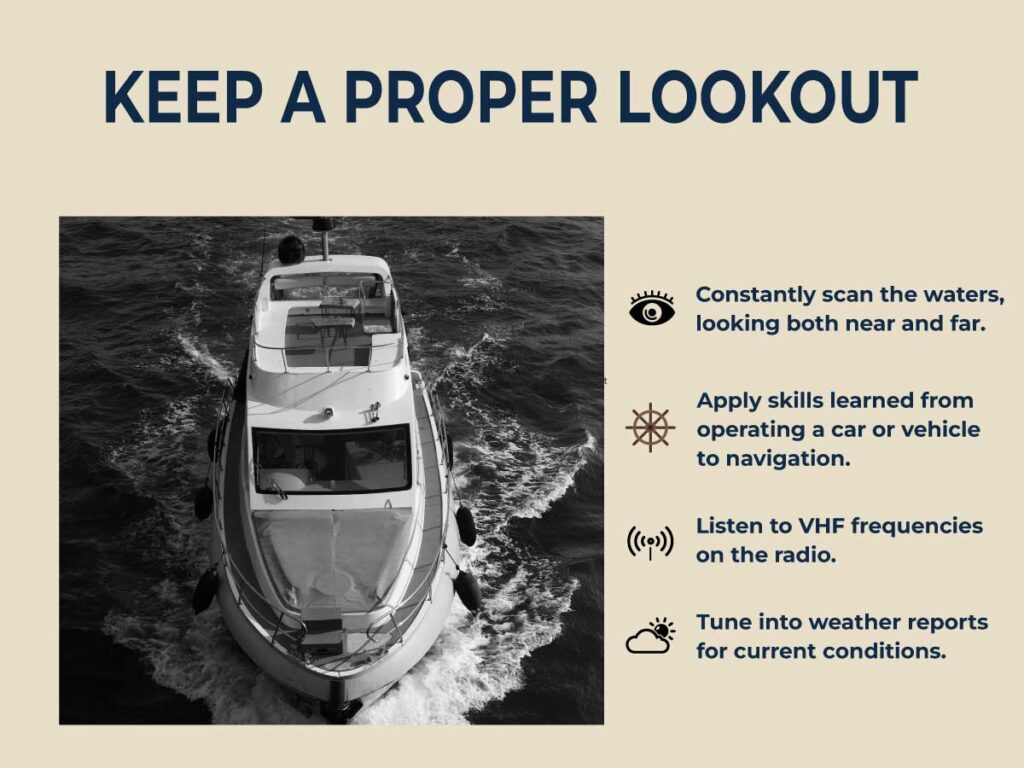
Keeping a proper lookout requires constantly scanning near and far. But how does a vessel operator keep proper lookout when they have so much to monitor? The skills that are learned from driving a car or operating any type of vehicle serves the boat operator well when they’re navigating the waters. Listening to the VHF frequencies on the radio and tuning into the weather reports also helps with keeping a lookout.
-
Constantly scan the waters, looking both near and far.
-
Apply skills learned from operating a car or vehicle to navigation.
-
Listen to VHF frequencies on the radio.
-
Tune into weather reports for current conditions.
-
Use sight and hearing to make a full appraisal of the situation.
-
Be prepared to monitor and address multiple things at once.
Maintain a safe speed
Always pay attention to marked speed limits, and only go fast when it’s safe to do so. Marked speed limits indicate that the area has a shallow bottom, or there are hazards that have to be passed with care. Not only does this keep you and your passengers safe from harm, it also protects the surrounding environment.
To maintain a safe speed of your vehicle, do the following:
-
Adjust speed based on vessel traffic, visibility, and water conditions.
-
Ensure ample time to avoid a collision.
-
Be able to stop the vessel within an appropriate distance.
-
Reduce speed when navigating at night or in restricted visibility (fog, heavy rain).
-
Obey posted speed limits and no-wake zones.
Why should a vessel operator keep a proper lookout?
Motoring on the water is a lot different from driving on a paved road. Optical illusions are more likely to form as light reflects from the surface, which means it’s easy to make a navigational mistake. Boat traffic is unpredictable, and you always have to look out for the other guy in terms of avoiding a collision. Last, but not least, underwater obstacles aren’t always immediately obvious when the water is cloudy. Paying attention helps you avoid them.
How does a vessel operator keep a proper lookout?
As a boat operator, developing the skills to keep a proper lookout is key to staying safe. Here’s a look at the elements to develop the skills for a proper lookout.
Active Observation:
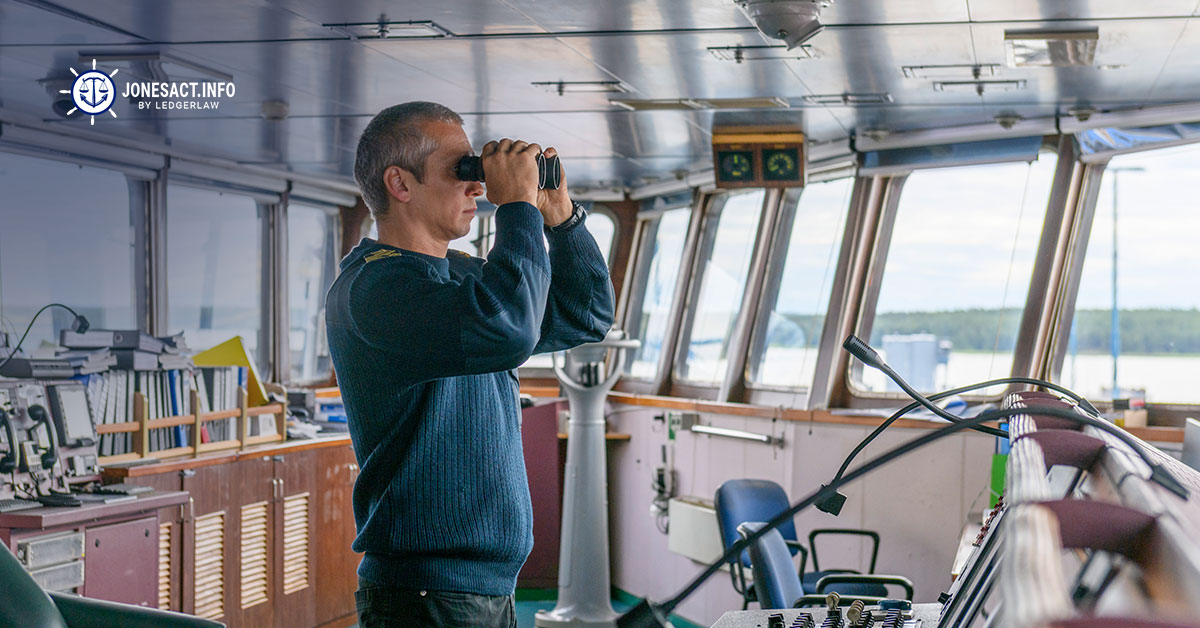
Active observation is the act of engaging in scanning your surroundings and looking ahead to the horizon. You’re looking for other boats in the vicinity, unusual water conditions, and approaching bad weather. For hidden obstacles, you want to look for shadows in the water that indicate there’s something just underneath the surface.
Using Hearing:
Use your hearing to listen to the weather radio and tune into emergency services. Also be sure to listen for changes in the wind as this can indicate a storm is on its way. Your hearing can also tell you if the engine is having trouble or if the propeller is struggling.
Employing Technology:
Navigational equipment is designed to make it easy for you to monitor a variety of conditions and contact authorities in case of an emergency. A NOAA weather radio helps you stay ahead of bad weather, and a GPS unit helps you find your way home. Radar shows you what’s under the water. Carrying a marine radio enables you to get help when you need it through a distress call, and works on long-range very high frequency (VHF) for when you’re a ways away from shore.
Assigning a Dedicated Lookout:
Assign someone to act as backup and keep an eye out for potential dangers that are out of your line of sight. Their job is to alert you and make you aware of trouble so you can avoid it.
Maintaining Unobstructed Views:
It’s easy to let stuff collect on your dashboard and on nearby surfaces. Eliminate the clutter, and place important items in nearby pockets. Make sure that radios and other technology are within reach, but not resting in your line of sight.
Adapting to Conditions:
Ambient light and the weather are always changing, which means you need to compensate for their arrival or disappearance. Being on top of environmental conditions results in making good decisions that keep you and your passengers safe.
Staying Informed:
Staying informed means checking in on current water conditions and staying on top of the weather forecast. Do this before you leave home, when you get to the boat, and during your trip. The staff at the marina are usually informed about recent changes and incidents that can affect your trip, so be sure to talk to them before you head out.
Avoiding Distractions:
Distractions range from someone talking to you as you pilot the boat to letting your attention wander. Keep interactions with others to a minimum, put your phone down, and take a break if you find your mind wandering.
Understanding Right-of-Way Rules:
The right-of-way rules on the water are intended to reduce the risk of a collision. In general, you have to give way to the boat on the right, or starboard side, of your vessel. While these rules aren’t codified into law, it helps to understand and apply them whenever possible. This helps you avoid a collision and makes navigation easier.
Legal Considerations:
A vessel operator has to be mindful of the legal requirements for operating their boat on any body of water. Rule 5 of the International Regulations for Preventing Collisions at Sea (COLREG) apply to all vessel operators, regardless of how large or small the vessel.
The Legal Landscape of Lookout Requirements on Boats:
The vessel operator is always liable for keeping people safe when they’re at the wheel. They’re required to keep a lookout at all times, and become the responsible party in the event of an accident.
Suing for a Boat Accident Caused by the Failure to Keep a Proper Lookout:
A passenger or employee can sue the vessel operator for failure to keep a proper lookout. It constitutes negligence under maritime law.
This also goes for the family of someone who’s lost their life in an accident that’s the result of inattention by the vessel operator. Someone who’s been injured because of a lack of proper lookout can sue to recover damages. Contact a maritime attorney to learn more about the viability of your case and what your options may be. You have rights, and you can enforce them through legal action.
Conclusion:
One moment of inattention can cause a boat to hit another boat or object and injure people onboard. Thus, it’s your duty as a boat operator to follow the standard lookout procedure when operating the vessel. Also, ensure you maintain a safe speed for a peaceful voyage, every time.
And as a passenger, if you face any injury or accident due to the failure of the boat operator’s proper lookout and breach of safety standards, you can sue them for compensation. JonesAct Info will fight for our rights.
FAQ
Frequently Asked Questions

The vessel operator is legally required to maintain a proper lookout. They can assign someone to help them watch for obstacles in the water, but the only person who is required to keep a lookout is the operator.
The primary responsibility of the vessel operator is to is to ensure the safety of everyone by engaging in safe navigation protocols. The secondary responsibilities include running at a safe speed and following navigation rules.
The most critical action a vessel operator needs to take is to maintain a lookout on all the surroundings at all times.
Are Boat Operators Liable for Injuries Caused by Failure to Maintain a Proper Lookout?