Key Takeaways:
-
Record-Breaking Cargo Loss: The ONE Apus lost 1,816 containers overboard. It was one of history’s largest non-collision maritime cargo disasters.
-
Extreme Weather Impact: Severe storms induced parametric rolling. Thus, the massive stack collapsed despite the ship’s modern stabilization technology.
-
Dangerous Goods Released: Among the lost containers, 64 containers were carrying hazardous materials like batteries, fireworks, and liquid ethanol.
-
Massive Financial Damage: Total insurance claims and cargo losses were estimated to exceed $200 million for global shippers.
-
Industry Safety Shift: Immediate reviews focused on enhanced safty protocols and weather routing for ultra-large container ships.
In late 2020 when the ONE Apus accident shocked the maritime world. The titan of the water experienced a catastrophic cargo failure. One Apus was navigating the treacherous waters of the Pacific. Right then, the vessel came across a weather system. The weather condition resulted in one of the largest non-collision cargo losses ever recorded.
The container ship accident of 2020 sparked intense debates about vessel design, the pressure of global supply chains, and the adequacy of modern lashing systems. Also, people argued about new container ship handling guidelines and the increased safety of goods and crews.
An Overview of the ONE Apus Container Ship:
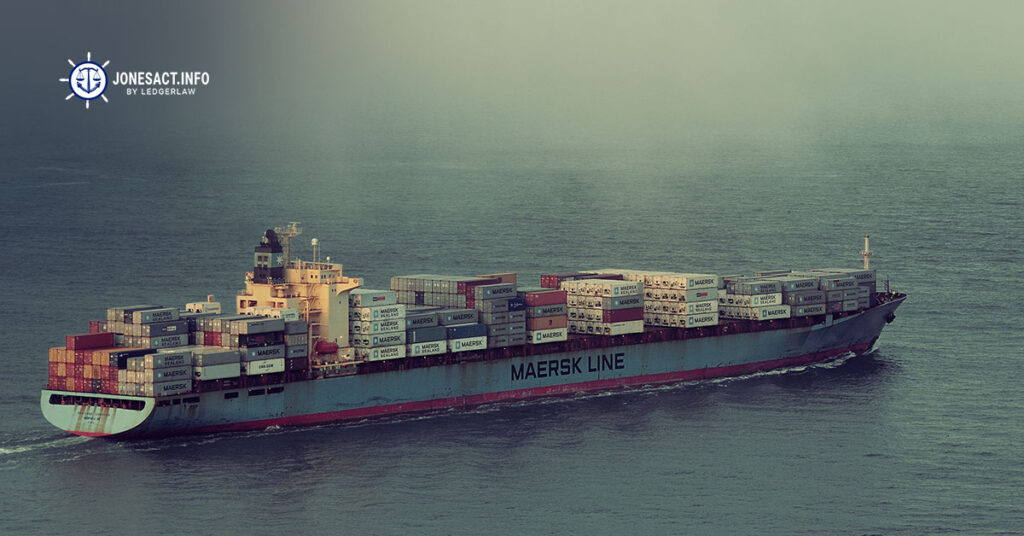
The ONE Apus container ship is an ultra-large container vessel (ULCV). The Ocean Network Express (ONE) owns and operates this ULCV for worldwide goods transportation. Since the first time the ship hit the water, it was always among the topics for its gigantic size.
Built in 2019, the ship is a marvel of modern engineering. It is 364 meters long and has a capacity of 14,000 Twenty-foot Equivalent Units (TEU). The ONE Apus container ship has an efficient and modern design. It maximizes efficiency on the busy trade routes between Asia and North America.
The ONE Apus container ship was a relatively new vessel at the time of the incident. So, it had the latest navigation and stabilization technology. Thus, everyone expected it to transport the goods safely. That’s why the accident came as a shock, and everyone wondered as to why and how the ship suffered such a catastrophic accident. Its modern safety features made the event more questionable.
A Detailed Story – ONE Apus Container Ship Accident 2020:
On November 30, 2020, the ONE Apus was going from Yantian, China, to Long Beach, California. The ship experienced a violent storm cell roughly 1,600 nautical miles northwest of Hawaii. It begun a chaos that eventually led to a historic maritime insurance claim. The insurance claim was followed by a logistical nightmare.
Accident Overview:
Extreme weather conditions were responsible for the one apus container incident. The vessel reportedly encountered gale-force winds. On top of it, large swells on the ocean induced “parametric rolling.” Thus, the ship experienced heavy, rapid rolling in head or following seas as a result of the windy phenomenon.
The parametric rolling caused the ship to tilt uncontrollably. So, the ship titled in extreme angles reportedly up to 30-40 degrees. As a result, the titling forces exceeded the strength of the lashing gear and container corner posts. It started a “domino effect” in the stacks. Hence, the steel towers of the ship crashed into the Pacific Ocean. The remaining deck turned into a ruin with heavy loss of containers, calculated in millions.
Injuries and Losses:
Although The One Apus suffered a serious accident, miraculously, there were no reported injuries. The ship reported that all the crew members were safe. The advanced safety features of the superstructure, such as ample space and built quality, ensured everyone was safe during the storm.
However, the one apus lost a staggering number of containers totaling 1,816 units. 64 containers were carrying “Dangerous Goods,” among the lost containers. Their goods included fireworks, batteries, and liquid ethanol. Thankfully, a quick and comprehensive rescue operation meant the dangerous goods didn’t harm the ocean’s biology.
The financial loss was estimated to exceed $200 million, as per the US Coast Guard report. It impacted thousands of consignees ranging from small e-commerce businesses to major global retailers.
Post-Accident History:
Following the loss, the one apus abandoned its trek to California. It, instead, turned back toward Japan for safety. The ship arrived at the Port of Kobe on December 8, 2020. There, the ship became operational again after a months-long recovery.
Workers had to carefully remove thousands of damaged containers. Among these containers, some were dangling dangerously over the hull. Once the worker removed those containers, the main repair work began. The incident led to a surge in “General Average” declarations. Also, Japan Marine Accident Inquiry (JMAI) began a multi-year investigation. On top of it, the flag state also took a separate investigation. The focus of both investigations was to determine if human error or mechanical failure played a role in the shocking accident.
What to do in the Case of a Container Ship Accident?
The immediate aftermath of a major maritime accident includes legal filings, insurance claims, and logistical redirections. For cargo owners and crew, it could be overwhelming. So, you must know the correct procedural steps of filing a case, insurance claims, and legal steps to protect your rights.
Things to Do After a Container Ship Accident:
Are you a stakeholder or a worker affected by a container ship accident? If so, follow these steps:
-
Notify Insurers Immediately: You must immediately report it to insurer because marine insurance has strict windows for reporting losses.
-
Secure the Bill of Lading: The bill of lading is your primary evidence of the contract and cargo value. So, collect and secure it.
-
Document Everything: Are you a crew member of the ship? If so, keep a personal log of the incident. Also, if you observe any operational or safety violations, keep a record of it.
-
Identify Dangerous Goods: Assess and flag all hazardous materials safely to port authorities. It is essential to prevent secondary explosions, further accidents or environmental leaks.
-
Retain Maritime Counsel: Hire an expert maritime lawyer to navigate the complex admiralty law. It’s crucial to secure your insurance claims.
Contact Jones Act Info Maritime Lawyer:
Seamen and crew members often get injured during a cargo collapse or vessel instability. In such cases, the Jones Act offers full protection of your rights. The federal law allows maritime workers to seek compensation for employer negligence.
However, it could be quite difficult for individual crew members to navigate a claim against a massive shipping line like ONE. Thus, you need an experienced maritime lawyer who understands the maintenance and cure, unseaworthiness, and the specific hazards of ultra-large container ships.
Our maritime lawyers at Jones Act Info will listen to your case, assess the possibilities and prepare the paper to sue the authority for insurance. Contact our skilled admiralty law attorneys fast so we can secure your compensation before the statute of limitations. We ensure maximum compensation from the shipping authority for your tranquil recovery.
Final Words:
The one apus container ship accident was both shocking and a landmark case in maritime history. It once again showed the fragile balance between massive scale and environmental safety. The shipping and cargo transportation industry has implemented stricter weather routing. Yet, the incident shows our vulnerability in the ocean. Thus, you should protect your interests, whether cargo or personal safety, through appropriate legal guidance.
FAQ
Frequently Asked Questions
The One Apus vessel lost 1,816 containers overboard. Moreover, there were thousands more containers damaged on deck. It resulted in a loss of more than $200-millions.
No, there were no fatalities or serious injuries reported among the crew after the One Apus accident. The advanced safety features of the cargo ship ensured everyone remained safe during the storm.
The extreme weather conditions caused "parametric rolling" of the vessel. As a result of the violent rolling, the lashing systems failed under immense physical stress. So, the containers fell off the ship.
The One Apus was heading towards California before the stormy accident. However, it diverted to the Port of Kobe, Japan, after the accident to undergo cargo offloading and structural repairs.
The lost containers included hazardous materials such as fireworks, ethanol, and lithium-ion batteries.
Yes, cargo owners can sue the ship operators for loss, but it is complex. The Carriage of Goods by Sea Act (COGSA) governs the system. It often limits a carrier's liability unless negligence is proven, and so, you must hire a professional and expert lawyer for your claims.