Key Takeaways:
-
Commercial fishing is an inherently dangerous industry: The US commercial fishing industry causes most accidents and fatalities despite implementing high-safety.
-
High rate of fatality: with 50 deaths in 2022 and 23 fatalities per 100,000 full-time employees, commercial fishing is more dangerous than most jobs.
-
Fishermen are at risk of serious accidents: Commercial fishing ships are full of hazards that can result in serious injuries or death, including slips and falls, falling overboard, and getting caught in equipment.
-
The environment of a commercial fishing ship is hazardous: A fisherman has to work in an unpredictable and wet environment that can cause them to sustain an injury.
-
The Jones Act provides employee protection after an injury: Fishermen who are injured while working on a fishing vessel have rights provided by the act, and a commercial fishing accident attorney can help them enforce their rights.
Commercial fishing is an industry that supplies the US with its supply of fresh fish. The work is done in all kinds of water conditions, and puts employees on the deck at risk of injury. In fact, with 50 deaths per year and 23 deaths per 100,000 full-time employees, commercial fishing is one of the riskiest jobs in the US.
The occupation of a commercial fisherman comes with the risk of injury from slippery conditions, injuries from handling equipment, and even death from falling overboard. Read on to learn more about the hazards associated with the job.
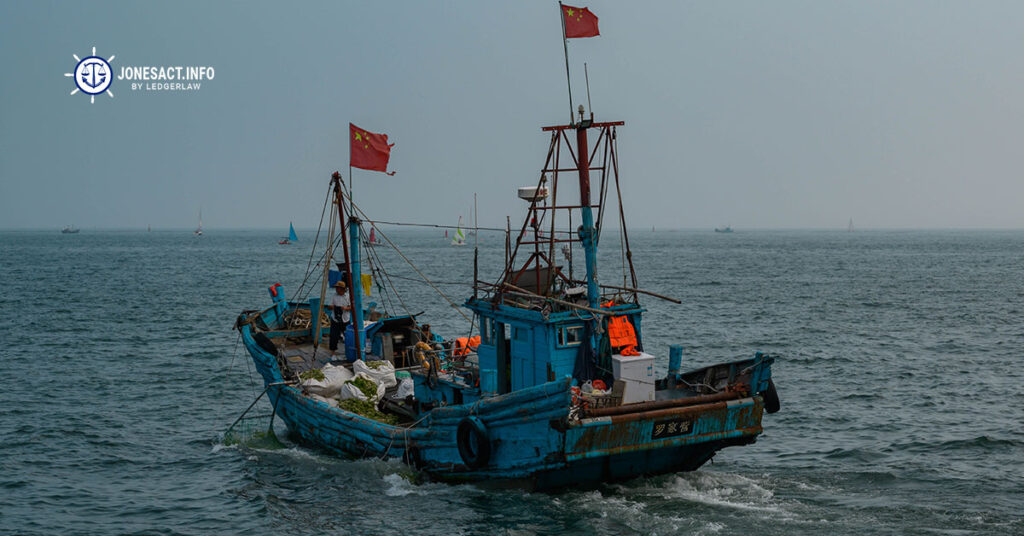
Most Common Types of Commercial Fishing Accidents:
The dangers of commercial fishing frequently result in the following types of accidents. They include.
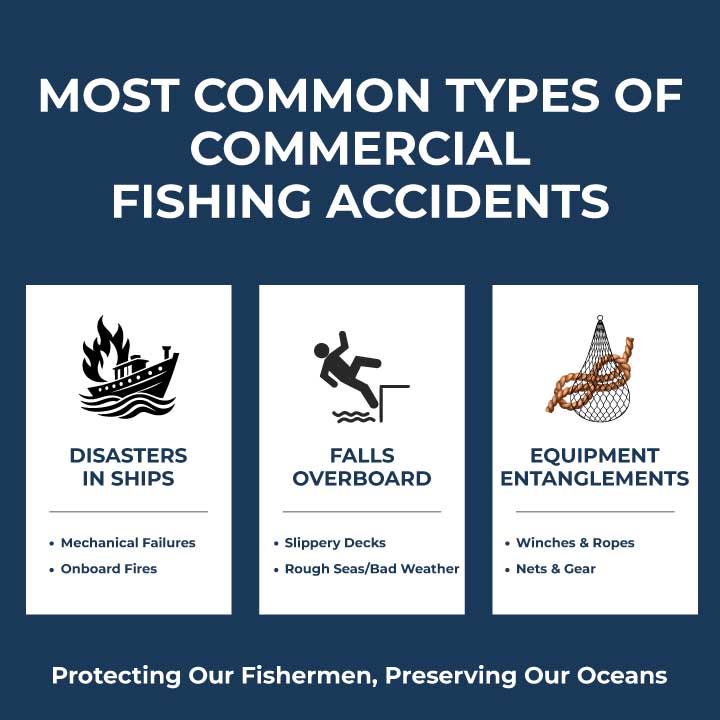
Disasters in Ships:
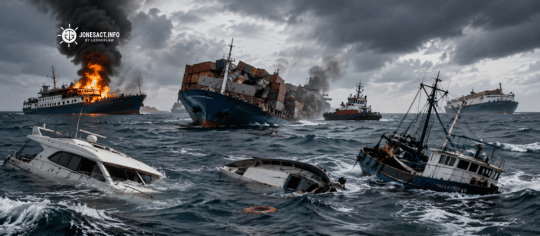
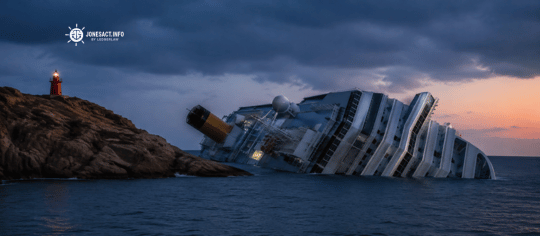
A ship disaster is classified as a ship sinking, colliding with another ship, or capsizing from rough seas. Everyone on board is at risk of a serious injury or drowning when a ship is going through a disastrous incident. Fire is another ship disaster that has serious implications for everyone on board.
Falls Overboard:
Workers on a ship have to deal with a constantly changing environment, slippery decks, and a lack of safety on poorly maintained vessels. Add into consideration the fact that many workers are fatigued during their shifts and the chance of falling overboard skyrockets.
Injuries from Equipment:
The equipment on a fishing vessel is designed to swing and move for various purposes. A worker is at risk of being hit by the boom on a crane or caught in the lines that bring up the nets. If a worker is processing the catch, they can get injuries from the conveyor belt that transports the fish.
Strain Injuries happening repetitively:
This type of injury is known as repetitive strain, and it’s the result of doing the same motion over and over again. A fisherman’s job is to draw in and process fish, actions that require moving the body in the same way each time. Over time, muscles, tendons, and ligaments get fatigued, which results in the development of injuries.
Onboard falls and slips:
The deck of a shipping vessel is always wet with water and slime. This creates a slippery footing that’s difficult to counter. The seaman is at constant risk of a slip and fall that results in a serious injury. The slip and fall can also result in someone going overboard.
Type of Accident | Primary Cause of Accident | Typical Outcome |
Ship disaster | Collision with another ship, ship sinks, or runs aground | Various injuries, fatalities |
Engine room fires | Ship engine catches on fire | Burns, scalds, smoke inhalation |
Deck machinery | Getting caught in lines, equipment malfunctions | Crush injuries, amputations, broken bones |
Rough weather conditions | Causes a seaman to go overboard, or a collision with nearby surfaces | Hypothermia, drowning |
Hazardous materials | Poorly kept chemical containers can release the contents onto the deck | Burns, inhalation injuries |
Falling from docks | Failure to pay attention while traversing the dock | Crush injuries, drowning |
Why is commercial fishing dangerous?
The environment of a commercial fishing boat is one that’s active, risky, and uncertain. The fishermen have to move quickly to bring in the current catch, send it down for processing, then throw the nets or traps back out as fast as possible.
Time is money on a commercial fishing boat, and safety doesn’t always get observed. Commercial fishing laws are designed to keep fishermen safe, but enforcement is difficult. Fishermen face the following issues when out to sea.
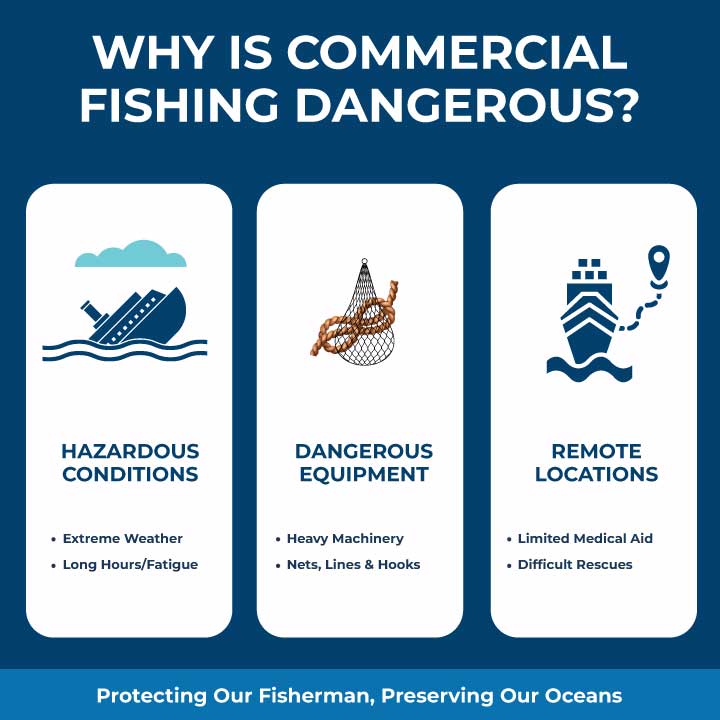
Bad Weather:
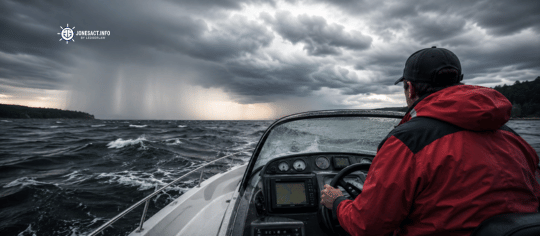
Bad weather is a constant issue with commercial fishing. Sometimes the best time to harvest a particular type of fish is during the winter or stormy seasons. The boats go out on choppy waters, and high seas or waves can show up unexpectedly.
Staying Too Long In Vessel:
Fishermen work long hours each day while using equipment and shifting heavy loads. The longer a seaman stays on the ship means they get more fatigued and sore with each day. This means they’re not at their best when they work for too many hours aboard the ship.
Heavy Equipment and Machines:
Commercial fishing ships use heavy equipment that includes cranes and winches to bring in a catch and transfer loads. Fishermen are at risk of getting a crush injury or suffering an amputation because they’re fatigued and can’t make good decisions when operating or moving around heavy equipment.
Remote Shipping Locations and Delayed Response:
A commercial fishing ship can find itself a long way from a location with modern medical facilities. If a seaman is injured in a remote part of the ocean, they can wait for some time to get proper medical care. They may have to settle for a lower standard of care in a remote community.
Overboard Events in Ship:
An overboard event means a seaman has gone overboard into the water. The reasons why this happens are many, but the risk of death increases greatly due to water conditions. Death is also likely if the ship’s crew can’t spot the person overboard.
Fatigue and Mental Toll:
Fatigue and a loss of mental acuity are a common problem for fishermen. The work on a commercial fishing ship is brutal and often pushes people past their limits. This environment makes it difficult to rest and sleep for recovery. As a result, fishermen have a harder time keeping their wits around them while they work.
How Dangerous is Commercial Fishing?
The dangers of commercial fishing can not be understated. It’s a job that’s full of accidents waiting to happen because of pressure to catch fish and the inherent risks of moving around on a ship at sea. Here’s a look at the statistics for the different types of accidents and injuries that are associated with a commercial fishing vessel.
Statistics of Commercial Fishing Accidents and Injury:
Injury and Death Statistics | Amount of Employees Injured Annually |
Annual deaths | 50 (2022) |
Rate of fatalities | 23 per 100,000 full-time employees (2023) |
Rate of non-fatalities | 4.2 per 100 full-time employees (2023) |
Cause of death | Slips, trips, falls, violent acts, contact incidents, and exposure to harmful substances |
Regional percentage — Alaska | 0 fatalities (2022) |
US Commercial Fishing Injuries and Fatalities:
The annual fatality toll is estimated to be about 43 deaths per 100,000 a year for fishermen on a commercial fishing vessel. Thousands of fishermen are injured on an annual basis, but the actual numbers aren’t known due to underreporting.
Regional Dangers for Fishermen:
Each fishing region carries different dangers that increase the potential for injury to a fisherman. The East Coast and Alaska are two areas of high-risk due to weather that’s unpredictable and the severity of storms. Alaska has the additional risk of frigid water temperatures. The Gulf of Mexico is another region with a high fatality rate for fishermen due to the annual storm season.
Injuries Due To Chemical Exposure:
Commercial fishing ships carry hazardous chemicals to support the ship while it’s out to sea. These chemicals are prone to spillage, which releases the chemicals onto the deck and into the air. Nearby fishermen can sustain chemical burns on their skin and lungs as a result.
Safety Standards and Challenges to Implement Them:
The commercial fishing industry is governed by OSHA, and the U.S. Coast Guard has the authority to enforce safety laws on fishing vessels. However, the nature of the fishing industry makes enforcement of safety laws more difficult. Ships are often away from shore for long periods of time, and a safety violation isn’t always found in a timely manner.
Commercial Fishing Laws And Accident Attorney:
The fishermen aboard a commercial fishing vessel are covered by a set of laws known as the Jones Act. This act gives fishermen the same workers’ rights that they would have if they were working a job on dry land. The act also recognizes that there are serious commercial fishing issues that mean employers often ignore the law in favor of profit.
If you’ve been injured while working on a commercial fishing vessel, contact a commercial fishing accident attorney for help. Maritime laws are different than dry land laws, and making a claim for compensation can be more difficult. Getting help from a maritime lawyer improves the odds of you getting a reasonable settlement for your injuries.
Conclusion:
A fishing vessel is a hazardous environment that poses a lot of risk for fishermen. They face factors such as unexpected storms, slippery conditions on deck, and heavy equipment, all of which can cause serious injury or death. Fishermen need to stay alert at all times to avoid getting hurt, but it’s not always possible for various reasons. Contact a commercial fishing accident attorney for help with recovering from injuries you sustained while working on a commercial fishing boat.
FAQ
Frequently Asked Questions

Commercial fishing is one of the most dangerous jobs in America with a fatality rate that's 28 times higher than average for most jobs.
Commercial fishing ships often regularly engage in overfishing, something that decimates fish populations.
The current state of commercial fishing is bad for the environment because ships use techniques that damage underwater habitats and leave behind trash that pollutes the water.