Key Takeaways:
-
On July 19, 2018, a duck boat sank on Table Rock Lake near Branson, Missouri, killing 17 people-including nine members of one Indiana family-making it one of the deadliest boating accidents in U.S. history.
-
Lawsuits alleged negligence, wrongful death, and defective duck boat design, raising complex maritime law and state law jurisdiction issues.
-
A federal judge ruled the 1851 Shipowner's Limitation of Liability Act inapplicable because Table Rock Lake is not a navigable waterway under admiralty law.
-
Criminal charges against three men-captain Kenneth Scott McKee and two supervisors-were eventually dismissed, but civil accountability continued through confidential settlement agreements.
-
Victims of similar boat accidents may pursue compensation under state personal injury law and federal maritime law with help from experienced counsel.
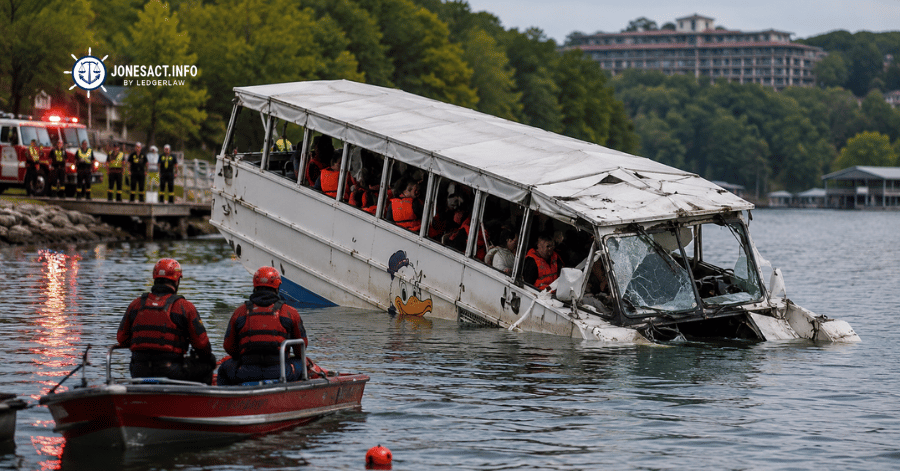
On the evening of July 19, 2018, the Branson duck boat accident lawsuit grew out of the sinking of Stretch Duck 07 on Table Rock Lake in Missouri, where 17 people died and victims’ families brought wrongful death and negligence claims against the boat operator and manufacturers. Stretch Duck 07—a World War II–style amphibious vehicle operated by Ride the Ducks Branson—entered the lake with 31 passengers and crew aboard. Within minutes, a severe thunderstorm with wind gusts reaching 65 to 70 mph turned the lake into a deadly trap. The boat sank roughly 250 feet from shore, and 17 people drowned after the vessel was swamped and sank in 15–20 feet of water. Passengers were not wearing life jackets, the boat’s canopy and side curtains trapped passengers inside, and duck boat operators had ignored a severe thunderstorm warning from the national weather service.
What followed was years of litigation, investigation, and calls for justice, including claims of negligence, defective design, and failures to follow basic safety protocols, with many cases later settling confidentially after federal court rulings. For families affected by the Branson tragedy, victims of similar boat accidents, and lawyers evaluating maritime or wrongful death claims, this article explains what happened, how the Branson duck boat accident lawsuit process unfolded, how maritime and state law shaped the cases, what settlements and investigations revealed, and what legal options may still matter when pursuing compensation after a serious boating accident.
Branson Duck Boat Accident Lawsuit Explained:
What Happened on Table Rock Lake on July 19, 2018:
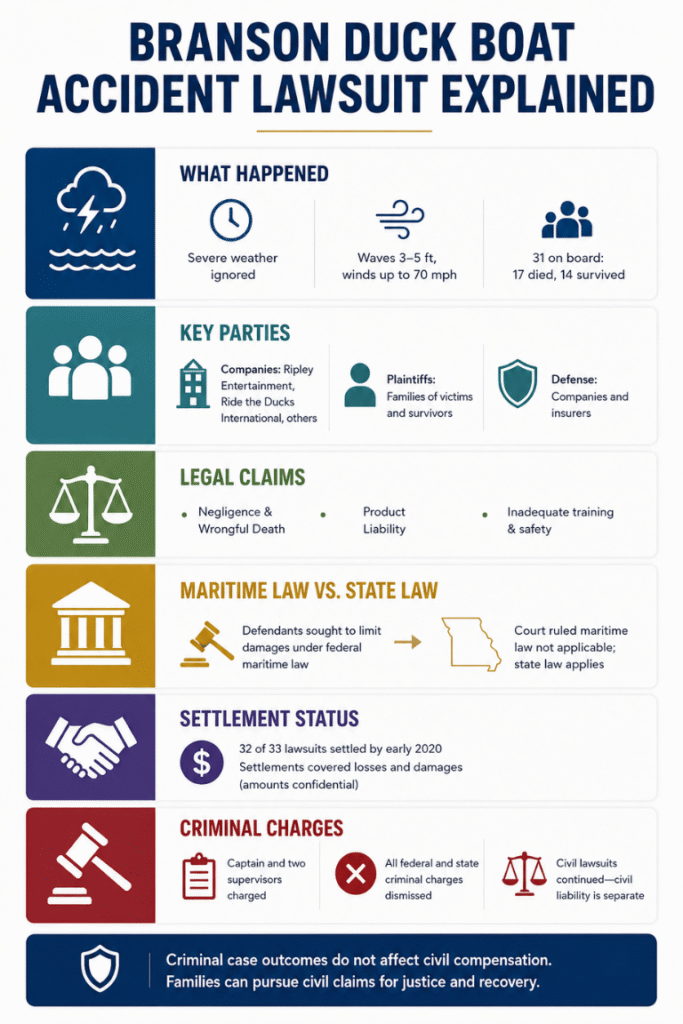
The national weather service reports indicated severe weather approaching Branson that afternoon. Despite this, Ride the Ducks Branson reversed its normal tour order, putting the water portion of the ride first to “beat the storm.” At approximately 6:55 p.m., Stretch Duck 07 launched onto the lake. Within minutes, waves reached 3–5 feet and winds reached 65 miles per hour-with gusts up to 70 mph. Water poured through a non-weather tight bow air intake hatch faster than bilge pumps could handle. The duck boat lost power and sank. Of the 31 people on board, 17 died-including children-and 14 survived, many with serious injuries. Nine family members from a single Indiana family perished together, along with other victims from multiple states.
Key Parties Involved in the Duck Boat Lawsuits:
Plaintiffs named several defendants: Ripley Entertainment (owner of Ducks Branson), Ride the Ducks International (designer and manufacturer), Amphibious Vehicle Manufacturing, and the local operating company. Some lawsuits also named the captain and employees who made weather and safety decisions. Notable plaintiffs included families of the lives lost and survivors like Tia Coleman, who lost her husband and three children. Defense attorneys represented the corporate entities while insurers joined settlement discussions. Herschend Family Entertainment was also referenced in early reporting, though Ripley Entertainment was the primary corporate defendant.
Major Legal Claims: Negligence and Wrongful Death:
Lawsuits alleged negligence for failure to heed national weather service warnings, reckless route changes, and continuing the tour in dangerous conditions. Wrongful death claims sought compensation for lost income, companionship, and funeral expenses on behalf of family members. Product liability theories targeted the duck boat designer for defective hull design, inadequate bilge systems, and a fixed canopy that prevented escape. Complaints also cited negligent training, inadequate emergency procedures, and failure to require life jackets.
Maritime Law vs. State Law: The Shipowner’s Limitation of Liability Act:
Ripley and related companies filed in federal court under the 1851 Shipowner’s Limitation of Liability Act, seeking to cap total damages at the sunken vessel’s post-accident value-effectively zero. Plaintiffs argued the accident occurred on an inland lake in Missouri and should be governed by state wrongful death law. Federal judge Douglas Harpool in the Western District of Missouri ruled the liability act inapplicable because Table Rock Lake is not a navigable waterway under admiralty law. This ruling ran parallel to individual civil lawsuits and significantly influenced settlement negotiations.
Settlement Status and the “Final” Branson Duck Boat Lawsuit:
A federal lawsuit seeking $100 million in damages was filed on July 29, 2018, on behalf of two members of the Coleman family, the Associated Press reported. A confidential settlement was reached in March 2019 for an Indiana family. According to the Associated Press, the company has settled 31 lawsuits. Settlements provided compensation for funeral expenses, medical bills, lost income, and non-economic damages, though exact money amounts remained confidential. As reported by the springfield news leader and other outlets, the litigation record continues to shape duck boat safety debates.
Criminal Charges and Their Relationship to Civil Lawsuits:
A federal grand jury indicted captain Kenneth Scott McKee and two shore-based supervisors-Curtis Lanham and Charles Baltzell-on charges including seaman’s manslaughter. Federal charges were later challenged on jurisdictional grounds. In December 2020, all criminal charges against three employees were dismissed. Missouri state prosecutors, including a stone county judge, later brought 63 counts of involuntary manslaughter in July 2021, but those charges were also dismissed for insufficient probable cause. Critically, dismissal of criminal charges did not prevent civil wrongful death cases from moving forward. Criminal responsibility (punishment) is separate from civil liability (compensation), and families can succeed in certain situations even without criminal convictions.
Background: History and Risks of Duck Boats:
Duck Boats and Prior Fatal Incidents:
Duck boats originated as WWII DUKW amphibious vehicles later converted for tourism. Since 1999, 42 people have died in duck boat accidents, including the 1999 Miss Majestic sinking in Arkansas that killed 13. The national transportation safety board raised concerns about duck boat safety in 2002 and had urged specific safety upgrades for years. The Branson accident occurred despite decades of warnings about similar safety issues.
Known Design Hazards: Canopies, Flotation, and Escape:
Investigations highlighted design flaws in the duck boat. The NTSB warned about duck boat canopies trapping passengers since 1999 and recommended removing canopies after prior incidents. Duck boats’ design makes them vulnerable to rapid swamping due to low reserve buoyancy and poor compartmentalization. Life jackets, while critical, can become entanglement hazards under a low canopy, complicating escape during a fast-moving boat accident.
Life Jackets and Passenger Safety Practices:
Passengers on Stretch Duck 07 were advised not to wear life jackets on the duck boat. While life jackets were on board, the captain told passengers they would not be necessary. Coast guard rules require life jackets be available but not always worn, leaving usage to operator judgment-a gap lawsuits argued was negligent given the storm warnings and enclosed canopy.
Investigation and Regulatory Aftermath:
NTSB and Coast Guard Investigations:
The national transportation safety board’s final report confirmed that continued operation after severe weather warnings, flooding through a non-weathertight hatch, and lack of reserve buoyancy were the probable causes. The investigation coordinated with the coast guard and Missouri State Highway Patrol, reviewing inspection records and compliance history.
Timeline of the Branson Duck Boat Litigation:
Date | Event |
July 19, 2018 | Duck boat sank on Table Rock Lake; 17 lives lost |
July 29, 2018 | Federal lawsuit filed |
Late 2018 | Limitation of liability act action filed; federal indictments issued |
March 2019 | Confidential settlement reached for Indiana family |
December 2019 | Federal judge rules limitation act inapplicable |
April 2020 | NTSB issues final report |
December 2020 | Federal criminal charges dismissed |
July 2021 | State criminal charges filed (63 counts) |
April 2022 | State criminal charges dismissed |
By 2023 | 31 civil lawsuits settled, according to the Associated Press |
Changes in Duck Boat Operations After the Accident:
Ride the Ducks Branson permanently closed after the sinking. Widespread calls for stricter safety regulations for duck boats followed the accident. Other cities temporarily halted duck boat tours and re-evaluated weather policies. A new company, Branson Duck Tours, opened in 2022 using custom-built vessels rather than WWII-era ducks. The coast guard began pursuing rule changes on canopies, reserve buoyancy, and emergency egress.
Timeline of the Branson Duck Boat Accident and Lawsuits:
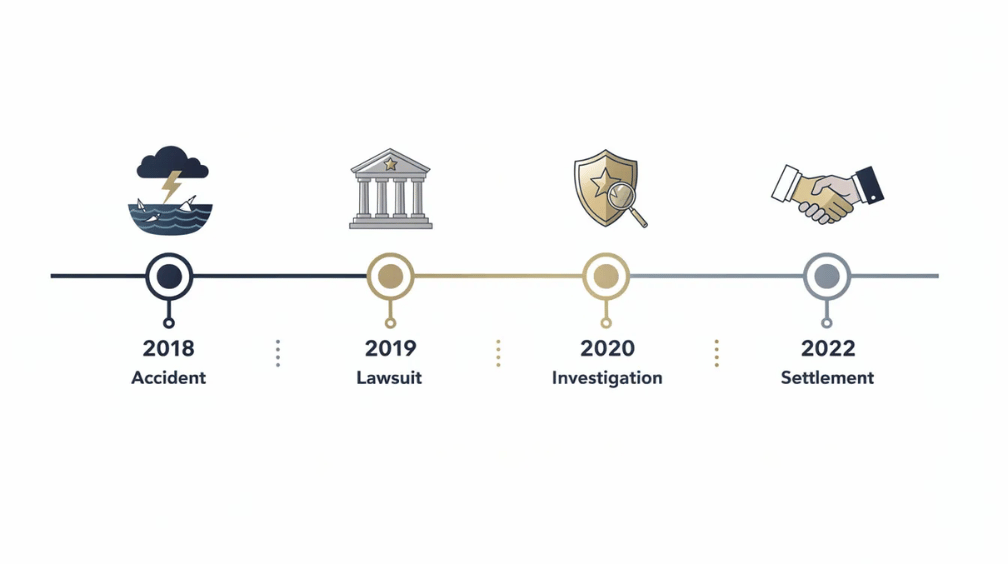
We visually summarizes major dates from July 19, 2018 through the last reported settlement, helping readers quickly grasp the progression of the Branson duck boat accident litigation.
Key Legal Issues in Duck Boat Accident Lawsuits:
Negligence: Weather Decisions and Safety Protocols:
Operators allegedly ignored national weather service warnings that severe thunderstorms were imminent. The decision to reverse the tour order and put passengers on the water first to “beat the storm” formed the core negligence allegation. Plaintiffs argued operators breached their duty of care by failing to abort the tour or order passengers to don life jackets once waves started swamping the vessel.
Product Liability and Design Defect Claims:
Lawsuits alleged the duck boat’s hull, bilge pumps, and canopy design made the vessel unreasonably dangerous. Ride the Ducks International and related entities failed to implement NTSB safety recommendations from the 1999 Miss Majestic tragedy. “Failure to warn” claims addressed known hazards including rapid sinking and entrapment risks.
Wrongful Death and Survival Actions for Family Members:
Surviving families pursued wrongful death claims for losses including financial support, companionship, and funeral expenses. Survival actions sought damages the deceased could have claimed, including pre-death pain and suffering. The emotional impact was particularly devastating where nine family members from one household died in the same accident. Expert economic analysis and psychological evidence played key roles in valuing these claims for injured survivors and families of the deceased.
Attempts to Limit Liability Under Maritime Law:
The 1851 Shipowner’s Limitation of Liability Act lets vessel owners try to limit total liability to the post-accident value of the vessel. In this case, that would have reduced recoveries to zero because Stretch Duck 07 was destroyed. Plaintiffs argued owners had “privity or knowledge” of the hazards, defeating the right to limit liability.
Evidence Used to Support Plaintiffs’ Cases:
Key evidence included weather radar and NWS bulletins, onboard video, eyewitness testimony, company policies, and prior NTSB reports criticizing duck boat safety. Expert witnesses in naval architecture, meteorology, and marine safety reconstructed the sequence of events. William Strecker and other investigators contributed to building the evidentiary record. This strong evidence of prior warnings and design knowledge strengthened plaintiffs’ leverage during settlement talks.
Compensation Potential in Duck Boat and Boat Accident Claims:
Typical damages include medical costs, rehabilitation, funeral expenses, lost wages, and non-economic damages like grief and loss of consortium. In egregious cases, plaintiffs may seek punitive damages for willful or reckless disregard. Recoverable amounts vary by victims’ ages, dependents, income history, and local damage caps. Each case requires individualized legal evaluation, especially when maritime law may apply.
How JonesAct.info Helps Duck Boat and Boat Accident Victims:
JonesAct.info’s Focus on Maritime and Boating Injuries:
JonesAct.info is a resource dedicated to maritime law, including injuries and wrongful deaths on lakes, rivers, and coastal waters. The site connects victims with attorneys who understand the Jones Act, general maritime law, and applicable state statutes for complex cases involving passenger vessels and duck boats.
Why Maritime Experience Matters in Duck Boat Accident Lawsuits:
Inland boat accidents can trigger overlapping federal maritime and state laws. Seasoned maritime counsel can analyze whether the Jones Act, Death on the High Seas Act, or state wrongful death laws govern a specific claim. Understanding limitation of liability actions, forum selection, and statutes of limitations unique to maritime law is essential for every person pursuing a claim.
Contact JonesAct.info for Duck Boat Accident Lawsuit Related Issues:
If you or a loved one has been injured or lost family members in a duck boat accident or any serious boating incident, contact JonesAct.info for a free, confidential case evaluation. Consultations carry no obligation. The firm works on a contingency fee: the fee is a percentage of what is recovered. If there is no recovery, you owe no attorney fee, but you may still be responsible for court costs and case expenses. Act promptly-evidence in boat accident cases, including weather data, maintenance logs, and witness memories, can fade or be lost over time.
Who Can Be Liable in a Duck Boat Accident?
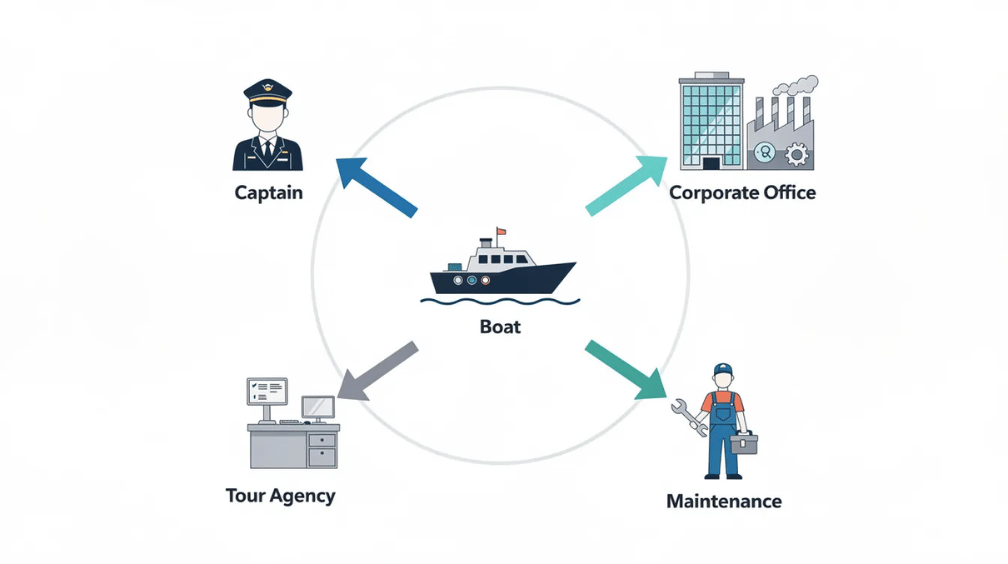
This maps potential defendants in a duck boat or boat accident case, showing how responsibility can extend beyond the captain to corporate entities, manufacturers, and maintenance contractors.
Conclusion:
The Branson duck boat accident on Table Rock Lake exposed longstanding safety problems with duck boats and led to extensive wrongful death litigation and settlements. Families alleged negligence, defective design, and failure to require life jackets-and most cases resolved through confidential agreements after complex maritime law disputes. If you or someone you know has been affected by any duck boat or boat accident, learn from the Branson lawsuits and seek legal guidance early to protect your rights. JonesAct.info can help connect victims and family members with attorneys who understand both maritime law and serious boating accident litigation.
Branson Duck Boat Accident FAQs (Detailed Case Questions):
This section answers concise questions frequently asked about the Branson duck boat accident lawsuits. Answers are general and not a substitute for personalized legal advice.
FAQ
Frequently Asked Questions

On July 19, 2018, a Ride the Ducks Branson duck boat called Stretch Duck 07 sank on Table Rock Lake during a severe thunderstorm, killing 17 of the 31 people on board.
Yes, dozens of wrongful death and personal injury lawsuits were filed in state and federal court by survivors and family members of those who died.
Plaintiffs sued Ripley Entertainment, Ride the Ducks Branson, Ride the Ducks International, Amphibious Vehicle Manufacturing, and in some cases individual employees involved in safety decisions.
Claims included negligence, wrongful death, and product liability alleging unsafe operation in a storm, failure to require life jackets, and defective duck boat design.
Seventeen passengers died, including nine members of one Indiana family and several children.
Yes, the boat owners filed a federal action under the 1851 Shipowner's Limitation of Liability Act, seeking to cap damages at the destroyed vessel's value, which plaintiffs opposed and a federal judge ultimately rejected.
Plaintiffs relied on weather warnings, onboard video, survivor testimony, company procedures, and prior NTSB reports criticizing duck boat safety and design.
Yes, plaintiffs alleged defects in the duck boat's canopy, flotation, and drainage systems that caused the vessel to sink quickly and trap passengers.
A sudden severe thunderstorm with high winds and large waves swamped the duck boat, and lawsuits claimed operators should have canceled or aborted the water portion of the tour.
The NTSB, U.S. Coast Guard, and Missouri authorities investigated the sinking, focusing on weather decisions, vessel condition, and regulatory oversight.
According to the Associated Press, the company has settled 31 lawsuits. Terms were kept largely confidential.
The accident prompted closer regulatory scrutiny, calls for removing canopies and adding flotation, and some operators shutting down or modifying duck boat tours.
Life jackets were on board but passengers were not wearing them, and survivors reported being told they would not need to put them on.
Lawsuits began shortly after July 2018, limitation actions and criminal charges followed within months, and most civil cases were resolved through settlements by 2020–2022.
Depending on where the accident occurs and the type of vessel, victims may have rights under federal maritime law, state negligence statutes, or both, and should consult a maritime-savvy attorney.
Because duck boat and boating accidents often involve maritime law and complex jurisdiction questions, it is wise to work with an attorney experienced in maritime and boating cases who can navigate overlapping federal and state claims.
Deadlines vary by state and by whether maritime law applies, but victims often have only one to three years, so seek legal advice as soon as possible after any hour of delay.
Do not sign anything or accept an early offer before consulting an attorney who can assess whether the amount truly covers your losses, including long-term medical costs and non-economic damages.
Foreign tourists injured on U.S. waters can usually pursue claims in U.S. courts, though exact options depend on contract terms and where the accident occurred.
Seek medical care, preserve photos and contact information for witnesses, report the incident to authorities, and contact a qualified maritime or boating accident lawyer promptly.