Key Takeaways:
-
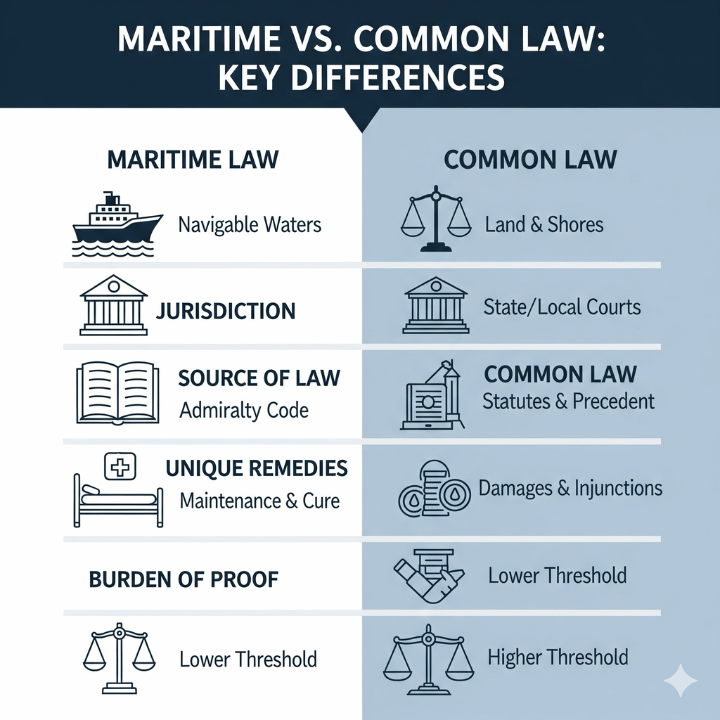
Distinct Jurisdictions: Maritime law is a federal jurisdiction, while common law primarily falls under state jurisdiction.
-
Different Sources of Law: Maritime law is heavily influenced by federal statutes and international treaties. Common law is based on judicial precedent and state statutes.
-
Unique Remedies: Maritime law provides unique remedies, such as "maintenance and cure," for seamen, which are not available under common law.
-
Location is Key: The location of an incident (on or near navigable water vs. on land) is the primary factor in determining which law applies.
-
Different Standards of Proof: The burden of proof for negligence can be lower in maritime cases (e.g., the Jones Act) than in common law.
-
Specialized Legal Help: Due to their complexities, cases in either field require an attorney with specific expertise in that area of law.
-
Intersecting Laws: In certain situations, such as accidents on docks or piers, both maritime and common law principles may apply, complicating jurisdictional issues.
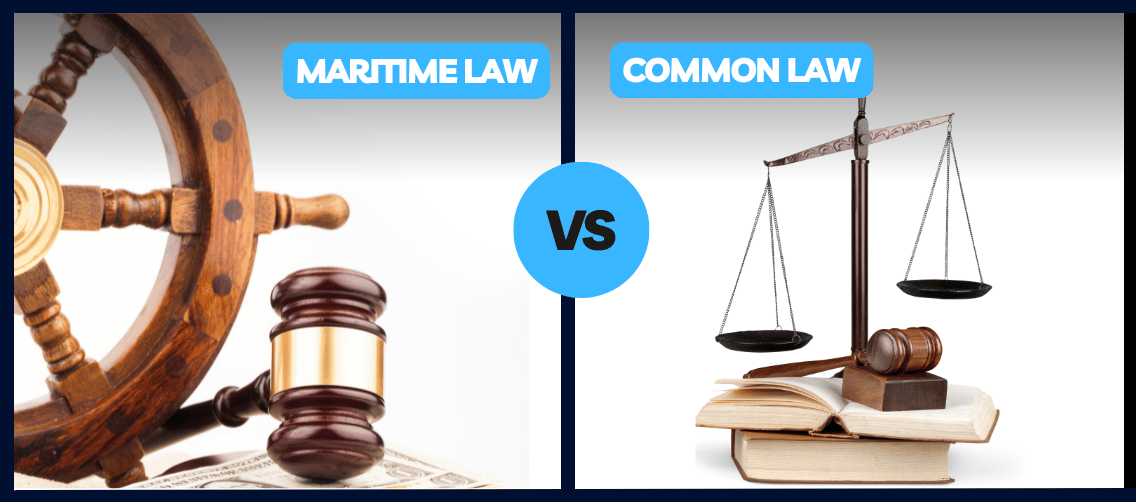
Maritime law and common law have different case scenarios to regulate behavior and resolve conflicts. However, they operate on fundamentally different principles, with unique origins, jurisdictions, and applications. So, what is the difference between maritime law and common law?
As a person, you must know the maritime law vs. common law differences. It will ensure your rights at sea and on land, serving different cases. Initially, the common law was a product of hundreds of years of judicial precedent. The U.S. Constitution governs maritime law under Article III, Section 2.
What Is Maritime Law?
Maritime law, also known as admiralty law, governs all matters related to the sea, including navigation, shipping, commerce, and marine accidents. Its primary purpose is to regulate commerce and navigation on the high seas and navigable waterways. Article III, Section 2, Clause 1 of the U.S. Constitution governs maritime law.
So, it ensures the safety and rights of all individuals and entities involved in maritime activities.
Key Scenarios and Provisions:
-
Injured seamen's rights (Jones Act).
-
Longshore and harbor worker claims (LHWCA).
-
Vessel collisions and salvage operations.
-
Cargo disputes and liabilities.
-
Seaworthiness of vessels.
-
International treaties and conventions.
-
Longshore and harbor worker claims (LHWCA).
-
Vessel ownership and liens.
What Is Common Law?
Common law is a legal system based on judicial precedent. The past court decisions are a primary source of common law. The principle of stare decisis is central to this system. The courts must follow precedents established by higher courts in the common law system.
It governs versatile legal matters, including torts, contracts, and property law, covering most legal issues that arise on land.

-
Car accidents and personal injuries.
-
Slip and fall claims.
-
Medical malpractice.
-
Breach of contract disputes.
-
Property and real estate law.
-
Land-based civil disputes.
-
Criminal law proceedings.
Origins and Basis of Maritime Law and Common Law:
The roots of the common law and maritime law date back to the pre-medieval period. Both laws have different historical periods and cultural contexts. Their distinct origins have shaped their core principles and applications.
Origins of Maritime Law:
The Phoenicians, Greeks, and Romans all had legal codes governing seafaring trade in early history. The Rhodian Sea Law, dating back to 900 B.C., is one of the earliest known examples of maritime law. In the Middle Ages, the Laws of Oléron and the Consulate of the Sea further developed these principles, codifying rules for shipping, salvage, and crew relations.
In the United States, admiralty and maritime jurisdiction were explicitly granted to federal courts by the U.S. Constitution in Article III, Section 2. It was a deliberate decision to create a uniform body of law for maritime commerce, free from the complexities and variations of state laws.
Origins of Common Law:
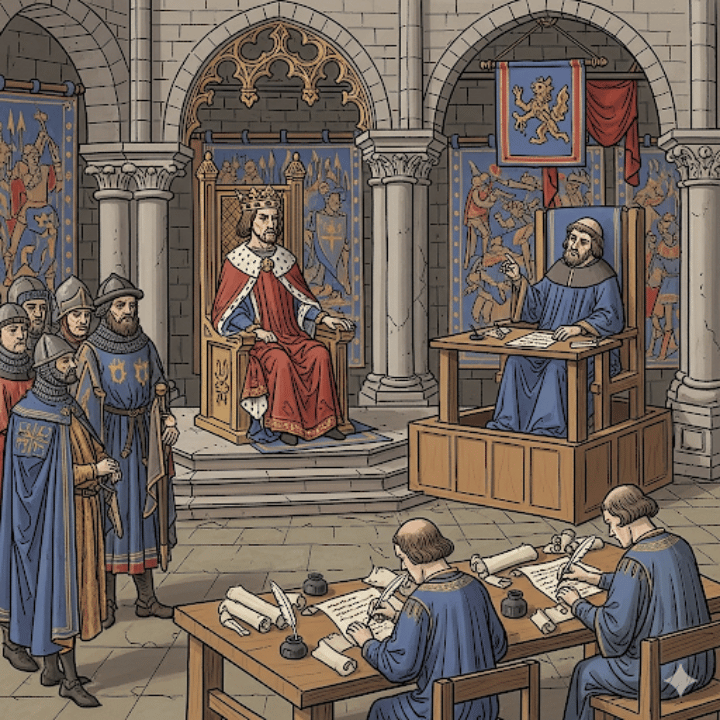
Common law originated in England during the Middle Ages, beginning with the Norman Conquest in 1066. King William the Conqueror’s courts sought to create a uniform, “common” law for the entire kingdom.
It replaced the disparate local customs and laws. It was based on judicial decisions rather than on statutes enacted by a legislative body. Over time, judges began to record their decisions, and these records became a source of law. The principle of stare decisis evolved, creating a system in which past decisions guided future ones, thereby ensuring consistency and predictability.
Core Differences Between Maritime Law and Common Law
The most significant differences between these two legal systems lie in their scope, jurisdiction, and the manner in which they handle cases.
Scope and Jurisdiction:
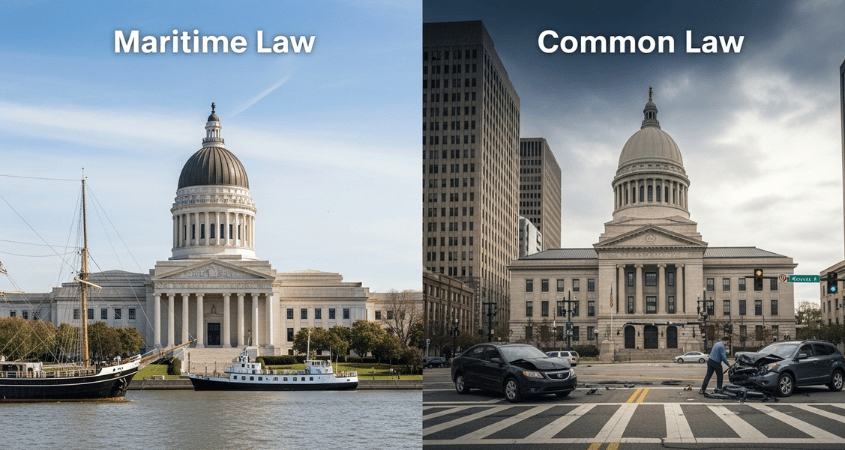
Maritime law applies exclusively to activities on navigable waters. It includes oceans, seas, and interconnected lakes and rivers. Its key claims are:
- Maintenance and Cure: A seaman’s right to receive living expenses and medical care.
- Unseaworthiness: A vessel owner’s strict liability for injuries from an unfit vessel.
- General Average: Proportional sharing of financial loss from a voluntary sacrifice to save the ship.
Common law, in contrast, applies to all other legal matters that occur on land.
How Cases are Handled:
Maritime law is often a blend of federal statutes, international treaties, and judge-made law. Its specific legislation includes the Jones Act, the Longshore and Harbor Workers’ Compensation Act (LHWCA), and the Death on the High Seas Act (DOHSA). The law provides specific rules and remedies for maritime workers and incidents that occur on or near the sea.
Common law cases, however, rely heavily on precedent. When a judge hears a case, they will look to previous similar cases to guide their decision. While statutes exist, past court decisions often shape the interpretation and application of those statutes.
Court Systems and Jurisdictional Differences:
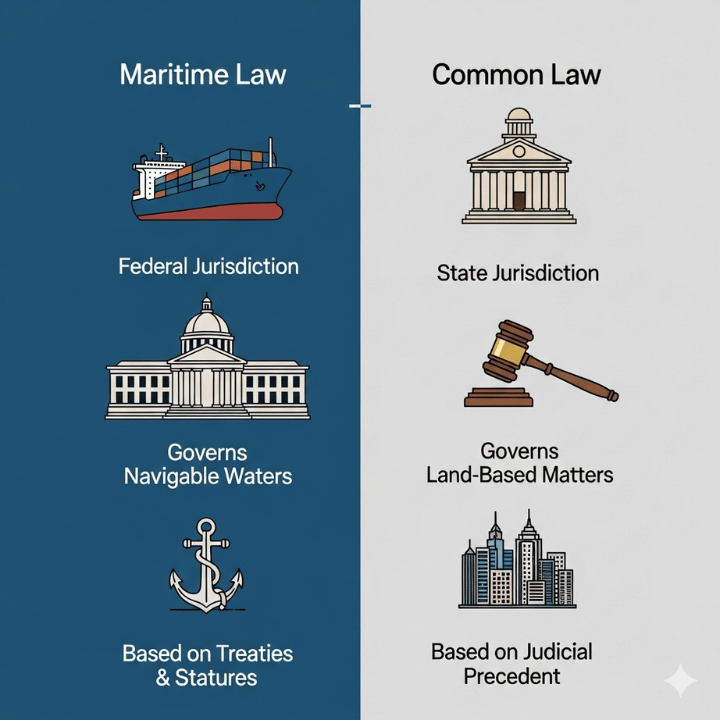
Maritime laws are heard in federal courts. However, common law often follows state proceedings.
Maritime Law Cases in Federal Courts:
Maritime law is a federal jurisdiction in the United States. Therefore, most federal courts handle marine cases. The federal courts have exclusive jurisdiction over admiralty claims. It ensures a consistent application of maritime law across the country.
Common Law Cases in State Courts:
State courts handle the most common types of law cases, including personal injury claims, contract disputes, and property disputes. State laws and precedents govern these cases. So, you will find variations in legal outcomes from state to state for the same common law.

Looking for a personal injury lawyer near you in Newport Beach, California?
We ensure you get the deserved compensation!
Send Us A Message
Application of Statutes vs. Precedent:
Marine law is based on national and international treaties, agreements, and regulations. On the other hand, common law follows the precedents.
Common Law and Precedent:
The principle of stare decisis is the backbone of common law. So, the court must follow the decisions of a higher court in similar cases. This creates a predictable and stable legal system. But it can be slow to adapt to new social and technological changes.
Maritime Law and National/International Treaties:
International treaties and conventions heavily influence maritime law. It includes the International Convention on Salvage or the International Convention for the Safety of Life at Sea (SOLAS). These treaties create a uniform set of rules for the global shipping industry.
Areas of Application of Maritime Law and Common Law:
The types of cases that fall under each legal system are a clear indicator of their distinct purposes.
Types of Cases Typically Handled by Maritime Law:
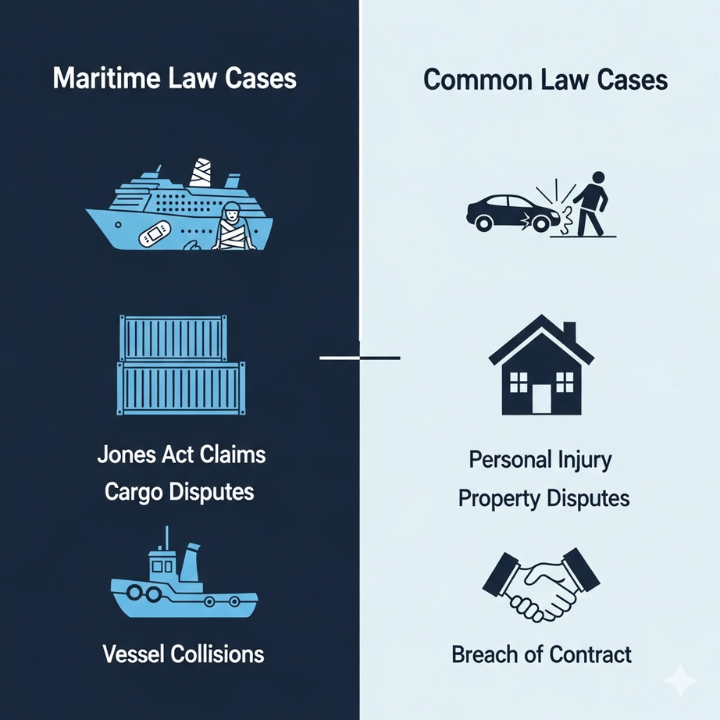
Maritime law mainly offers security and compensation to seafarers. Also, it resolves cargo and salvage claims and disputes.
Injuries and Accidents at Sea:
- The Jones Act: The federal law provides a cause of action for seamen who are injured due to the negligence of their employer or the unseaworthiness of a vessel.
- Longshore and Harbor Workers’ Compensation Act (LHWCA): It provides compensation for longshore workers, harbor workers, and other maritime employees who are injured on or near navigable water.
- Passenger Accidents: Claims for injuries to passengers on cruise ships or other vessels.
Shipping and Vessel Disputes:
- Cargo Disputes: Claims related to lost or damaged cargo.
- Salvage Claims: Disputes over compensation for salvaging a vessel or cargo in distress.
- Collision Cases: Legal actions resulting from vessel collisions.
International Maritime Treaties:
- Limitation of Liability: A shipowner’s right to limit their liability for a maritime accident. The limitations are up to the value of the vessel and its pending freight.
Types of Cases Typically Handled by Common Law:
Common law handles different case scenarios. From personal injury cases to medical malpractice, all fall under the common law category.
Personal Injury and Property Damage:
- Vehicle Accidents: Claims for injuries and property damage from car, truck, 18-wheeler, etc., vehicle accidents on land.
- Slip and Fall: Claims for injuries sustained from falls on someone else’s property.
- Medical Malpractice: Claims against healthcare providers for negligence.
Civil Disputes and Contract Law:
- Breach of Contract: Disputes arising from the failure to fulfill the terms of a contract.
- Property Disputes: Legal actions related to property ownership, boundaries, and use.
Common Law vs. Maritime Law: Damages and Compensation:
The types of damages and compensation available are distinctive between maritime law vs. common law.
Maintenance and Cure in Maritime Law:
Maritime law provides seamen with “maintenance and cure” as compensation. Maintenance covers a seaman’s daily living expenses during their recovery. It covers an injury or illness suffered in the service of the vessel.
The cure covers the cost of medical treatment until the seaman reaches maximum medical improvement. It is a no-fault remedy. So, the seaman is entitled to cure covers, regardless of who was at fault for the injury.
Common Law Damages:
In a common law personal injury case, a plaintiff can seek various types of damages, including:
- Economic Damages: Medical bills, lost wages, and future earning capacity.
- Non-Economic Damages: Pain and suffering, emotional distress, and loss of enjoyment of life.
- Punitive Damages: In cases of egregious conduct, a court may award punitive damages. It primarily punishes the defendant and deters similar behavior. Punitive damage is subject to taxation according to the IRS.
Comparative Compensation Models:
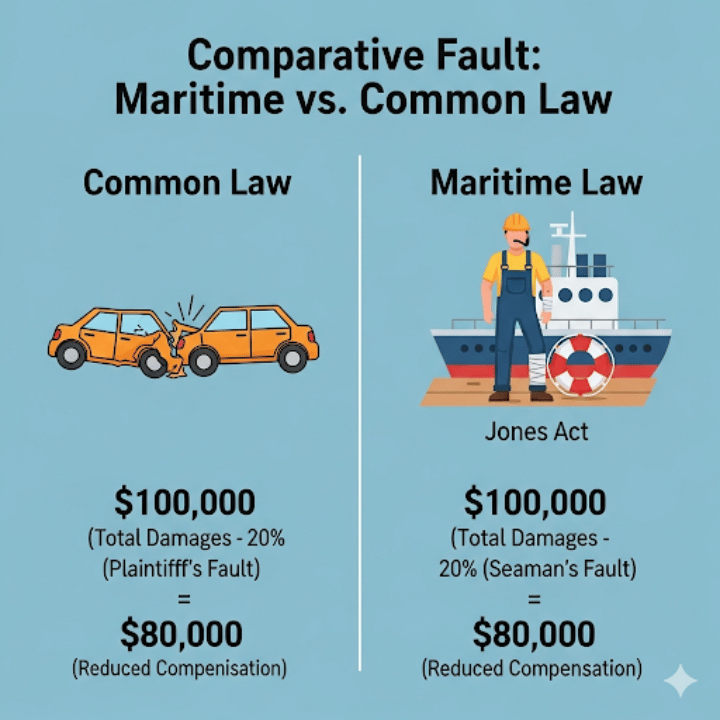
Common law jurisdictions often use a “comparative negligence” model. So, a plaintiff’s damages are reduced according to their percentage of fault. Although maritime law recognizes comparative fault, specific statutes, such as the Jones Act, have their own rules regarding negligence.
Settlements in Maritime vs. Common Law Cases:
Settlements are common in both legal systems, but the factors that influence them differ. In maritime cases, maintenance and cure are applicable. Additionally, the complexities of federal law can necessitate specialized settlement negotiations for maritime law.
Feature | Maritime Law | Common Law |
Jurisdiction | Federal Courts | State Courts (primarily) |
Source of Law | Federal Statutes, International Treaties, Judge-made Law | Judicial Precedent (stare decisis), State Statutes |
Scope | Activities on Navigable Waters | Legal Matters on Land |
Common Cases | Crewmember Injuries, Cargo Disputes, Vessel Collisions | Personal Injury, Contract Disputes, Property Law |
Key Legislation | Jones Act, LHWCA, DOHSA | State Civil Codes, Tort Law |
Unique Remedies | Maintenance and Cure | Punitive Damages, Pain and Suffering |
Jury Trials | Often Non-Jury (Admiralty Jurisdiction) | Common and often a Right |
Basis | Admiralty & Maritime Jurisdiction (U.S. Constitution) | Historical English and American Legal Tradition |
Real-World Examples and Case Scenarios:
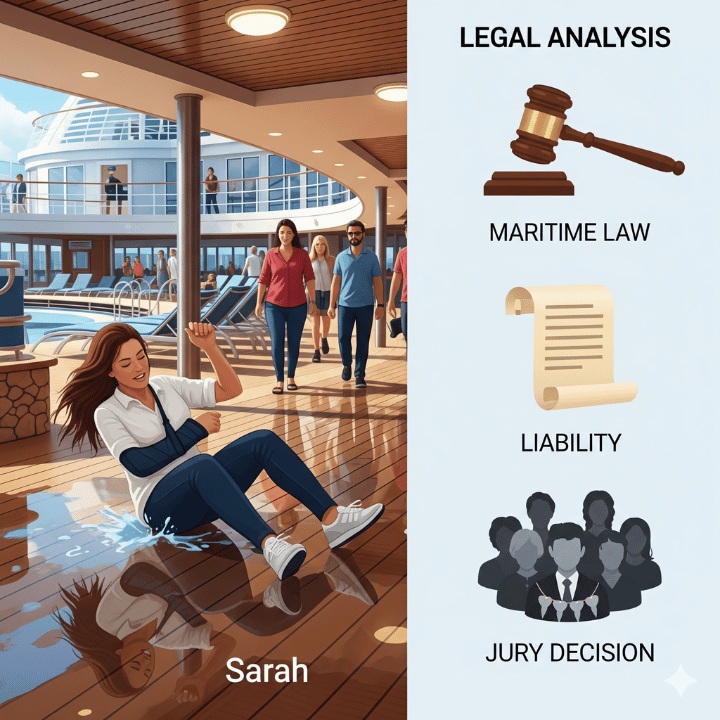
Sarah, a passenger on a cruise ship, was walking in a public hallway near the pool deck. She slipped and fell on a wet spot, resulting in a broken wrist. There were no “wet floor” signs, and the area was a high-traffic zone for people going to and from the pool.
Background:
- Individual: Sarah, a cruise ship passenger.
- Vessel Operator: Ocean Voyage Lines.
- Incident: A slip and fall injury on a cruise ship’s deck.
Details:
- The floor was wet from water tracked in by other passengers.
- The cruise line had not placed any warning signs or mats.
- Sarah was wearing appropriate footwear.
- The area was not recently inspected or cleaned by the crew, despite its proximity to the pool.
Under the Maritime Law Standard:
- Duty of Care: The cruise line has a duty to exercise reasonable care for its passengers. However, the cruise line is not automatically at fault just because an injury occurred.
- Notice of Hazard: To establish negligence, Sarah must prove the cruise line had actual or constructive notice of the dangerous condition. It means they knew the floor was wet (actual notice). Otherwise, the damp condition had existed for a sufficient amount of time to allow for reasonable inspection (constructive notice).
- Proximate Cause: Sarah must demonstrate that the cruise line’s negligence was a proximate cause of her injury. The injury was a result of the company’s failure to act.
- Limitation of Liability: The cruise line’s ticket often contains a forum selection clause and a limitation of liability clause. It restricts where Sarah can file her maritime lawsuit and may limit the types of damages she can claim.
- Comparative Fault: Even if Sarah is found to be partly at fault for her fall, it doesn’t reduce her compensation payout.
Under the Common Law Standard:
- Duty of Care: The court would treat the cruise line as a land-based property owner. They owe a duty of care to keep the premises reasonably safe.
- Breach of Duty: Sarah would have to prove that the cruise line’s failure to place warning signs or clean the floor was a breach of its duty of care. So, their actions were unreasonable under the circumstances.
- Causation: The legal standard for causation is often stricter under common law. It requires a “but-for” test. Sarah must prove that “but for” the cruise line’s negligence, the injury would not have occurred.
- “Open and Obvious” Doctrine: The cruise line could argue that the hazard was “open and obvious”, a common defense in premises liability cases.
- Comparative Negligence: Most states use a system of comparative negligence. If a jury finds Sarah was 20% at fault for her fall, her total damages would be reduced by that same 20%.
How to Seek Legal Help in Maritime vs. Common Law Cases?
Are you a seaman, harbor worker, or an individual? Are you involved in a maritime incident? If so, it is essential to contact an expert maritime law firm.
How Attorneys Specialize in Maritime vs. Common Law?
Expert maritime law attorneys focus on a specific federal body of law. They handle cases involving injuries at sea, cargo disputes, and vessel ownership. So, they often navigate complex federal regulations and international treaties.
In contrast, common law attorneys specialize in various legal areas, such as personal injury, family law, or real estate. They rely on state-specific statutes and judicial precedent to handle the cases.

Emery Brett Ledger
Founder Of Jonesact Info
Emery is committed to bringing remarkable results for his clients. During his 27+ years of professional career, he has ensured favorable results and deserved compensation for the clients.
Over the years, Emery has received the Elite Lawyer Award (2025), an award that only the top 1% attorneys get. His compassion, thoughtful approach and professional excellence has made him the top attorney in California.
Get in Touch With Emery Now
Conclusion:
The differences between maritime law and common law are like day and night. The distinctions lie in their origins, jurisdiction, and application. Maritime law is a specialized, federal body of law governing activities on navigable waters. Many international treaties and unique legal remedies have influenced it.
Common law, on the other hand, is a broad, precedent-based legal system. It governs most legal matters on land and is primarily handled in state courts. You will find variations in court precedents, jurisdictions, and statute of limitations in station-wise for common law.