Key Takeaways:
-
On February 10, 2013, a carnival ship fire in the engine room left the Carnival Triumph powerless and adrift in the gulf of mexico with 3,143 passengers and 1,086 crew members aboard.
-
No one died, but more than 4,200 people endured four days without functioning toilets, air conditioning, or reliable food-earning the trip the nickname poop cruise.
-
The vessel was towed to mobile, Alabama, triggering lawsuits, a thorough investigation by the coast guard and NTSB, and major safety investments by carnival cruise line.
-
Passengers received a full refund and $500 compensation, though many pursued additional legal claims for negligence and emotional distress.
-
The carnival triumph was later repaired for $115 million, renamed carnival sunrise, and returned to service with upgraded safety systems.
-
Passengers and crew members involved in cruise ship fires may have important legal rights under maritime and Jones Act law.
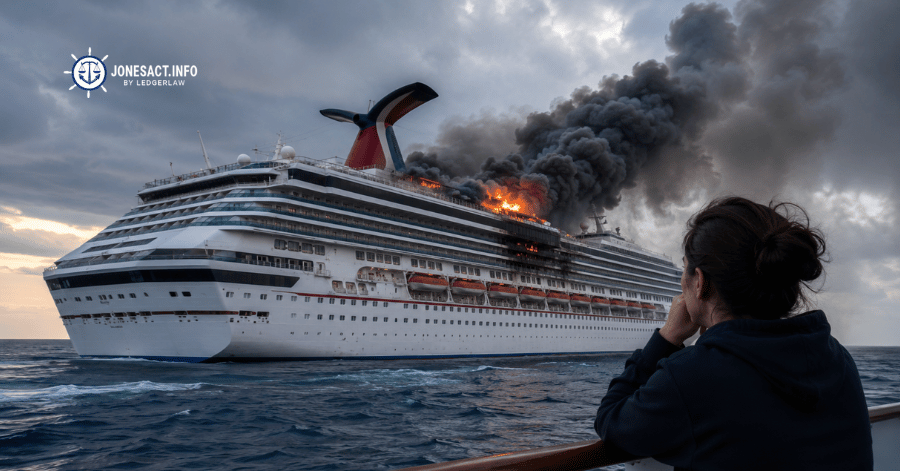
In the middle of the night on February 10, 2013, alarms ripped through the lower decks of the Carnival Triumph. The carnival ship fire readers usually mean was the engine room fire in the Gulf of Mexico that disabled propulsion, caused a complete power loss, and left 3,143 passengers and 1,086 crew adrift for four days without functioning toilets, air conditioning, or reliable food. Passengers jolted awake-some mid-dream about their bachelorette party plans in Cozumel, others resting after a day at sea-scrambled into darkened hallways as smoke poured from the aft engine room. Within hours, the ship that had promised a carefree four-day cruise became an international headline for all the wrong reasons.
The fire knocked out power across the vessel and left thousands stranded in sweltering heat and worsening sanitary conditions. When toilets stopped working and red biohazard bags replaced toilet paper, the media and the public gave the incident a name that stuck: the poop cruise. For affected passengers and crew, maritime injury victims, legal professionals, and anyone trying to understand what happened and what followed, the case remains a defining example of how a cruise emergency turns into a safety, compensation, and accountability fight.
This is the true story of what happened on the Carnival Triumph, drawn from public reports, official investigations, and firsthand accounts. Below, you’ll find the timeline of the disaster, its technical causes, the passenger and crew experience, the rescue and towing effort, the legal aftermath, Carnival’s safety reforms, and what became of the ship after repair and renaming-so readers can see not just how the crisis unfolded, but why it still matters for cruise safety, passenger rights, and maritime law.
Carnival Ship Fire: What Happened, What Caused It, and How the Cruise Disaster Unfolded:
This section answers the core questions-what, where, when, and why-about the fire on carnival cruise ship Triumph as early and directly as possible.
Timeline of the Carnival Triumph Fire in the Gulf of Mexico:
The Carnival Triumph departed Galveston, Texas on February 7, 2013, en route to Cozumel, Mexico for a four-day cruise. The trip went smoothly through Day 3. Passengers explored the port in Cozumel and returned to the ship for the sailing home.
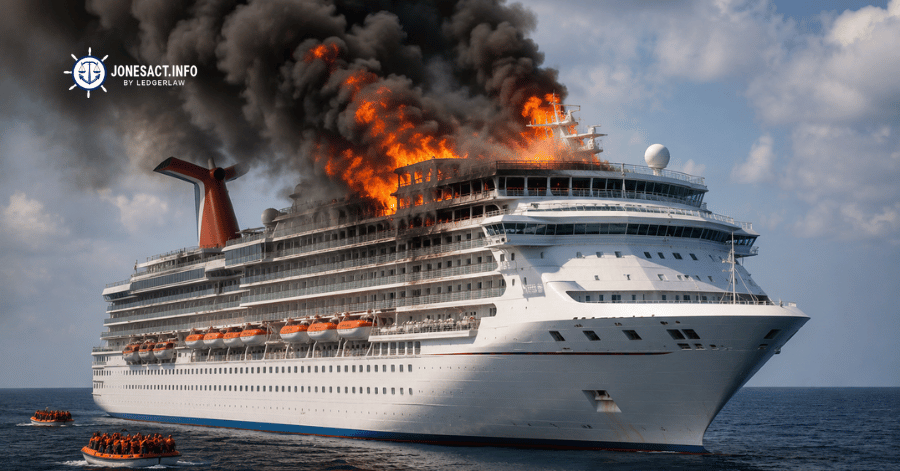
On Day 4-February 10, 2013-a fire broke out in the engine room at 5:30 a.m. Smoke was spotted in the aft engine room, and alarms sounded across multiple decks. The ship carried 3,143 passengers and 1,086 crew members, nearly all of whom were asleep when it happened.
The fire was extinguished by an automatic system (the Hi-Fog® water-mist suppression), supplemented by manual CO₂ flooding. But by the time flames were out, the damage was done. Key power cables were destroyed, and the vessel lost propulsion and most electrical services.
From that moment, the Triumph began drifting in the gulf of Mexico. Over the next four days, tugs and the coast guard coordinated a slow tow. The ship finally reached Mobile, Alabama on February 14, 2013-Valentine’s Day, after tugboats towed it the rest of the way.
Root Cause: What Caused the Fire on Carnival Triumph?
Coast Guard and NTSB investigators traced the carnival cruise engine fire to a single point of failure: a flexible pipe in a fuel oil return line forward of the No. 6 diesel generator. The pipe failed under approximately 10 bar of pressure at roughly 122°C, spraying atomized fuel upward.
That fuel mist contacted a hot surface-specifically, the turbocharger on the No. 6 engine-and ignited instantly. The resulting flash fire severely damaged generators No. 5 and No. 6 and, critically, burned through overhead cabling that connected the forward engine room generators to the ship’s main power distribution.
This design vulnerability meant that a single fire in one engine room could-and did-knock out power from generators in both the forward and aft compartments. While the fire suppression systems worked to contain the blaze, the fire was extinguished by an automatic system that itself lost effectiveness when the main switchboard lost power. The CO₂ flooding system’s remote station failed, requiring manual valve operation.
How the Engine Room Fire Knocked Out Power Across the Ship?
Cruise ships depend on centralized engine rooms and overhead power cables to run everything passengers take for granted: propulsion, air conditioning, lighting, kitchens, and sewage systems. On the Triumph, power was lost after the fire damaged main power cables running between engine rooms.
With both forward and aft generator rooms unable to deliver power, the ship switched to a limited emergency generator and battery backups. That meant dim lighting in hallways, no elevators on most decks, and heavily restricted electrical use everywhere.
The cascade was swift. Refrigeration failed, spoiling perishable food. Ventilation stopped, turning interior cabins into hot boxes. Water pumps shut down, leaving toilets without the vacuum pressure needed to flush. This incident revealed a critical gap: the lack of improved redundancy and fire-hardened cabling that would later become standard across the entire cruise industry.
Immediate Response by the Crew and Firefighting Efforts:
When alarms activated, fire doors closed automatically and emergency announcements directed guests to muster stations. Crew members undergo regular emergency and firefighting training to prepare for incidents like this, and that preparation showed. Trained fire teams in breathing apparatus entered the engine room to fight the blaze alongside the fixed suppression systems.
Passengers complete a mandatory safety briefing to understand emergency procedures aboard, which helped reduce panic during the initial chaos. Ship officers broadcast that the fire was “under control” within a few hours-technically true, but the emerging reality was that power was gone and normal ship functions could not be restored.
Despite the frightening conditions, no passengers or crew members were killed by the fire itself. That fact later played a significant role in investigations and litigation, as claims centered on conditions after the fire rather than the fire on carnival itself.
From Engine Room Fire to the “Poop Cruise” Crisis:
The transition from technical failure to humanitarian crisis happened fast. Within hours of the fire, toilets across most decks became unusable. The air conditioning shut down. Cabin temperatures climbed. Passengers dragged mattresses to open deck areas to sleep under improvised tents made from bed sheets.
The carnival triumph incident became defined not by the fire, but by what came after. Passengers were instructed to use red biohazard bags for waste, and some later described the conditions more bluntly as “shit” everywhere or simply a “shit” situation. Sewage backed up through drains. The smell of fuel and waste mixed with gulf humidity in every corridor.
Media outlets and the public labeled it the poop cruise-a name that stuck because it captured, in two words, the surreal indignity of the experience. For passengers and carnival crew members, this was less about an abstract engine room fire and more about four very long days of heat, odor, and uncertainty at sea.
Life Aboard the Carnival Triumph During the “Poop Cruise”:
Imagine the smell first: sewage, fuel oil, and sweat in a dark bathroom with no ventilation. Then the heat-gulf air trapped in windowless cabins without air conditioning. Then the waiting. This is what life felt like aboard a powerless ship drifting with no cell service and no timeline for rescue.
Sanitation Meltdown: Toilets, Showers, and Biohazard Bags:
Once pumps and vacuum systems failed, functioning toilets became a rarity. Passengers were told to urinate in showers and use red biohazard bags for solid waste. The bags had to be stored and carried to designated disposal points-a humiliating routine repeated for days.
Drainage systems became overwhelmed. Showers and bathroom floors backed up with foul water. Passengers reported sewage running down walls and floors on lower decks. The psychological impact was severe: embarrassment, anger, and the kind of dark humor that led to viral references and, eventually, the Trainwreck: Poop Cruise documentary.
Heat, Hunger, and Makeshift Camps on Deck:
Without air conditioning, interior cabins were unbearable. Passengers slept on deck due to heat from non-working AC, dragging blankets and mattresses to create makeshift camps under open sky. Family members clustered together, forming informal communities of support on exposed decks each night.
Food service collapsed from hot buffets to simple sandwiches and long lines. Perishable food was thrown away. Drinking water was rationed. Caring for children, elderly passengers, and people with disabilities in these conditions stretched everyone thin.
Communication Blackout and Media Spotlight:
Power loss killed onboard WiFi, phone charging, and satellite links. Passengers struggled to contact family members on shore. Some caught fleeting signals when another ship-the carnival legend, among others-rendezvoused to deliver supplies.
As a few cellphone photos and emails reached relatives, media coverage escalated from “minor propulsion issue” to full crisis. CNN ran wall-to-wall coverage, amplifying the phrase poop cruise and making the carnival ship fire globally infamous.
Crew Members Under Pressure:
The crew-many from dozens of countries –lived in hot, cramped crew quarters with the same failing plumbing. They worked marathon shifts distributing food, water, and supplies while managing crowds and cleaning with almost no resources.
Passengers later praised specific crew members for superhuman effort, patience, and humor during the ordeal. The crew were both victims and first responders, and their contribution became a teachable moment in how crisis response depends on human resilience as much as technical systems.
Rescue, Towing, and Arrival in Mobile, Alabama:
After days adrift, tugboats finally secured tow lines to the stranded vessel. The original plan to return to Mexico was abandoned when currents pushed the powerless boat farther north and east.
Why the Rescue Took So Long:
Wind and currents complicated initial rescue plans from Progreso, Mexico. Carnival and the coast guard coordinated with tug operators and ultimately decided to tow the ship to mobile, Alabama. The distance, the ship’s size, weather conditions, and limited towing speed meant the trip took several agonizing days.
Sewage Flooding and Last Days at Sea:
As tugs aligned and towed in rough conditions, listing caused sewage to slosh and overflow inside the vessel. Hallways on lower decks had waste on floors and what passengers described as “walls of smell.” Medical teams monitored for illness and dehydration, working to prevent a full-scale health emergency. The last thing anyone wanted was an outbreak on top of everything else.
Disembarkation in Mobile and Immediate Aftermath:
The Carnival Triumph reached dock in Mobile, Alabama on February 14. Passengers crowded rails, cheering at the sight of land. Disembarkation included medical checks, and buses and flights were arranged to get guests home.
Carnival’s immediate response included ticket refunds, reimbursement of travel expenses, and credit toward future cruises. Reactions were mixed-gratitude toward crew, anger at the company, and lingering emotional impact that shaped public perception of the entire carnival corporation fleet for years.
Legal Fallout: Lawsuits, Liability, and Passenger Rights:
When the crisis ended at sea, the legal and regulatory battles on land began.
Investigations and Findings of Fault:
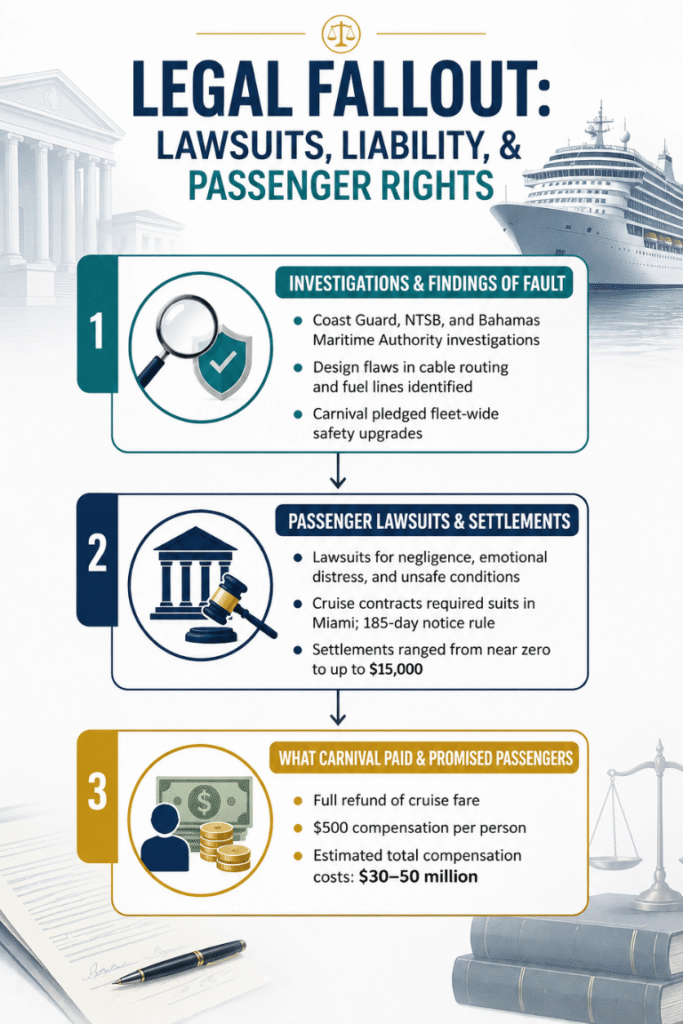
The U.S. Coast Guard, NTSB, and Bahamas Maritime Authority conducted a thorough investigation into maintenance practices, fuel line design, and fire-risk management. Investigators identified the design vulnerability in cable routing and fuel line construction as contributing factors. Carnival acknowledged the need for improvements and pledged fleet-wide upgrades.
Passenger Lawsuits and Settlements:
Lawsuits were filed in U.S. federal courts within days, including claims for negligence, emotional distress, and unsafe conditions. Cruise ticket contracts and maritime law limited certain claims-forum selection clauses required suits in Miami, and passengers had just 185 days to file written notice. Carnival changed its terms and conditions after the incident to address some of these issues.
Many cases settled confidentially. One documented award gave 27 passengers a combined $118,500-roughly $4,400 each. Individual settlements ranged from near zero to $15,000 depending on documentation.
What Carnival Paid and Promised Passengers:
Passengers received a full refund and $500 compensation per person, plus reimbursement of travel expenses and credit toward a future cruise. Some passengers and attorneys argued these amounts were inadequate given the conditions and length of the ordeal. Exact total compensation costs-including confidential settlements-have been estimated at $30–50 million.
Safety Reforms After the Carnival Triumph Fire:
One lasting legacy of the poop cruise was a wave of technical and policy changes that led carnival cruise line to overhaul its approach to comprehensive fire prevention and emergency preparedness.
Carnival’s Fleet-Wide Safety Upgrades:
Carnival invested over $500 million in fleet safety improvements after the triumph disaster. The company conducted fleet-wide upgrades of engine rooms, including redesigned fuel lines, fire-hardened cable routing, and improved redundancy in power distribution. Carnival implemented enhanced fire prevention and suppression systems across the entire fleet, and corrected design vulnerabilities revealed by the incident.
Additional backup generators were installed, sewage and hotel service systems received greater redundancy, and maintenance and inspection schedules were tightened-particularly for flexible fuel pipes.
New Emergency Procedures and Passenger Protections:
Carnival’s safety protocols now include Health, Environmental, Safety and Security (HESS) measures, along with enhanced management systems for crisis response. Muster drills, communication protocols, and contingency plans for loss of power were all revised. These changes reflect industry leadership that the entire cruise industry adopted in various forms after 2013, establishing more robust safety standards for cruise ships worldwide.
Recent incidents underscore ongoing vigilance. The Carnival Freedom experienced fires primarily in its exhaust funnel area, and recent fire incidents on Carnival cruise ships involved lightning strikes. Carnival Freedom had a notable incident on March 23, 2024, resulting in significant damage-the onboard fire team extinguished the flames during the March 2024 fire incident, and two Carnival Freedom cruises were canceled after the March 2024 fire for emergency repairs.
What Happened to the Carnival Triumph After the Fire?
The ship did not go to the scrapyard. After passengers went home and the media moved on, the Carnival Triumph entered a long process of repair, refit, and reinvention.
Repairs, Overhaul, and $115 Million Refit:
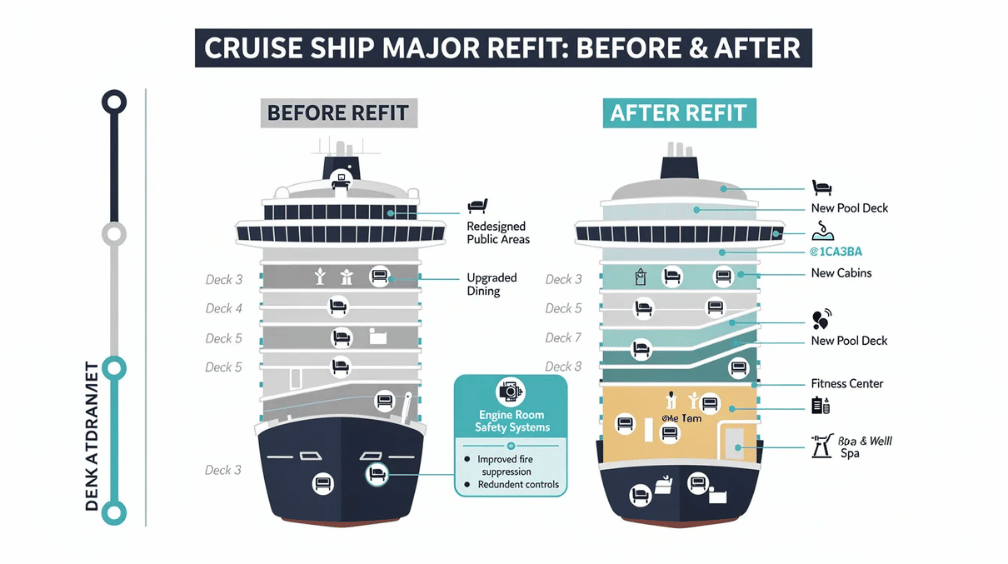
Carnival spent $115 million to rehabilitate the Triumph. The ship was cleaned, decontaminated, and towed to a shipyard for months of structural repairs, new safety systems, cabin upgrades, and fresh public spaces. Fire-damaged areas in the engine room and lower decks were rebuilt with improved fire protection and redundancy.
Rebirth as the Carnival Sunrise:
In May 2019, the former Carnival Triumph was rechristened as the Carnival Sunrise after an extensive refit-effectively rebranding the vessel for a new chapter. The ship now sails Caribbean and Bahamas itineraries as part of Carnival’s modern fleet. Some guests still remember the story of the poop cruise, while many newer passengers know it only as Carnival Sunrise. The vigorous health of its booking numbers suggests the rebrand worked.
Is Cruising on the Former Triumph Safe Today?
According to public information, the ship underwent thorough repairs, inspections, and upgrades before re-entering service. Safety culture, technology, and oversight across the entire cruise industry have improved significantly since 2013. No vessel is risk-free, but the carnival triumph incident drove changes-from cable hardening to enhanced emergency power-that make modern cruise ships substantially safer than they were a decade ago.
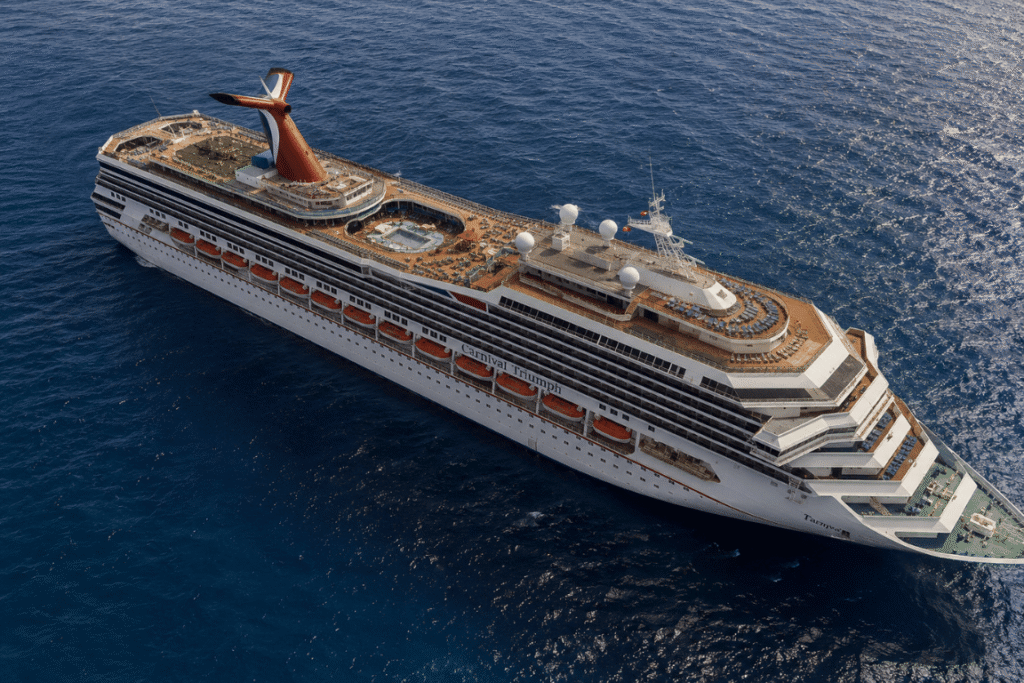
Carnival Triumph to Carnival Sunrise – A Before-and-After Look:
Contact JonesAct.info After a Cruise Ship Fire or Maritime Injury:
Passengers and crew injured or traumatized in incidents like the Carnival Triumph engine room fire may have important legal rights under maritime and Jones Act law. The Jones Act and general maritime law provide protections for seamen, crew members, and in some cases passengers against negligence at sea-including maintenance and cure, lost wages, and damages.
Incidents involving engine room fires, loss of power, unsafe sanitation, or delayed medical care raise complex questions of liability and compensation. If you or a family member experienced a cruise ship disaster, offshore injury, or gulf of mexico maritime accident, contact JonesAct.info to discuss your situation with an experienced maritime attorney. Early legal guidance can help preserve evidence, meet filing deadlines, and evaluate settlement offers from cruise lines or insurers.
FAQ
Frequently Asked Questions

The engine room fire broke out early on the morning of February 10, 2013, while the ship was returning from Cozumel, Mexico.
A fuel-oil return line leaked atomized fuel onto a hot turbocharger surface in the aft engine room, igniting a flash fire.
The fire occurred in the aft engine room while the ship was sailing in the Gulf of Mexico, roughly 150 miles off the Yucatán Peninsula.
About 3,143 passengers and 1,086 crew members were on board at the time of the incident.
No one was killed, and no serious injuries were reported in official statements following the fire.
After it lost power, tugboats towed the ship the rest of the way to Mobile, Alabama, where it arrived on February 14, 2013.
The nickname came from widespread toilet failures and overflowing sewage that forced passengers to use red biohazard bags as makeshift bathrooms.
Vacuum and sewage pump systems failed when power was lost, making toilets across most decks completely unusable for four days.
Investigations identified design and maintenance concerns related to fuel lines, but publicly available records do not show Carnival admitting prior knowledge of an imminent hose failure.
Investigators attributed the fire to fuel line failure and design vulnerabilities; Carnival acknowledged the need for improvements and committed to fleet-wide safety upgrades.
Yes, multiple lawsuits were filed in federal court within days, including class action claims for negligence and emotional distress.
Each passenger received a full refund plus $500 cash, travel expense reimbursement, and future cruise credit; some pursued additional legal settlements.
After $115 million in repairs and upgrades, the ship was relaunched with modernized safety systems and refreshed guest spaces.
Yes-the Triumph was renamed Carnival Sunrise in 2019 and currently operates Caribbean and Bahamas itineraries.
Carnival invested over $500 million in fleet-wide upgrades including fire-hardened cabling, redesigned fuel systems, backup generators, and enhanced emergency protocols across the entire fleet.