Key Takeaways
-
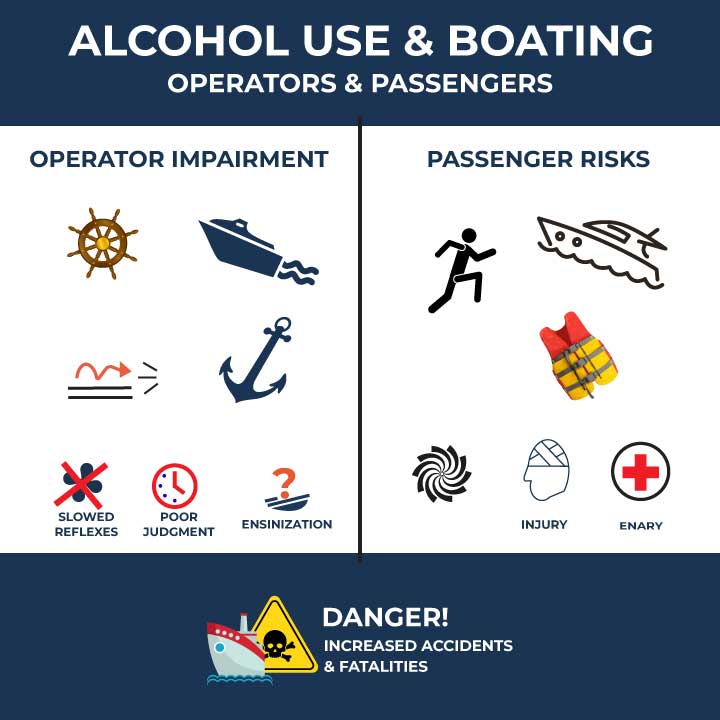
Consuming alcohol causes the body to slow down: Drinking and boating don't go together well because reaction times are much slower, and it's harder to adjust to the movement of a boat.
-
Operating a boat while under the influence is more difficult: Alcohol impairs your executive functions and makes it harder to handle a boat, much less compensate for current conditions.
-
Drinking while boating can come with serious consequences: Being drunk as a passenger on a boat can result in bad judgments. It could lead to a slip and fall, or going overboard. Also, it slow downs your decision making time and physical reaction which can worsen the condition.
-
Blood Alcohol Limit: In most US states, the blood alcohol content (BAC) limit is 0.08 or greater, unless you are a minor. If the boat crew and captain cross the BAC limit, they are held liable for boating under influence. So, boating under intoxication (BUI) charge could cancel your license.
-
Seek legal help after a boating accident: In the event you've been injured because someone on the boat was drunk, you have rights. A maritime lawyer can help enforce those rights on your behalf and help you recover damages.
People often prefer boating as a reason to entertain themselves and drink alcoholic beverages. Unfortunately, irresponsible drinking can result in boating accidents and collisions, causing serious injuries.
Alcohol depresses, or relaxes, the nervous system and slows down the transmission of normal impulses. So, it becomes more difficult to react to an event that may result in a bad accident. Another issue is that the vessel operator can get charged with a BUI, something that affects their diver’s license.
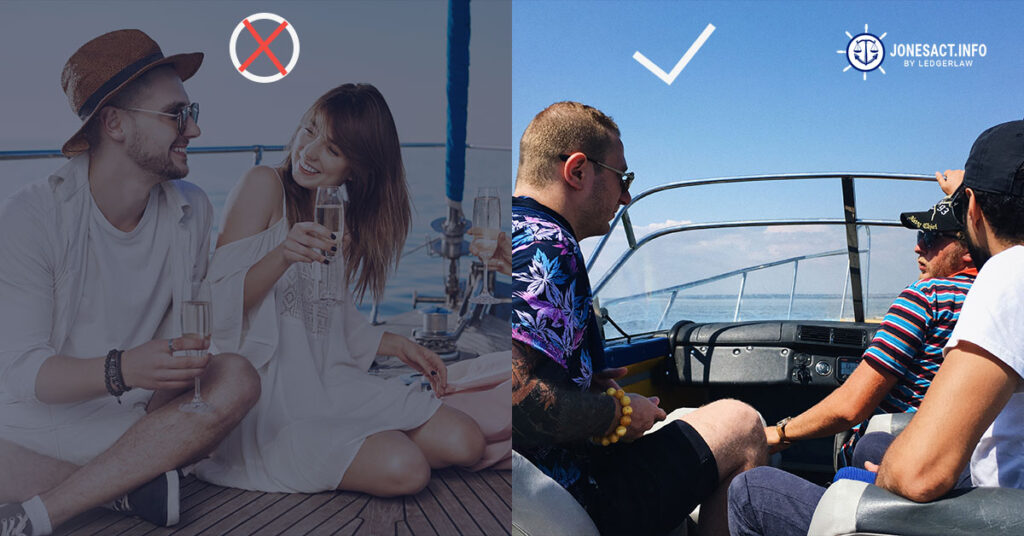
How Does Alcohol Use Affect Boat Operators And Passengers?
Alcohol is an intoxicant that impairs people’s ability to make good judgments. When people drink on a boat, their risk of getting into an accident increases. The boat operator must understand that a boat moves differently than a car which makes its control even more difficult. Additionally, boat operators who drink and operate the boat are putting them and their passengers at the risk of an accident.
Another issue that comes with operating a boat while intoxicated is getting a BUI, or boating under the influence. A BUI is treated similarly to a DUI, and can impact your ability to both operate a boat and drive a car.
Read on to learn more to answer the question of “how does alcohol use affect boat operators or passengers?”
How Does Alcohol Affect You When You’re Operating A Boat?
Alcohol is an intoxicant and a depressant that affects your ability to react, make judgments, and stay focused. You don’t make good decisions because your mind is impaired, and you’re not as accurate as you are when you’re sober. Here’s a look at how alcohol affects you overall.
Inaccurate Judgment:
It’s more difficult to make a judgment or decision while intoxicated. Alcohol slows down your brain’s ability to process information. Thus, it becomes harder to figure out what’s going on around you.
Slower reaction times:
Alcohol also slows down the signals that pass through your nervous system. That means all of your physical movements and reactions are not as fast as you think they are.
It happens as alcohol impairs the cognitive component. So, your reaction time and brain response become slower. And on water, a millisecond of your delay in decision making could be fatal.
Reduces coordination and balancing:
Counterbalancing against the movement of the boat is more difficult, as is walking around. For example, you think that you’re going to shift your body against the movement of the boat, but you’re not able to move fast enough in the right direction.
Tiredness and Fatigue:
This is often interpreted as feeling relaxed after having a drink, but you’re in a state of physical weakness. Alcohol makes you lose your muscle control, while reducing your alertness.
Decreases vision and perception:
One of the main impacts alcohol has on the eyes is that it dries the surface, which causes impaired vision. Additionally, the muscles that control the eyes are unable to respond quickly to stimuli, and focusing is more difficult.
How Does Alcohol Affect Boat Passengers?
Being on a boat amplifies your lack of physical control because the boat rocks with the slightest of current. That means countering the movement of the boat is more difficult, and can result in a fall of some kind. You’re also more likely to suffer an injury as the result of a bad decision or movement that you or the boat operator made.
Falling overboard:
Falling overboard is way more likely when you’ve been drinking. Your spatial awareness isn’t what it’s supposed to be, as is your balance. One bad move by you or the boat can result in you going over the side and into the water.
Decreases Sensation:
Your sense of smell, touch, are all impacted by alcohol, and sometimes hearing as well. This means you can’t easily detect that you’ve been in the sun too long and are developing a serious burn, can’t smell if a fire is starting on the boat, and if you’re touching something you shouldn’t be.
Slips and falls Injury:
A boat is a wet environment that can become slippery when least expected. Alcohol impairment can make it harder to react to a slippery surface and cause you to fall in a way that causes injury.
Impacts Decisions Badly:
Drinking impacts your ability to make a judgment call or decision. All it takes is one drink to impair your decision-making ability, and consuming a lot of drinks only worsens your judgment. You’re more likely to get into an accident with another boat or collide with an object in the water as a result.
Drinking on a Boat: What You Need to Know:
It’s true that alcohol affects boat operation safety the same as it affects the safe operation of a car. The difference is, boating while intoxicated comes with more serious consequences for you if you’re caught boating while intoxicated by the authorities.
Legal Consequences for BUI:
As previously mentioned, getting a BUI can affect your vehicle driver’s license. The laws surrounding a BUI are different in each state, but you’ll have to retain a BUI lawyer and have your case heard in court. You’ll also be required to pay fines and deal with a license suspension.
A few major BUI consequences are:
-
Significant Fines: Pay large monetary fines and court costs.
-
Loss of Freedom: Potential jail time or strict probation.
-
Suspension of Licenses: Loss of boating and/or driving privileges.
-
Vessel Seizure: The boat used may be impounded or forfeited.
-
Permanent Record: Creates a serious, lasting criminal record.
Thus, you must know the legal BAC limit for boat operators. It includes:
State | Legal BAC Limit for Operators (21+) | BAC Limit for Operators Under 21 |
Arizona | 0.08% | 0.00% (Zero Tolerance) |
California | 0.08% | 0.01% |
Florida | 0.08% | 0.02% |
Illinois | 0.08% | 0.00% (Zero Tolerance) |
Massachusetts | 0.08% | 0.02% |
Michigan | 0.08% | 0.02% (Per state law, or visibly impaired) |
New Jersey | 0.08% | 0.02% |
New York | 0.08% | 0.02% |
Texas | 0.08% | Any detectable amount |
Washington | 0.08% | Any detectable amount |
Additional Impacts of Drinking on a Boat:
Operating and handling a boat is very different from that of driving a car. If you’re operating the boat while intoxicated, you’re increasing the odds that you’re going to have a collision. Last, but not least, passengers are more likely to slip and fall, or fall overboard.
Stay safe and alert:
Make it a point to engage in safe boating practices and keep a proper lookout when you’re piloting a vessel. You want your passengers to get home safely and have great memories of their day out on the water. If you feel that you need to relax with a drink, wait until you’ve found a safe place to moor or anchor. Wait for at least an hour to pass before you decide to head to your next port of call.
Legal Support for Drunk Boating Incident:
Unfortunately, people make poor judgments and drink while operating a vessel. It can also happen that a drunk passenger does something that causes an accident. If you or a loved one has been the victim of a BUI, it’s time to contact a maritime lawyer. Personal injury claims for accidents that happened on a body of water are different from traditional personal injury claims.
You still have rights even though maritime laws for personal injury are handled under a specific set of laws and rules. More information about maritime law and how legal claims for personal injuries received while on the water are handled is available at Jonesact.info.
Time is of the essence when it comes to pursuing a personal injury claim against a vessel operator who was intoxicated. Contact a personal injury lawyer as soon as you can to get your claim started.
Conclusion:
It’s not a good idea to drink while boating, but it’s a common activity all the same. Operating a boat before you’re fully sober can result in making a misjudgment that puts you and your passengers at risk of getting into an accident. When everyone on a boat has been drinking, the chance of a serious injury or death is that much higher. The potential for getting a BUI is also stronger.
The best thing you can do is to drink responsibly while on a boat, and give yourself time to sober up if you’re the boat operator.
FAQ
Frequently Asked Questions

Yes, passengers can drink on a boat as long as they are of legal drinking age, not operating the boat, and the boat operator is sober. However, boat operators are restricted from drinking since they only have a 0.08% BAC limit.
Each state has its own BAC for boat operators, but it's .08 in most states. Check your state's BAC laws for boat operators to make sure you don't go over the limit. Also, for minors, the BAC limit is 0.02 for most states with Texas and Washington implying strict any detectable amount restrictions for minors.
Yes, BUI is treated similarly to DUI. The punishments are similar even though the circumstances are different. Your driver's license can be suspended for BUI the same as a DUI.
You should wait for at least an hour after drinking a beer, and longer for hard liquor. It takes an hour for your body to clear one drink, but everyone's body is different. Waiting for more than an hour increases the likelihood that the alcohol has cleared your system.