Key Takeaways:
-
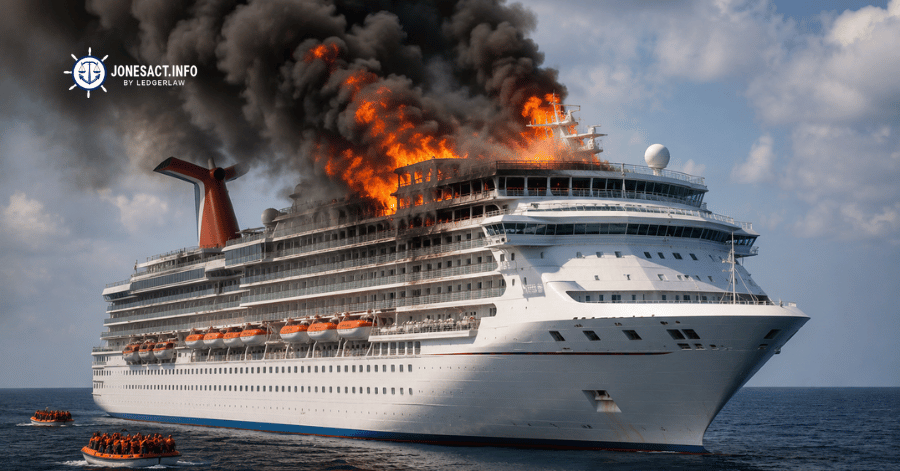
May 2026 saw at least 10 notable maritime incidents across U.S. waters and inland lakes, resulting in multiple fatalities and injuries.
-
Accidents ranged from pier and dock collisions to sandbar groundings, boat fires, and suspected Boating Under the Influence (BUI) crashes.
-
Crew members and passengers were affected by factors such as rough seas, nighttime navigation, and possible operator impairment.
-
Several events occurred in calm or no-wake zones, underscoring that severe weather conditions were not the only risk factor.
-
Rapid Coast Guard and local rescue responses prevented further loss of life in some maritime incidents.
-
A cargo vessel lost roughly 70 cargo containers off North Carolina on May 30, and a 45-foot catamaran caught fire and sank south of St. Thomas on May 31, further expanding the month's toll.
-
These cases underline the need for better safety training, sober operation, and strict adherence to maritime regulations.
Several notable maritime incidents occurred in the United States during May 2026, making it one of the more sobering months for boating safety in recent memory. In May 2026, there were several significant recreational and minor operational maritime accidents in U.S. waters, spanning everything from recreational boats and a sportfishing vessel to a workboat on a service pond and an offshore sailing yacht. Themes like crew members’ safety, heavy seas, nighttime navigation, and human error run through nearly every case, and the details that follow paint a clear picture of what went wrong and why it matters, even though not every dangerous situation involves severe weather.
10 Maritime Accidents in USA in May 2026:
The following sections walk through 10 specific, documented maritime accidents in the USA in May 2026 in roughly chronological order. Each summary covers the date and time, location, accident type, casualties, essential details, and source links for further reading. Descriptions distinguish between fatalities, crew injuries, and close calls, with brief context on visibility, time of day, or environmental conditions when available.
1. Fatal Boat Crash Near Boston Logan Airport (Pier Collision):
A fatal recreational boating accident occurred on May 13, 2026, in Boston, Massachusetts, when a twin-engine boat struck a pier near Logan International Airport at approximately 11:20 p.m. The collision killed one person and hospitalized three others.
Accident Date, Location and Type:
-
Date & Time: May 13, 2026, ~11:20 p.m.
-
Location: Boston Harbor, Pier 4R adjacent to Runway 4R, East Boston, Massachusetts.
-
Accident Type: High-speed pier collision in darkness.
Accident Details:
The twin-engine recreational boat, carrying four passengers (one man and three women), was reportedly taken without authorization from the Freedom Boat Club after hours. Operating in darkness, the boat struck Pier 4R near the airport runway, causing all passengers to be thrown onto slippery rocks beneath the pier. Elizabeth Dankert, a Union College graduate working at PTC software company, succumbed to injuries sustained in the crash.
The other three passengers were hospitalized but sustained non-life-threatening injuries. Massachusetts State Police and Suffolk County District Attorney’s Office are investigating factors including speed, lighting conditions, and potential operator impairment. The incident highlights the dangers of unauthorized vessel use and nighttime navigation near complex harbor structures.
Casualties: 1 death (Elizabeth “Lizzie” Dankert, 24, of Andover); 3 injured with non-life-threatening injuries.
-
Sources: CBS News Boston, BoatTEST.
2. Fatal Boating Accident – Watauga Lake, Tennessee:
On May 8, 2026, a man scheduled to compete in a bass tournament fell overboard in a no-wake zone on Watauga Lake and did not resurface, making it Tennessee’s 8th boating fatality of the year.
Accident Date, Location and Type:
-
Date & Time: May 8, 2026, ~7:00 p.m.
-
Location: Rat Branch boat ramp, Watauga Lake, Hampton, Carter County, Tennessee.
-
Accident Type: Fall overboard in a no-wake zone.
Accident Details:
Details: Alexander C. Luster was preparing to compete in a bass fishing tournament when he fell overboard near the Rat Branch boat ramp in the no-wake zone of Watauga Lake. Despite calm water conditions, Luster did not resurface, prompting a search by Carter County Rescue Squad divers. The body was recovered around 11:35 p.m. using a remotely operated vehicle (ROV) to assist in the underwater search.
An autopsy was ordered to determine the exact cause of death. This incident underscores that even in restricted-speed zones and calm waters, risks such as accidental falls and drowning remain significant, especially when safety equipment like life jackets may not be worn or accessible.
Casualties: 1 death (Alexander C. Luster, 36, of Boone, North Carolina).
-
Sources: BoatTEST.
3. Boat Hit Sandbar – Jones Beach, New York:
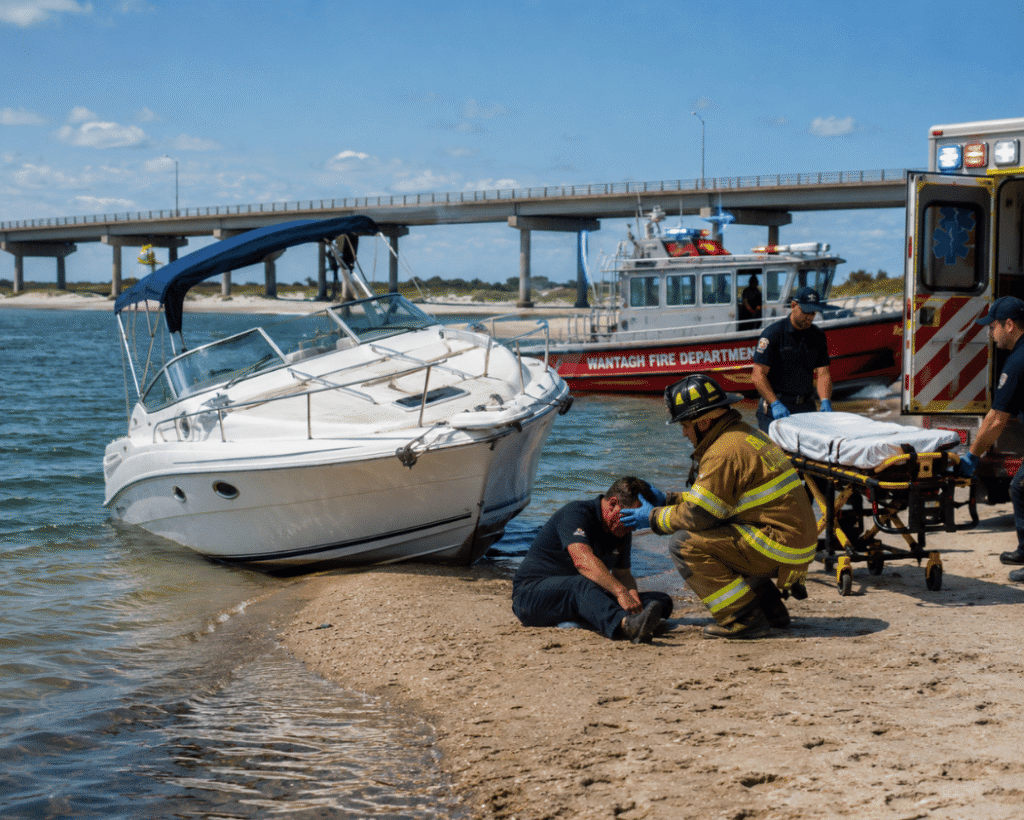
A recreational vessel struck a sandbar near Jones Beach on May 8, 2026, injuring the operator during a routine transit from Zachs Bay toward the Wantagh State Parkway bridge.
Accident Date, Location and Type:
-
Date & Time: May 8, 2026.
-
Location: Waters near Jones Beach, Nassau County, Long Island, New York.
-
Accident Type: Grounding on a sandbar.
Accident Details:
While navigating from Zachs Bay toward the Wantagh State Parkway bridge, the boat operator failed to avoid a sandbar in the shallow waters near Jones Beach. The unexpected grounding caused the operator to be thrown forward violently, resulting in a head injury. The vessel remained stuck on the sandbar until the Wantagh Fire Department arrived to assist. Emergency responders safely removed the injured captain and coordinated transport to a Nassau County ambulance for hospital treatment. This accident highlights the importance of updated navigational charts, awareness of shifting sandbars common in coastal areas, and cautious vessel operation in shallow waters.
Casualties: 1 injured (captain sustained a head injury).
-
Sources: BoatTEST.
4. Boat Struck Dock – Antioch, California:
On May 10, 2026, a boat crashed into a marina dock at a waterfront restaurant in Antioch, California, injuring two people.
Accident Date, Location and Type:
-
Date & Time: May 10, 2026.
-
Location: Antioch Marina, Contra Costa County, California.
-
Accident Type: Collision with a dock.
Accident Details:
The vessel was attempting to dock at the Antioch Marina near a local restaurant but collided with the dock structure, resulting in injuries to two occupants. Contra Costa County Fire Protection District (CONFIRE) responded promptly, performing a water rescue operation and transferring the victims to shore. One injured person was transported to John Muir Walnut Creek Medical Center for further treatment, while the other declined hospital care. The crash may have been influenced by operator error, environmental factors such as currents, or mechanical issues affecting maneuverability. This incident underscores the risks associated with docking maneuvers and the need for operator vigilance in crowded marina environments.
Casualties: 2 injured (1 hospitalized, 1 declined treatment).
-
Sources: BoatTEST.
5. Disabled Sailboat Rescue – Off Rhode Island:
The 60-foot sailing vessel “Scotch Mist” began taking on water approximately 170 nautical miles south of Block Island on the morning of May 13, 2026, prompting a major coast guard rescue. Mechanical failure from a deteriorating shaft seal can significantly reduce a vessel’s navigation ability, and this case proved it.
Accident Date, Location and Type:
-
Date & Time: May 13, 2026, morning.
-
Location: ~170 miles south of Block Island, Rhode Island (open Atlantic).
-
Accident Type: Progressive flooding from a deteriorating shaft seal.
Accident Details:
The “Scotch Mist,” a 60-foot sailing vessel, experienced a critical mechanical failure when its shaft seal deteriorated, allowing water to flood the hull progressively. The crew attempted to manage the flooding, but offshore the situation can deteriorate quickly once a vessel is compromised, and they ultimately required assistance due to the risk of sinking in open ocean conditions. The U.S. Coast Guard Air Station Cape Cod deployed an HC-144 Ocean Sentry aircraft equipped with a dewatering pump to assist.
The cutter William Chadwick (WPC-1150) was diverted to the scene, successfully rescuing all four crew members. They were treated for shock and mild hypothermia caused by exposure to cold Atlantic waters. This incident highlights how mechanical failures can rapidly escalate in offshore environments, stressing the importance of routine maintenance and emergency preparedness.
Casualties: 0 deaths; 4 rescued (treated for shock and hypothermia).
-
Sources: BoatTEST.
6. Fatal Memorial Day Boat Crash – Long Beach Township, New Jersey:
A Memorial Day boat crash near a channel marker in Long Beach Township, New Jersey, killed 28-year-old Gunnar Pearson on May 25, 2026.
Accident Date, Location and Type:
-
Date & Time: May 25, 2026 (Memorial Day).
-
Location: Brant Beach section, Long Beach Township, Barnegat Light, New Jersey.
-
Accident Type: Collision with a channel marker.
Accident Details:
During Memorial Day festivities, a boat traveling near a marina channel collided with a channel marker in the Brant Beach area of Long Beach Township. The impact inflicted fatal injuries on 28-year-old Gunnar Pearson, while one other occupant was critically injured and four others sustained minor injuries. The accident occurred amid foggy conditions that reduced visibility, complicating navigation.
New Jersey State Police are investigating factors such as vessel speed, operator alertness, and possible alcohol involvement. Collisions with navigation markers often result from misjudging distances or failing to maintain proper lookout, emphasizing the need for vigilance in congested waterways.
Casualties: 1 death (Gunnar Pearson, 28, of Barnegat); 1 critically injured; 4 with minor injuries.
-
Sources: 6ABC.
7. Fatal Boating Accident – San Diego, California:
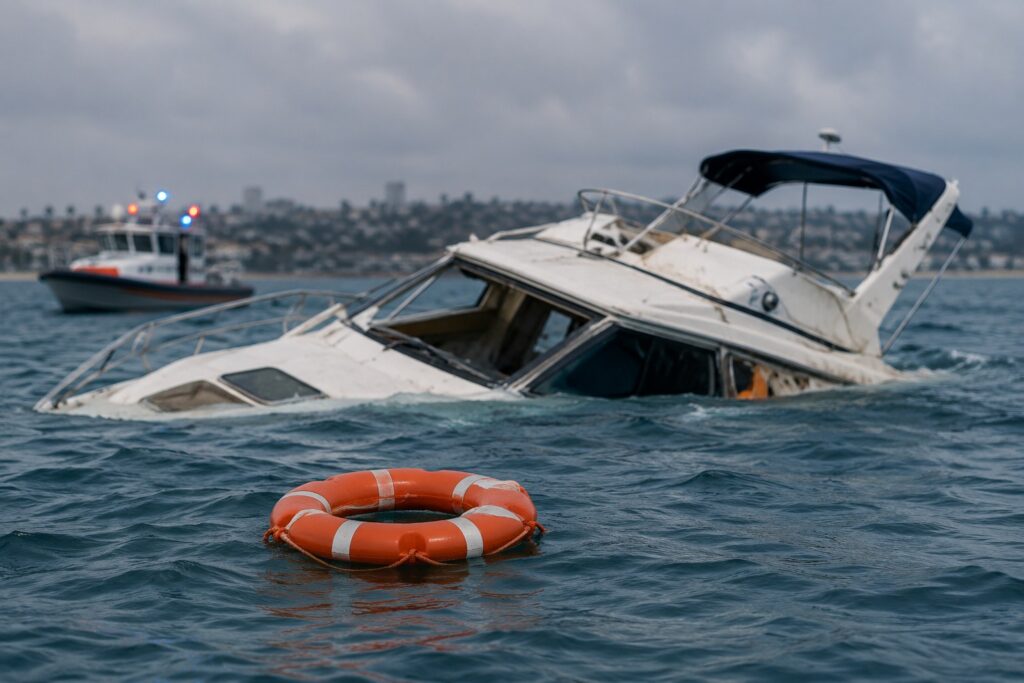
On May 8, 2026, a passenger aboard the sportfishing boat “The New Seaforth” died after a medical emergency several miles offshore San Diego. Details on the underlying cause remained unclear at the time of reporting.
Accident Date, Location and Type:
-
Date & Time: May 8, 2026.
-
Location: Several miles offshore, San Diego, California.
-
Accident Type: Fatal onboard medical emergency.
Accident Details:
While on a sportfishing trip aboard “The New Seaforth,” a passenger suffered a sudden medical emergency several miles offshore. San Diego Lifeguards boarded the vessel and initiated CPR efforts that lasted over 30 minutes, assisted by paramedics waiting at the dock. Despite the intensive resuscitation, the victim was transported to a hospital where they were pronounced dead.
The exact medical cause was not disclosed publicly, and no evidence of trauma or foul play was reported. This incident underscores the challenges of medical emergencies at sea and the critical role of rapid response teams.
Casualties: 1 death (victim pronounced dead at hospital).
-
Sources: YouTube news coverage.
8. Virginia American Water Employee Boating Death – Dale City, Virginia:
A 35-year-old Virginia American Water employee fell from a boat into a service pond in Dale City on May 19, 2026, and died at the hospital on May 22.
Accident Date, Location and Type:
-
Date & Time: May 19, 2026 (died May 22, 2026).
-
Location: Service pond, Dale City, Prince William County, Virginia.
-
Accident Type: Work-related fall from a boat into an enclosed body of water.
Accident Details:
While performing work-related tasks on a service pond in Dale City, a 35-year-old Virginia American Water employee fell from a boat into the water. Despite rescue efforts, the man was hospitalized and succumbed to injuries or complications three days later. Police investigations found no evidence of foul play, deeming the incident accidental. This fatality highlights occupational hazards faced by maritime workers even in controlled environments like service ponds. Maritime safety laws and workplace regulations aim to protect such employees from unsafe conditions and prevent similar tragedies.
Casualties: 1 death (35-year-old employee).
-
Sources: Patch.com.
9. Boat Fire – Lake of the Ozarks, Missouri:
On May 3, 2026, a 1987 Cobalt boat caught fire during refueling at Lake of the Ozarks in Osage Beach, Missouri, injuring two occupants.
Accident Date, Location and Type:
-
Date & Time: May 3, 2026.
-
Location: Lake of the Ozarks, Osage Beach, Missouri.
-
Accident Type: Refueling-related boat fire.
Accident Details:
During routine refueling of a 1987 Cobalt boat, a spark or fuel vapor ignition caused the vessel to catch fire. The driver, a 25-year-old man, and a 50-year-old passenger sustained minor injuries and were treated at Lake Regional Hospital. Fire crews quickly extinguished the blaze, preventing further damage or injury. The incident highlights the importance of following strict safety procedures during refueling, including ensuring engines are off, adequate ventilation, and avoiding ignition sources near fuel.
Casualties: 2 injured (minor injuries).
-
Sources: BoatTEST.
10. BUI Boat Crash – Steilacoom, Washington:
A speedboat crashed into a rock embankment near the Steilacoom Ferry Dock around 5:00 p.m. on May 1, 2026, after the operator appeared to be passed out at the helm.
Accident Date, Location and Type:
-
Date & Time: May 1, 2026, ~5:00 p.m.
-
Location: Near Steilacoom Ferry Dock, 54 Union Avenue, Steilacoom, Washington.
-
Accident Type: High-speed impact with a rock embankment (suspected BUI).
Accident Details:
Witnesses reported that the 21-year-old boat operator appeared passed out or unconscious while piloting the vessel at high speed near the Steilacoom Ferry Dock. The boat narrowly missed two ferries before crashing into a rock embankment. Law enforcement found multiple alcohol bottles onboard, and the operator was arrested on suspicion of Boating Under the Influence (BUI). The operator sustained non-life-threatening injuries. This incident illustrates the severe dangers posed by impaired boating, especially in busy ferry corridors where collisions could have catastrophic consequences.
Casualties: 1 injured (non-life-threatening).
-
Sources: BoatTEST, KIRO 7.
Patterns and Contributing Factors, Including Severe Weather Conditions, in May 2026 Maritime Incidents:
The May 2026 accidents reveal recurring themes: operator behavior, environmental conditions, mechanical failures, and the broader maritime landscape. Human factors dominated-suspected BUI in Steilacoom, possible unauthorized after-hours use in Boston, and potential inattention in docking and sandbar strikes. Crew fatigue can significantly affect decision-making during emergencies, a reality that applies to both recreational and commercial operations.
Environmental influences also played a role. Offshore exposure and rough seas threatened the “Scotch Mist” crew, while fog contributed to the Barnegat Bay fatality. High winds and heavy seas can overwhelm vessels quickly, and the situation can deteriorate fast once control or watertight integrity is lost, even on well-maintained ones. Yet several deadly incidents occurred in calm, no-wake areas-Watauga Lake and the Virginia service pond-proving that danger is not confined to open water.
Beyond these 10 cases, the broader May 2026 maritime picture was active. On May 26, the U.S. Coast Guard coordinated a high-seas rescue operation 489 miles off Oregon. The U.S. Coast Guard responded to a disabled vessel in Maui on May 29, 2026. A three-boat crash occurred during the Sail Grand Prix in New York on May 31, 2026, and a 45-foot catamaran caught fire and sank south of St. Thomas that same day. A cargo vessel lost roughly 70 cargo containers off North Carolina on May 30, and a private fishing vessel capsized off the coast of Port Canaveral, Florida, on May 28, 2026.
The U.S. Southern Command carried out military strikes against suspected drug-smuggling vessels in May 2026, adding a security dimension. Even the World Health Organization notified about a hantavirus outbreak on May 2, 2026, aboard MV Hondius, raising health-related marine concerns.
Globally, the month fit into a tense period. In prior months-February, march, and april-incidents in the Strait of Hormuz region near Iran and Oman had escalated. The San Antonio incident was the 32nd since the war began, and the Iran war continued to affect transiting cargo ships in the area. Eight crew members were injured in a maritime incident reported near that region, and search teams found a life raft 95 nautical miles from the vessel in one case. Families of missing crew members face devastating uncertainty in such scenarios.
Elsewhere, the vessel Pac Dubhe made news earlier in the west Pacific near the Mariana area, while incidents entangled shipping lanes from London to the Philippines and France. Typhoons present extreme risks for cargo vessels in that region, and poorly secured cargo increases capsizing risk in severe weather.
Capsizing incidents often involve severe weather and cargo instability, a pattern confirmed across multiple storm seasons. A ship moored at anchor in one port sustained damage from a sudden storm surge, and a barge was towed to shore after its position shifted. The recovery of lost containers remained underway well into June.
Legal and Safety Implications of May 2026 Maritime Accidents and Coast Guard Involvement:

Each of these incidents can trigger complex legal questions and reinforce the need for robust maritime safety practices. Negligence can be central to legal claims in maritime incidents, whether the allegation involves BUI, unauthorized vessel use, inadequate maintenance, or failure to provide proper safety equipment.
Families may pursue compensation under maritime law, and the Death on the High Seas Act governs claims beyond U.S. waters. For on-the-job accidents like the Virginia water utility death, workers’ compensation or maritime employment protections may apply. The responsibility to discuss safety protocols falls on employers, vessel owners, and operators alike.
The U.S. Coast Guard participated in trilateral search and rescue exercises in the Pacific Northwest on May 21, 2026, reflecting ongoing efforts to improve emergency response. Key safety takeaways from these cases include:
-
Mandatory life jacket use, especially for crew members working over water.
-
Sober operation and zero tolerance for BUI.
-
Adherence to marked channels and navigation aids.
-
Careful refueling practices to prevent fire.
-
Updated charts and awareness of shifting sandbars.
-
Respect for weather advisories and conditions, including high waves and rough seas warnings.
Boat owners and operators should review Coast Guard safety guidelines, consider formal boating education courses, and ensure that every vessel is properly maintained and equipped before leaving the dock.
Conclusion: Lessons from Maritime Accidents in the USA in May 2026
May 2026 was marked by a series of maritime accidents in the USA that highlighted the complex interplay of human error, mechanical failure, environmental conditions, and regulatory challenges. These incidents underline the vital importance of strict adherence to safety protocols, sober and attentive operation, and proper vessel maintenance. The U.S. Coast Guard’s prompt and effective responses saved lives and mitigated further harm in several cases, emphasizing the value of well-coordinated emergency services.
As hundreds of vessels navigate busy U.S. waters, ongoing education, enforcement, and technological support remain essential to prevent future tragedies. The month’s events serve as a sobering reminder that maritime safety requires vigilance, preparation, and respect for the sea’s unpredictable nature. Several other incidents occurred in calm conditions or no-wake zones, showing that human error and mechanical failures were equally important factors.
FAQ
Frequently Asked Questions

This article highlights 10 significant, publicly reported maritime accidents and incidents occurring in U.S. waters or involving U.S. jurisdictions during May 2026.
On May 13, 2026, a twin-engine recreational boat struck Pier 4R near Boston Logan International Airport, killing 24-year-old Elizabeth "Lizzie" Dankert and injuring three others.
The tragedy occurred near the Rat Branch boat ramp in Hampton, Tennessee, on May 8, 2026, when 36-year-old Alexander C. Luster fell overboard in a no-wake zone and did not resurface.
"Scotch Mist" began taking on water due to a deteriorating shaft seal about 170 miles south of Block Island on May 13, 2026, and the crew was attempting to control flooding before the Coast Guard evacuated four people and treated them for shock and hypothermia.
On May 25, 2026, a boat in the Brant Beach section of Long Beach Township struck a channel marker, fatally injuring 28-year-old Gunnar Pearson of Barnegat.
Around 5:00 p.m. on May 1, 2026, a 21-year-old operator suspected of BUI crashed into a rock embankment near the Steilacoom Ferry Dock after nearly hitting two ferries, causing one non-life-threatening injury.
On May 3, 2026, a 1987 Cobalt boat caught fire during refueling in Osage Beach, Missouri, causing minor injuries to a 25-year-old driver and a 50-year-old passenger, both treated at Lake Regional Hospital.
Yes. Offshore rough seas and exposure played a role in the "Scotch Mist" rescue, showing how quickly a maritime situation can deteriorate once a vessel is compromised. At the same time, not every dangerous maritime situation in May 2026 involved severe weather.
A 35-year-old Virginia American Water employee fell from a boat into a service pond in Dale City, Virginia, on May 19, 2026, and died on May 22 after being hospitalized for the vital importance of strict adherence to safety protocols, sober and attentive operation, and proper vessel maintenance. The U.S. Coast Guard's prompt and effective responses saved lives and mitigated further harm in several cases, emphasizing the value of well-coordinated emergency services.
As hundreds of vessels navigate busy U.S. waters, ongoing education, enforcement, and technological support remain essential to prevent future tragedies. The month’s events serve as a sobering reminder that maritime safety requires vigilance, preparation, and respect for the sea’s unpredictable nature.. Several other incidents occurred in calm conditions or no-wake zones, showing that human error and mechanical failures were equally important factors.
The USCG coordinated multiple rescue operations, including the offshore evacuation of the "Scotch Mist" crew, a high-seas rescue off Oregon, and response to a disabled vessel near Maui, demonstrating their critical role in maritime safety.