Key Takeaways
-
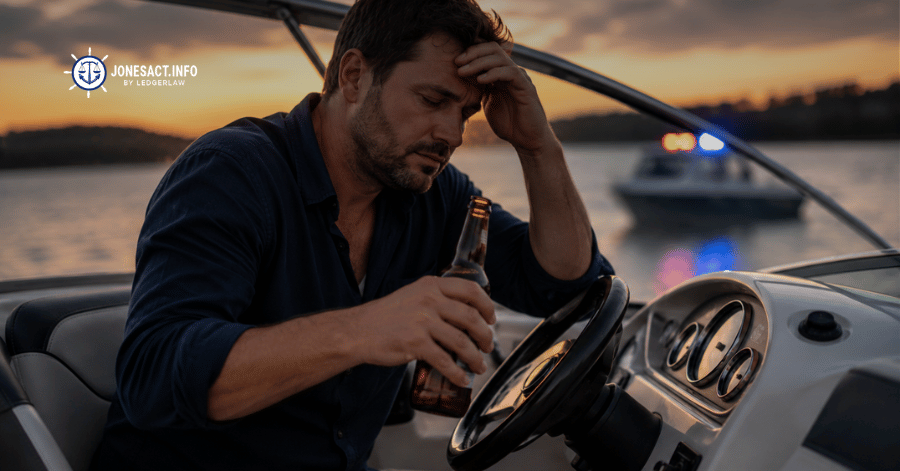
Maritime shipping happens to be one of the most dangerous industries in the world.
-
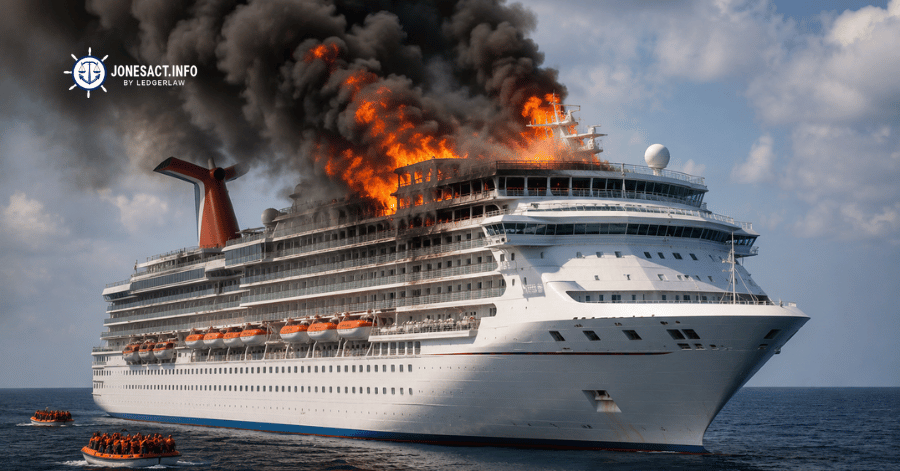
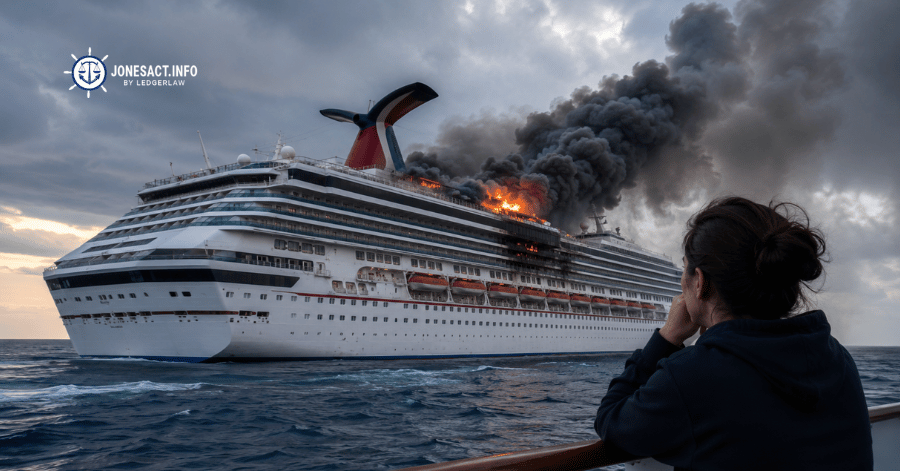
There are many types of marine accidents. They range from the trivial (slight damage to a ship on the water) to severe (think multiple deaths and a sunken ship).
-
Marine casualties are up.
-
Ship losses are down. But ship damage is on the rise.
Accidents can happen anywhere. The park. Your home. At the office.
But accidents at sea can be more dangerous than ones on land.
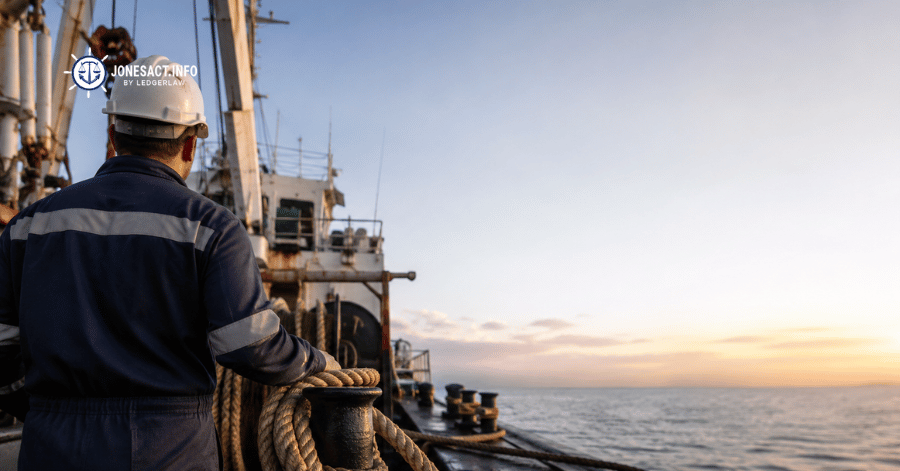
Maritime workers are the most common victims. Which stands to reason. They work on slippery surfaces. With heavy-duty machinery. Managing heavy cargo.
But travelers can be affected too. A slip and fall accident can break a bone or even cause a concussion. A fall overboard can be fatal.
What Is Considered a Maritime Accident?
The UN Office for Disaster Risk Reduction says that a maritime accident that:
-
Injures or kills someone.
-
Damages one or more ships on the water.
-
Environmental damage caused by an incident involving one or more ships on the water.
Common Causes and Scenarios of Maritime Accidents:
Lacey walks around on the deck after a storm. She slips. She breaks her ankle. And has a mild concussion.
The captain forgets to check the weather forecast. Sails into a storm. The ship runs aground.
Dock workers don’t load barrels with toxic chemicals carefully. One cracks during the trip. Chemicals leak out. Nearby sailors incur chemical burns and other injuries.
Maritime Law and Your Rights For Maritime Accident Claims:
Maritime law gives you the right to sue over an accident.
But you have to know:
-
Which laws apply to your situation.
-
What types of compensation you can claim.
-
Who to sue?
-
How to sue.
Then you need to understand how these cases work their way through the legal system.
4 Maritime Accident Claim Types:
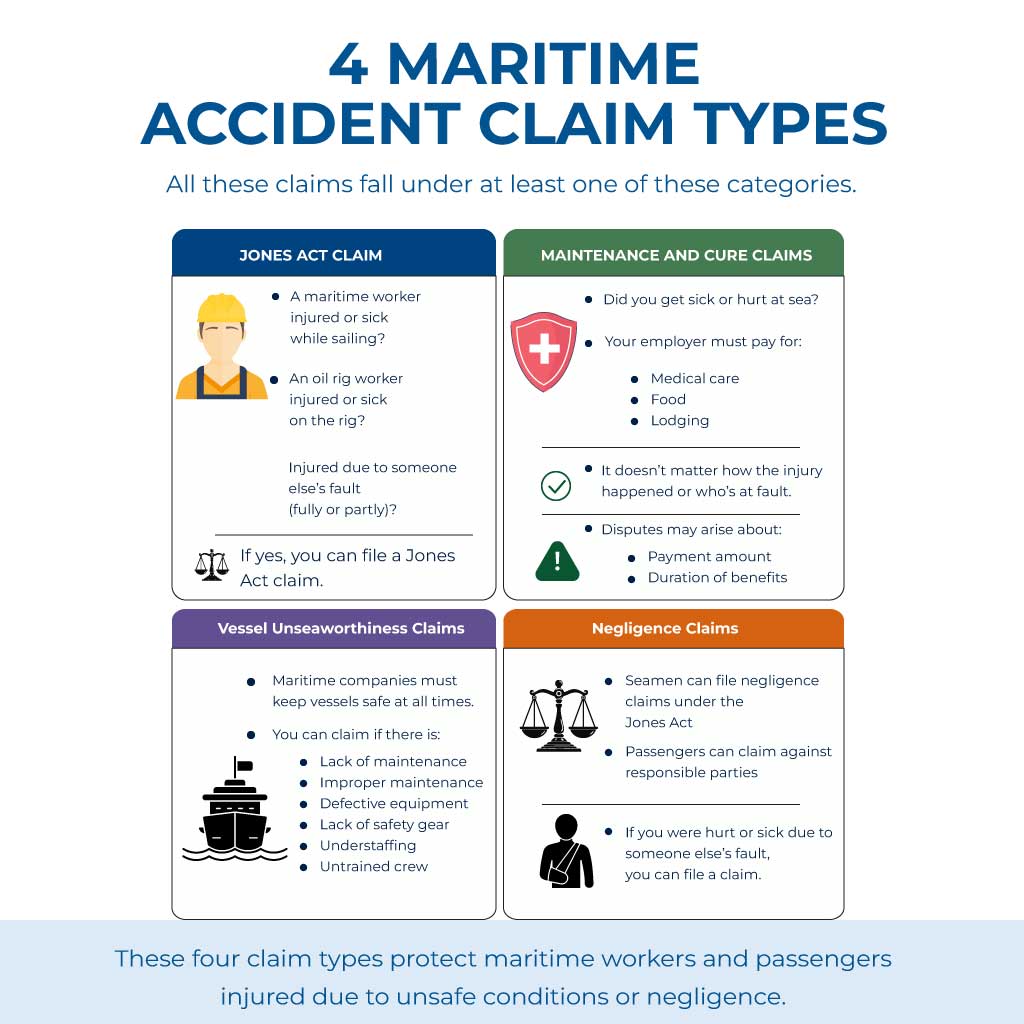
There are four main types of claims:
-
Jones Act claims.
-
Maintenance and Cure claims.
-
Vessel Unseaworthiness claims.
-
Negligence claims.
All these claims fall under at least one of these categories.
Jones Act Claim:
Are you:
-
A maritime worker who’s been hurt or gotten sick while the boat is sailing?
-
An oil rig worker who’s been hurt or gotten sick on the rig?
-
Is your injury or sickness someone else’s fault (or at least partly someone else’s fault)?
If you answered yes to any of these questions, you can file a Jones Act claim.
Your Rights Under Maintenance and Cure Claims:
Did you get sick or hurt at sea?
If so, your employer is legally required to pay for:
-
Your medical care.
-
Food.
-
Lodging.
It doesn’t matter how you got hurt.
Or who’s to blame.
Your employer is legally required to cover your claim.
But disagreements might come up over:
Lorem ipsum dolor sit amet, consectetur adipiscing elit. Ut elit tellus, luctus nec ullamcorper mattis, pulvinar dapibus leo.
-
How much needs to be paid.
-
How long you need maintenance/cure payments.
Understanding Vessel Unseaworthiness Claim in Maritime Law:
The law says maritime companies have to make sure their vessels are safe for sailing. All. The. Time.
You can file an unseaworthiness claim over:
-
Lack of maintenance.
-
Improper maintenance.
-
Defective equipment.
-
Lack of proper safety gear.
-
Untrained staff.
Negligence Claim:
Seamen who want to claim negligence can file a claim under the Jones Act.
Ship passengers can file a negligence claim against responsible parties.
Did you get hurt? Sick?
You can file a negligence claim if someone else is to blame for your suffering.
Who Is Covered Under Maritime Law?
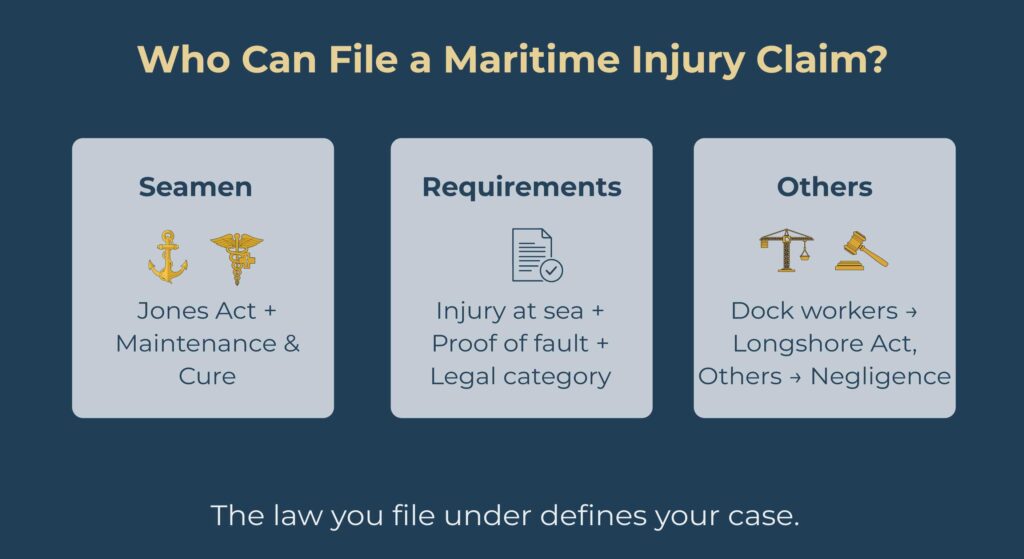
Maritime law doesn’t cover everyone who works in the maritime industry.
Understanding Longshore and Harbor Workers Compensation Act
This act covers people who work with, near, or on docked ships. Such people include:
-
Longshore workers.
-
Harbor construction workers.
-
Ship builders.
-
Ship breakers.
-
People who happen to be working on a ship at the time the injury happened.
On top of that, to qualify for coverage, you have to show your accident happened in one of the following places:
-
On navigable waters.
-
On a pier, dock, terminal or wharf.
-
At a place used for loading or unloading a ship.
Who Qualifies as a Seaman Under the Jones Act:
Seamen are covered under the Jones Act. But only if they work at least 30% of the time on:
-
A sailing boat.
-
An oil rig in the ocean.
You also have to work in a job that plays an integral role in the ship’s or rig’s operations.
What Financial Compensation Can I Receive in a Maritime Injury Lawsuit?
-
Medical bills.
-
Lost Wages.
-
Pain and suffering.
-
Emotional suffering.
-
Wrongful death (if you lost a loved one).
But you’ll need evidence:
-
Photos/videos.
-
Witness testimony.
-
Medical bills.
-
Expert witness testimony.
Who Can File a Maritime Injury Claim?
Anyone who’s been hurt or gotten sick at sea.
If they have evidence proving fault.
The only question is which law the claim can be filed under.
Only seamen can file a maintenance and cure claim or a Jones Act claim.
Only people working at a port, dock, wharf, or similar location can file a claim under the Longshore and Harbor Workers Compensation Act.
Other injured parties can file a negligence claim.
Statute of Limitations for Maritime Injury Claims:
You have three years to file your claim.
The clock starts ticking from the day your injury happened. But in some cases, it can start from the day you discovered the injury.
If you try to file a case after the Statute of Limitations has run out, it’ll be automatically dismissed. Even if you have clear, strong evidence on your side.
Conclusion:
Accidents happen. Sometimes no-one is to blame. In other cases, one or more people or entities are responsible for at least some of your suffering.
Maritime law allows you to file a claim. But the type of claim you file will depend on your employment status and where the accident happened.
Claims can be complicated. And you can be sure the other side will be lawyered up. So hire a maritime accident lawyer who’s familiar with your case type if you’re considering a lawsuit.
A good lawyer can:
- Tell you if you have a case
- Tell you how to file your case
- Help you collect and organize evidence
- Find expert witnesses
- File your case
- Represent you in court
- Represent you in settlement negotiations
Maritime lawyer work under a “no-win = no fee” framework.
Get good legal help today to find out if you have a case.
FAQ
Frequently Asked Questions


Maritime accidents happen on a boat or rig. At sea.
Or they happen near the water, on a spot such as a dock or wharf.
Personal injuries happen on land. And in places not related to maritime work.
Anyone who works in the maritime industry. But not on a sailing boat or oil rig in the ocean.
But to qualify, you have to do work directly to maritime activity. Desk jobs at port, for example, don't count.
A Jones Act lawyer will:
- Tell you where and how to file a claim
- Help you determine who to sue
- Collect and organize evidence
- Get witnesses to testify for you
- Represent you. In court. And/or during settlement negotiations
An unseaworthiness claim is a liability claim based on the boat's condition.
It can also include claims related to boat operations. These include:
- Claims related to understaffing
- Claims related to untrained staff members
If you're a seaman, you have the right to file a maintenance and cure claim. Your employer has to cover:
- Medical bills
- Food
- Lodging
You also have the right to file a claim if your injury/sickness was someone else's fault.
If you're a passenger, you can file a liability claim.
You can still file a claim even if you were off-duty when the injury happened.
- Medical bills
- Lost wages
- Pain and suffering
- Emotional harm
- Wrongful death
- Punitive damages
You should file your maritime accident claim asp after the accident. It's better to file an accident claim within 24 - 48 hours. Therefore, the statute of limitations for each case depends on the type of case.
You can't file after three years.
It's normally three years from the date of the accident.
Yes
Talk to a lawyer before you file a claim.
During an initial consultation, your lawyer will:
- Look over the evidence to tell you if you have grounds for a lawsuit
- Tell you who could be sued, or let you know that further investigation is needed to identify the guilty party or parties
There are lots of reasons why maritime accidents happen:
- The industry is inherently dangerous. Boat decks are slippery. There's heavy cargo. Lots of dangerous machinery.
- Human error causes most accidents. People working at sea get tired. Very tired. Plus, they may not be trained properly. Lack of communication is common. And the outcomes for these failures is more dangerous at sea than in many industries on land
- Environmental conditions affect boats more than land-based industries. A storm, strong winds, and lightning can quickly cause serious problems