Key Takeaways:
-
Sudden Tragedy: Scandies Rose sank on New Year’s Eve 2019, near Sutwik Island, Alaska, claiming five lives.
-
Cause of Loss: Asymmetric ice buildup, inaccurate stability instructions, and rough weather caused the tragic accident.
-
Critical Conditions: Seven crews faced extreme weather, including heavy freezing spray and high katabatic winds.
-
Survivors & Missing: Seven men aboard F/V Sinking Rose, among them two survived, and five, including Captain Gary Cobban Jr., were lost.
-
Legal Accountability: Families secured a $9+ million settlement under the Jones Act, citing vessel unseaworthiness.
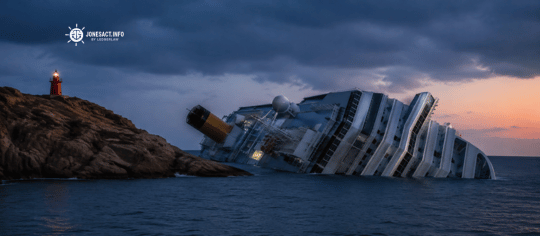
On New Year’s Eve 2019, as everyone was busy celebrating, the commercial fishing vessel (FV) Scandies Rose sank. It is one of the most tragic and sudden maritime disasters in modern Alaskan history. It happened in the Gulf of Alaska with five deaths.
The most shocking aspect of Scandies Rose’s sinking was its astonishing rate of capsizing. It just took a few minutes to sink before the experienced fishermen could do anything. At almost 40 years old, Scandies Rose was already an old-age ship.
Although a well-coordinated and speedy rescue saved the lives of two, the capsizing raised questions about fishermen’s safety and fishing ships. Federal investigations later found that the ship sank because of negligence, as a few preventable measures could have saved the ship.
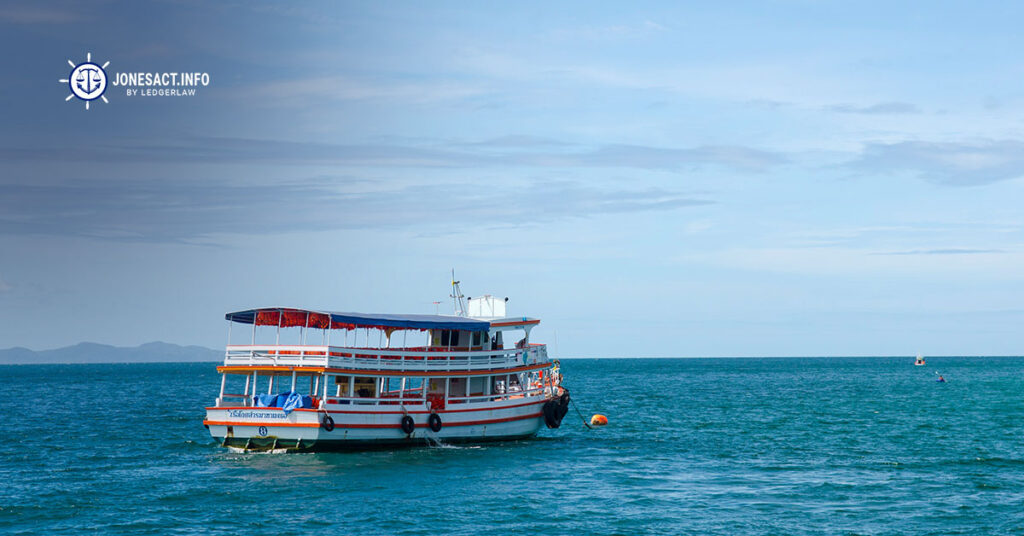
FV Scandies Rose Details:
The FV Scandies Rose was a crab fishing vessel. It mainly operated in the Bering Sea and the Gulf of Alaska. Bender Shipbuilding in Mobile, Alabama, built the ship in 1978. For four long decades, it served as an excellent crab-fishing vessel.
It was 130 feet long. Also, Scandies Rose was admired for its robustness. In fact, it earned the nicknames “The Battleship” and “The Tank” among those who fished Alaska’s dangerous grounds.
The Scandies Rose was registered in Dutch Harbor, Alaska. It specialized in fishing for king crab, Pacific cod, and opilio crab. Despite its strength, the crew’s skills and regular safety drills, a perfect storm ultimately overcame the boat. The ship was valued at approximately $15 million before the disaster. However, after the drowning, the owner declared Scandies Rose a total loss.
Scandies Rose Sinking Story And Overview
Scandies Rose began its last voyage on December 30, 2019. It departed Kodiak, Alaska, for fishing grounds in the Bering Sea. The vessel was heavily laden with approximately 195 large steel crab pots.
The crab pots were stacked high on its deck. It was an early preparation for the upcoming cod and crab seasons. Captain Gary Cobban Jr. was leading the crew. They were aware that the route would bring them into “lousy” weather.
The National Weather Service (NWS) forecasted two things before the Scandies Rose voyage:
-
They released warnings for gale-force winds
-
There was also an alert for heavy freezing spray
The vessel accumulated significant ice on its way. By the evening of December 31, the vessel had an uncontrollable lean of about 20 degrees to starboard. Captain Cobban recognized the imminent danger. So, he tried to alter the course of f/v Scandies Rose toward Sutwik Island. They decided to take shelter there.
However, this course change didn’t work as planned. The vessel was exposed to compromised stability. Plus, there were katabatic winds or “williwaws”, a localized weather phenomenon. It blew across the deck from the port side.
This shift, combined with the tilting starboard to overwhelm the vessel. At approximately 9:55 PM Alaska Standard Time (AST) on December 31, 2019, the vessel capsized. It took barely a minute once the crew broadcast the final distress. The Coast Guard located the wreck on the seafloor on its starboard side. It was lying roughly 2.5 miles south of Sutwik Island.
Scandies rose sinking cause:
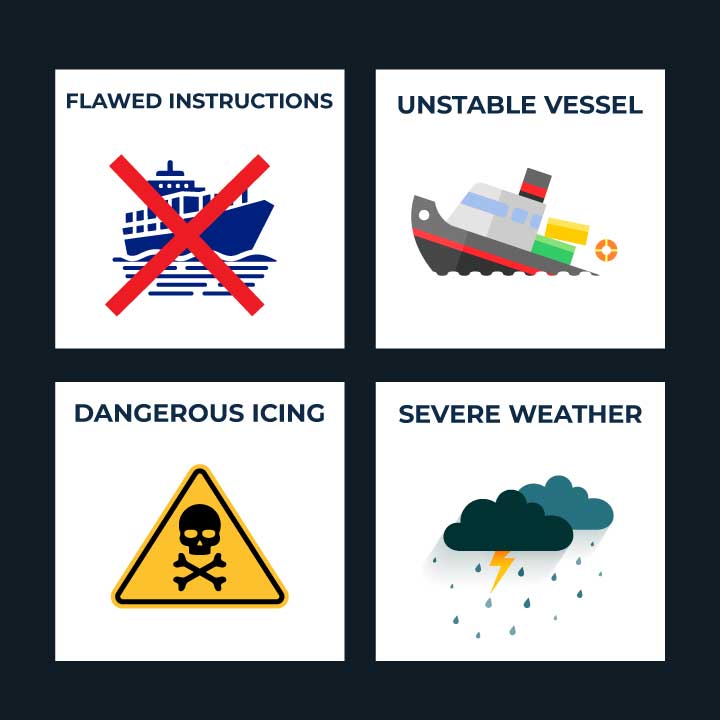
The NTSB determined a few probable causes for the drowning of Scandies Rise, including:
-
The vessel got inaccurate stability instructions.
-
There was a low margin of stability.
-
Heavy asymmetric ice accumulation on its path.
-
Extreme weather conditions, worse than forecasted.
-
The high, stacked load of crab pots severely.
Scandies rose sinking location:
The vessel capsized and sank in the Gulf of Alaska. It was approximately 2.5 miles south of Sutwik Island, Alaska. The island was largely uninhabited, far from the Alaska Peninsula.
Scandies rose sinking video:
There was no official video footage of the sinking boat. However, later, a few TV channels covered the tragedy. It included Discovery Channel’s Deadliest Catch. The program used dramatic recreations and expert analysis to detail the disaster. The NTSB investigation used remotely operated vehicle (ROV) video to survey the sunken hull. It was among the most crucial evidence of the sinking boat.
Who died on the Scandies Rose?
There were seven men aboard on Scandies Rose. Among them, five were lost and presumed dead, while two were rescued. The five men who perished were:
-
Captain Gary Cobban Jr. (Master/Part-Owner)
-
David Lee Cobban (Captain's son)
-
Arthur Ganacias (Engineer)
-
Brock Rainey
-
Seth Rousseau-Gano
The two survivors were Dean Gribble Jr. and Jon Lawler. They managed to escape in immersion suits and reach a life raft from where they were rescued to safety.
How did Scandies Rose sink?
The sinking of the Scandies Rose combined multiple reasons and failures from different parties. It included:
-
Fatal Asymmetric Icing: The vessel sailed directly into a severe weather system that had heavy freezing spray. Also, the high winds were estimated at 40-45 knots (around 46-52 mph). The vessel accumulated ice unevenly, particularly on the starboard.
-
Flawed Stability Documentation: The initial stability instructions were inaccurate. These instructions were outdated and had incorrect calculations. It failed to properly calculate the actual load of the massive crab pots and the effect of ice buildup.
-
Captain’s Decision: Captain Cobban attempted to change the vessel’s course. Sadly, it was another misjudgment as the ship’s orientation shifted to the strong, localized katabatic winds. The winds initially stabilized the listing ship, pushing against the high, iced-up side. Thus, the wind pushed the vessel against the lower, port side. It worsened the 20-degree list and changed the center of gravity.
-
Rapid Catastrophic Failure: The vessel capsized rapidly, taking only minutes before sinking completely. The two survivors credited their preparedness, immersion suits, and sheer luck for their miraculous rescue.
Scandies Rose Sinking Lawsuit – $9 million:
Scandies Rose lawsuits were filed against the vessel’s owner, Scandies Rose Fishing Company LLC. The claimants included two survivors and the families of the deceased crew members. These legal claims were made under federal maritime law, specifically the Jones Act (Merchant Marine Act of 1920).
The lawsuits alleged that the Scandies Rose was unseaworthy. It had flawed stability instructions. Also, they alleged that the owners were negligent. The owner knowingly allowed the vessel to depart into an extreme icing hazard.
The complex litigation was resolved out of court in 2020 through a settlement. Both parties agreed to a $9 million settlement. The vessel owners’ insurance policy funded the compensation without further delay.
The fund was soon distributed among the two survivors and the families of four of the deceased crew members. Captain Gary Cobban Jr.’s family received a separate settlement. It was because he was a part-owner of the vessel. Thus, his settlement claims were handled separately under different insurance arrangements.
Conclusion:
The sinking of the FV Scandies Rose on December 31, 2019, was a devastating one. No doubt, it was a stealthy fishing vessel. Yet, it sank due to inaccurate weather instructions, improper weight calculation, and the owner’s negligence.
Almost 5 years have passed, and the sinking of Scandies Rose stands as a major fishing vessel accident. After that, the ship was declared a total loss. The owner settled the compensation with $9M, which was a praiseworthy event.
At JonesAct Info, we are ready to stand by you in such cases. Our expert maritime attorneys will ensure your rights and compensation in case you suffer from a boat capsizing.
FAQ
Frequently Asked Questions

Yes, the commercial fishing vessel FV Scandies Rose capsized and sank on December 31, 2019, in the Gulf of Alaska. Five crew members were dead, and two crews survived miraculously.
Yes, the wreck of the Scandies Rose was located on the seafloor. The rescue party found it approximately 2.5 miles south of Sutwik Island, Alaska. The authority used a remotely operated vehicle (ROV) to monitor and survey the wreckage.
Welders must receive extensive, certified training, check their equipment before every dive, and follow all safety protocols. Also, ensure a reliable surface support team for emergency medical moments.
Scandies Rose sank in the Gulf of Alaska, near the Alaska Peninsula. The ship was found about 2.5 miles south of Sutwik Island, toward which the ship was heading for shelter.
The primary cause of the sinking of Scandies Rose included loss of stability and heavy asymmetric ice accumulation. Also, inaccurate stability instructions were another cause of the accident.