Key Takeaways:
-
Cruise lines try to limit lawsuits: Cruise lines make passengers sign a contract that limits their ability to sue, but they can't prevent all lawsuits.
-
Reasons why to sue a cruise line: There are a few reasons, such as illness or injury, that allow a passenger to sue a cruise line.
-
Cruise lines have a duty of care to its passengers: A cruise operator has to keep its passengers safe and take reasonable precautions to prevent passenger injuries.
-
How maritime law affects cruise ships: Multiple different acts and sets of laws create something that's known as maritime law.
-
Steps to file a lawsuit against a cruise line: Proving the cruise line operator was negligent requires evidence, and a maritime lawyer can help you prove your case.
You’re on a cruise ship and enjoying yourself. Suddenly some accident or mishap happens that interrupt your enjoyment and may even hurt you physically and mentally. It could violate your right as passenger and right at that moment you can think, “Can you sue a cruise line? Is it possible to claim compensation from them under maritime law?”
Generally, passengers sign a contract with the cruise line while traveling that often limits their right to sue. However, under different circumstances and categories, passengers still hold the right to sue a cruise line for negligence and failure to maintain their duty of care.
Can You Sue a Cruise Line?
Yes, you can sue a cruise line, but only under certain circumstances. When you purchase a ticket for a cruise, you sign a contract known as the passenger contract ticket. This contract restricts your ability to sue the cruise line for damages. But that doesn’t mean you can’t ever sue the operator for an injury you received while on the ship.
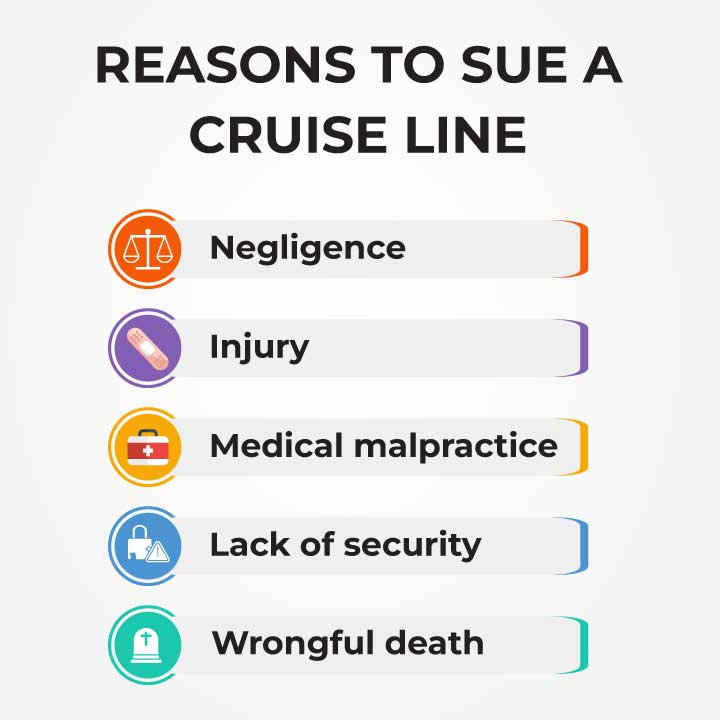
Some of the reasons why you can sue a cruise line include:
-
Negligence
-
Injury
-
Medical malpractice
-
Lack of security
-
Wrongful death
In order to sue a cruise ship operator, you have to bring suit within a specific time frame and file the lawsuit where the operator is headquartered. This makes it more difficult to file, but not impossible with the help of a maritime lawyer who’s familiar with the process of suing a cruise line.
Even though you sign a passenger ticket contract that limits your rights, you can still sue a cruise line. Read on to learn more about how to sue a cruise line for injuries you received as a passenger aboard a cruise ship.
What type of cruise injury can you sue for?
You retain the right to sue for the following types of injuries sustained on a cruise ship.
Slip and fall injuries:
A fall or slip on a ship that results in a serious injury is an incident where you can sue the cruise operator. The cause of your injury has to be the result of poor maintenance or neglect.
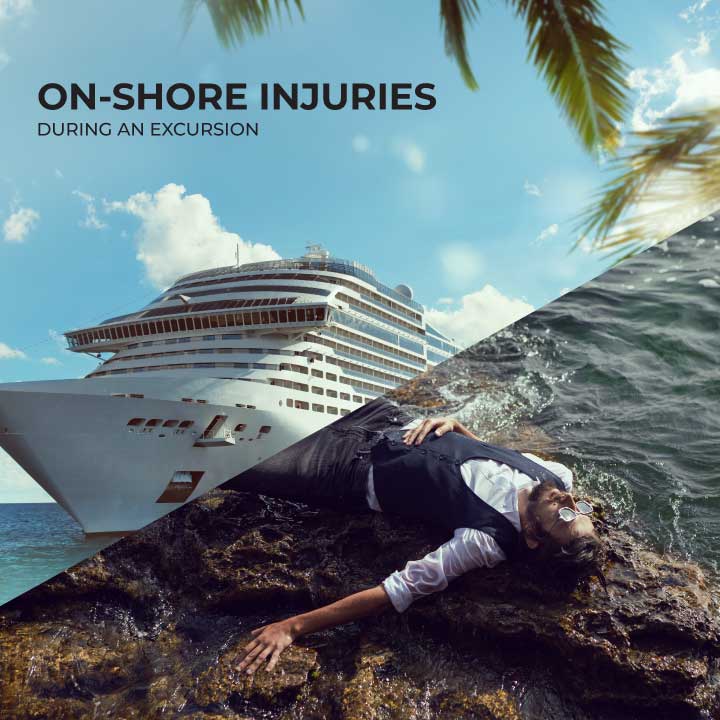
On-shore injuries during an excursion:
The cruise operator is responsible for verifying the integrity of a third-party operator or vendor of an on-shore activity or excursion. If the cruise line failed to properly investigate the background of the third-party vendor, the cruise line can be held liable for injuries.
Assault and battery:
In the event a passenger is assaulted by another passenger or a crew member, the cruise line is liable and can be sued. The cruise line operator failed to provide a safe environment for the passenger.
Medical malpractice:
In the event a member of the medical staff crew acted negligently in their care of a passenger, the passenger can sue for medical malpractice.
A few common medical malpractices on a cruise ship, are:
-
Negligent medical staff care.
-
Improper diagnosis or treatment.
-
Cruise ship doctor liability.
-
Failure to properly evacuate.
-
Inadequate medical facilities.
Food poisoning:
The cruise line operator has to make sure the food and drink it serves is safe for people to eat. If you suffer food poisoning from poorly handled food, you can sue for damages.
Who Is Responsible for a Cruise Injury?
It’s not always immediately clear as to who’s liable for an injury sustained on a cruise ship. The cruise line operator has to make sure the ship is reasonably safe for passengers. That means the ship has to be well-maintained and hazards are addressed promptly. When the operator is not keeping the ship safe, and a passenger suffers an injury as a result, the operator is responsible for the injury.
Understanding Passenger Rights in a Cruise Injury Claim:
As a passenger on a cruise ship, you are limited by your passenger ticket contract that outlines what you can’t sue over. The contract also requires you to engage in arbitration with a third party. However, the cruise line has a duty of care to its passengers, which means it has to provide a safe environment that’s free from risk of injury. When the cruise line fails in its duty of care, it has violated your rights to be free from harm, and you can file a lawsuit.
Proving Negligence in a Cruise Injury Lawsuit:
In order to prove negligence by a cruise ship operator, you need to have evidence that backs up your experience. Some of the types of evidence include:
-
Cruise ticket and contract that shows the ship's responsibility to you
-
Ship's logs
-
Security camera footage
-
Witness statements
Documentation is essential to proving that the cruise operator failed to keep you safe during your trip.
What Laws Apply on a Cruise Line?
Cruise lines are governed by multiple sets of laws. The primary laws that they have to obey are known as maritime laws, followed by US federal law for lines that operate from US ports. International laws are enforced when a ship is at sea and in a location that’s not governed by the previous laws. Last, but not least, the ship is also governed by the laws of the country from where the ship is registered.
-
Maritime Laws (Admiralty Law): Primarily, maritime law governs all nautical matters, accidents, and injuries at sea. It establishes the ship's heightened duty of care to passengers for cruise lines. Also, maritime law regulates aspects like seaworthiness, salvage, and liability claims in cruise ships.
-
US Federal Law: For cruise lines departing from US ports, US laws apply. It notably includes the Passenger Vessel Services Act and the Jones Act. These laws cover port security and passenger safety regulations,. They often dictate itineraries for foreign-flagged vessels.
-
International Laws: There are also international conventions and treaties that govern the cruise lines and determine their duty of care on international waterbodies. It includes SOLAS (Safety of Life at Sea) and MARPOL (Marine Pollution) that establish mandatory minimum global standards. They regulate cruise ship construction, safety equipment and environmental protection. It also controls the operational procedures while the cruise ship is on the high seas.
-
Laws of the Country of Registration (Flag State): The country where the ship is officially registered (Flag State) holds primary jurisdiction over the vessel's internal affairs. Its laws govern labor standards for the crew, taxes, onboard criminal acts, and the technical inspection of the vessel.
Effects Of Maritime Law On Cruise Ships and Lines:
Cruise ships aren’t governed by the rules of land, even though they dock at ports along the coastlines in different states. Instead, they’re governed by a set of maritime laws known as the Passenger Vessel Services Act (PVSA), also known as the Jones Act for passengers. Here’s a look at how maritime law functions.
Jurisdictional Issues Of Maritime Law:
The Jones Act is a set of maritime laws that gives various protections to the crew members of a vessel. The PVSA is similar to the Jones Act, but it applies to passengers of a cruise ship. Cruise ships and other types of vessels are subject to the laws outlined in these acts, and a lawsuit has to be filed according to these rules.
Cruise Contract Disclaimers and Their Legal Validity:
The disclaimers found in a passenger ticket contract have some legal validity and courts tend to respect them. However, if a cruise operator was grossly negligent or actively engaging in misconduct that caused injuries to its passengers, the courts can set aside the contract.
How To Sue a Cruise Line And The Legal Process: Step-by-Step:
In our step by step guide, we will discuss the suing process of a cruise line. Stay with us and read.
Information Needed To File a Cruise Ship Accident Lawsuit:
You need to have as much evidence as possible to prove the cruise line was negligent and contributed to your accident. Some of the information you should collect includes:
-
Incident reports
-
Ship maintenance logs
-
Surveillance footage
-
Witness testimony
-
Medical records
-
Photographs of the incident scene
How Much Time You Have to File a Lawsuit Against a Cruise Line?
Although maritime law allows three years of statute of limitations for personal injury claims, it’s different for cruise lines. The contract you sign with the cruise line as a passenger, limits your statute of limitations of suing a cruise ship to 1-year.
These standard practice is followed by most cruise ship operators, including:
-
Carnival Cruise Lines
-
Celebrity Cruise Lines
-
Costa Cruise Line
-
Disney Cruise Line
-
Norwegian Cruise Line (NCL)
-
Regent-Seven Seas Cruises
-
Royal Caribbean Cruise Lines (RCL)
-
Silver Sea Cruises, etc.
Thus, you will get 1-year from the date of your injury to sue a cruise line. That’s why you need to act fast to sue cruise ship lines for your injury claims.
Where to Sue a Cruise Line?
You can’t file a lawsuit against a cruise line in your local circuit court. So, where to sue a cruise line? You have to sue the operator where their headquarters are located, and you agree to this requirement as part of your passenger ticket contract. A maritime attorney can assist you by filing your lawsuit in the correct location.
Cruise Ship Lawsuit Settlements Time:
It takes anywhere from six to 18 months to settle a cruise ship lawsuit. The complexity of the case determines how long it takes to reach a settlement.
Legal Process and Documentation — Step by Step:
There’s no such thing as having too many documents to start the legal process against a negligent cruise line. Here’s how to do it:
-
Report the incident to ship staff
-
Seek medical help for your injuries
-
Take photos of the area where the injury happened
-
Collect witness information
-
Check the passenger ticket contract to learn about deadlines
-
Contact a maritime lawyer to begin the process of a lawsuit
Conclusion:
You can sue a cruise line for injuries you received while a passenger on the ship, and for various reasons. It’s not an easy process due to the maritime laws that apply to cruise ships and the passenger ticket contract. That doesn’t mean you should forego a personal injury lawsuit against the cruise line and give up your rights. Instead, contact a maritime lawyer who knows how the maritime laws are applied, and can file a lawsuit on your behalf.
A consultation with a maritime lawyer can help you answer your questions about filing a lawsuit. They can explain your options to you, and show you how to proceed with how to sue a cruise line.
Related: Cruise Ship Injuries
FAQ
Frequently Asked Questions

Yes, you can sue a cruise ship for a slip and fall injury.
It's possible to sue a cruise ship under certain circumstances. This should be done with the help of a maritime lawyer, and within the specified time frame.
You can sue Royal Caribbean for injuries you received because the operator was negligent.
You have to file a written claim with Carnival, then file a lawsuit in the Southern District of Florida federal court system within one year of the injury.
Anyone who was injured on a cruise ship can file a lawsuit against the cruise line. However, maritime law is complex, and hiring a maritime lawyer helps you get the best results.