Key Takeaways From The Arctic Rose Sinking:
-
Sudden Catastrophe: The F/V Arctic Rose sank on April 2, 2001, in the Bering Sea. The commercial fishing vessel vanished in less than five minutes, taking all 15 crew members with it.
-
Cause of Sinking: Rapid progressive flooding through an open aft watertight door was the primary cause of the sink. Also, there were stability issues.
-
Stability Negligence: The owners modified the vessel’s structure. Also, they did it without proper naval architect consultation, compromising the vessel's stability.
-
Regulatory Loophole: The 199-ton vessel was just under the 200-ton threshold. So, it was exempted from mandatory U.S. Coast Guard safety and stability inspections.
-
Survivor: All 15 crew members were dead. However, only Captain David Rundall’s body was found.
The F/V Arctic Rose sank in the Bering Sea, making it one of the most shocking commercial fishing disasters in recent U.S. history. On April 2, 2001, the 92-foot-long vessel vanished without a distress call. It took the lives of all 15 crew members in the icy Alaskan waters. The investors and experts were left in the dark as the ship sank in less than 4 minutes.
The subsequent investigation found that the vessel had stability, regulatory oversight, and crew safety training issues. Also, being a 12-year-old
commercial shipping vessel, it was already under strict scrutiny. Following its sinking, maritime claims were made that the ship operator and owner settled at an undisclosed amount.
Overview of Arctic Rose:
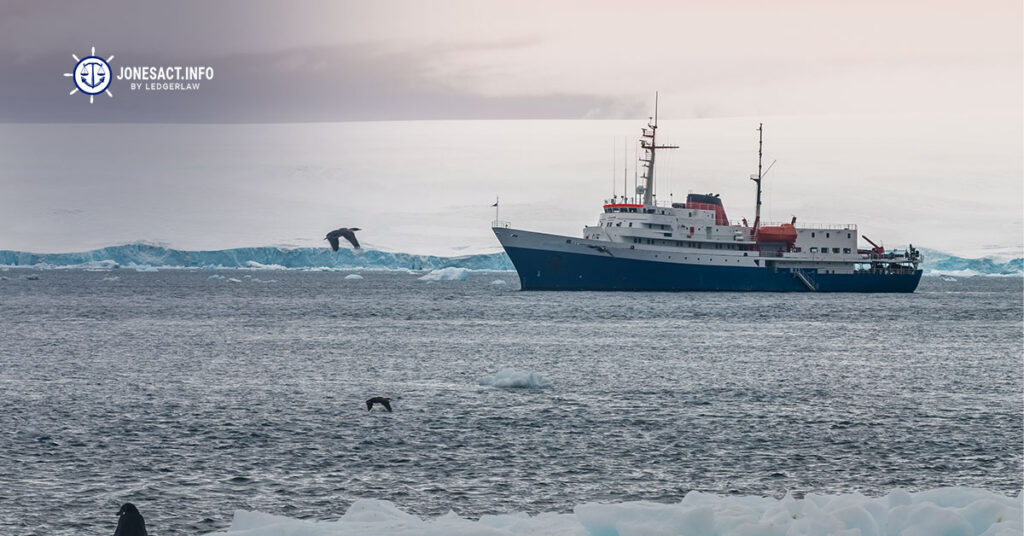
The F/V Arctic Rose was a 92-foot-long commercial fishing vessel. It worked as a head and gut catcher-processor. It could catch fish, remove the heads and entrails, and then flash-freeze the product before offloading. It means the ship could perform multiple tasks at the same time.
Originally, the vessel was built as a shrimp crawler in 1988 in Biloxi, Mississippi, for the Gulf of Mexico. The vessel underwent several conversions and name changes. It was later reoutfitted to trawl in the Pacific. Finally, the Arctic Sole Seafoods bought it in 1999 and renamed it the Arctic Rose. Although the ship operated in the Bering Sea, it was controlled from Seattle, Washington.
In 2001, it became the center of one of the deadliest U.S. commercial fishing accidents of the last 100 years. The Coast Guard found that the owners had made numerous modifications, including:
- Weight additions.
- Removals.
- Relocations.
Shockingly, the owner did all these without consulting a naval architect. They didn’t assess the vessel’s stability. The vessel was initially classified under 200 tons. Also, it was largely uninspected by the Coast Guard, which further contributed to its fatal accident.
A Detailed Story of Arctic Rose Sinking:
The final voyage of the Arctic Rose Wasilla began in early 2001, departing from Seattle’s Fisherman’s Terminal. It was headed for the Bering Sea, specifically the Zemchug Canyon. The famous fishing ground was approximately 200 miles northwest of St. Paul Island. The commercial vessel was heading to fish for sole. Even before its departure, the vessel’s seaworthiness was questionable. It had engine and equipment problems due to unverified structure modification and weight distribution.
When did the Arctic Rose sink?
The Arctic Rose sank in the early morning of April 2, 2001. It was operating in the Bering Sea under severe weather conditions. There was reportedly a triple-point system, a collision of three fronts, active in the region. It caused high winds and waves of up to 24 feet.
At 03:35 on April 2, 2001, an Emergency Position-Indicating Radio Beacon (EPIRB) activated and alerted the Coast Guard Command Center in Juneau, Alaska. Thus, everyone knew that the ship was in distress and submerged. However, the crew didn’t release any verbal Mayday or distress call.
The vessel’s sister ship, the Alaskan Rose, was fishing just a few miles away. However, it did not immediately receive a distress message. The Coast Guard launched their C-130 aircraft from Kodiak. It arrived on the scene hours later, only to see that the vessel had already disappeared. The search efforts initially found only debris and an oil sheen.
The body of Captain David Rundall was found partially in a survival suit. Later, a remotely operated vehicle (ROV) located the wreckage of the Arctic Rose. It was on the seafloor, resting upright in 428 feet of water.
The Coast Guard investigation concluded that the vessel sank with frightening speed. It sank within 1 minute 30 seconds to 2 minutes 40 seconds, and certainly less than five minutes.
Investigation into the Sinking of The Arctic Rose:
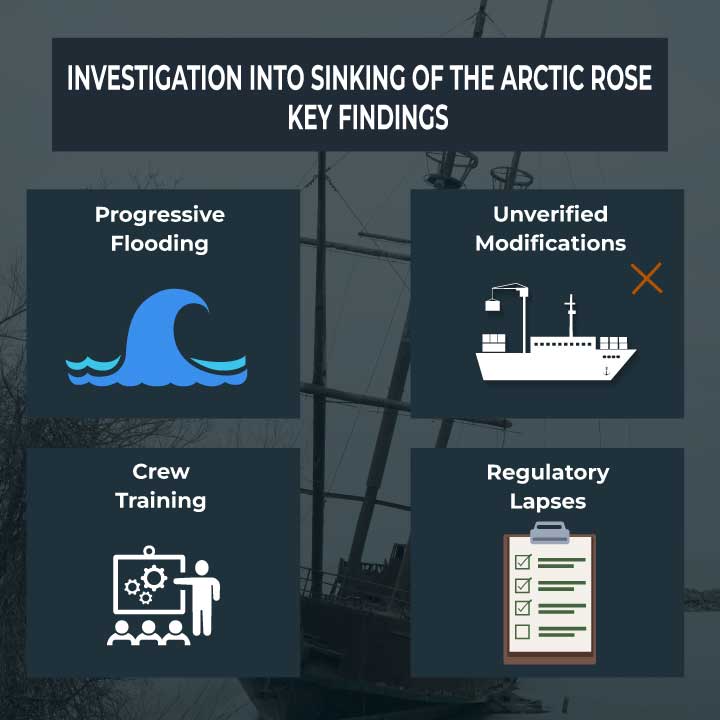
The sinking of the Arctic Rose was a mystery. So, the United States Coast Guard (USCG) Formal Marine Board of Investigation started an investigation soon. The USCG investigation led to several key findings:
- Progressive Flooding and Open Watertight Door: The investigation concluded that the vessel capsized due to rapid, progressive flooding. This flooding began when a large wave washed over the stern. As a result, water poured through an aft doorway into the processing space. However, the doorway was designed to be kept closed at all times to maintain watertight integrity. Once the water entered the processing area, it quickly spread to other compartments. So, there was a “free surface effect” dramatically reducing the vessel’s stability.
- Unverified Vessel Modifications: The investigation highlighted unverified modifications of the vessel. The owners had altered the vessel’s weight and configuration after a 1999 stability test. Critically, they didn’t contact a naval architect to re-evaluate the effect of these weight changes on the ship’s stability. So, these modifications likely made the ship unseaworthy.
- Crew Training and Experience: The USCG also found that many of the 15 crewmen, including foreign nationals, were inexperienced in commercial fishing. Most of them had only limited or introductory exposure to abandon ship drills. Also, the crewmen lacked knowledge of survival suit donning. Nonetheless, at what speed the ship sank, within 2 minutes, would also make experienced crews helpless.
- Regulatory Lapses: The Arctic Rose was classified at 199 tons. So, it was just under the 200-ton threshold. The wattage was strategically positioned to avoid the required mandatory USCG safety and stability inspections. So, it was a regulatory loophole found in many vessels in the Alaskan fleet.
Deaths and Injuries:
The casualty caused the death of all 15 crew members. The rescue team only found Captain David Rundall’s body during the initial search. The other 14 men were listed as missing and presumed dead. After a decade, the remaining was recovered. It was identified through DNA. There were no survivors.
Compensation and Legal Aftermath:
The families of the deceased crewmen filed maritime wrongful death suits in the United States District Court for the Western District of Washington. The lawsuits claimed that the owners of the Arctic Rose were negligent in several areas. The allegations primarily included:
- Unverified structural alterations
- Compromised stability
- Inadequate safety training for the crew.
The boat operator settled the cases for undisclosed amounts.
Conclusion:
The Arctic Rose sinking story reminds us how unverified and unauthorized modifications of commercial fishing vessels can cause tragic accidents. All 15 crew members died. Thankfully, through prompt claim submission and the appropriate maritime lawyers’ steps, the family of the dead crew got their compensation.
JonesAct Info is ready to fight for your case in such a fishing vessel accident. Our maritime attorneys will take your case to the court for a fair settlement. Contact us now if you have suffered from maritime injuries.
FAQ
Frequently Asked Questions

The Arctic Rose sank on April 2nd, 2001. It sank in the early morning hours within two to three minutes.
No, the Arctic Rose didn’t feature on the reality television show Deadliest Catch. The show aired on April 02, 2005, long after the Arctic Rose sinking. However, the tragedy is sometimes referenced in the Deadliest Catch when discussing the dangers of Bering Sea fishing.
The Deadliest Catch has followed various vessels. Although some fishermen featured on the show have died in fishing-related incidents, it was not shown directly. Also, some vessels have sunk in the same fleet or industry. However, they didn’t document any deaths during their show.
The Coast Guard determined that rapid, progressive flooding was the primary reason for the sinking of the Arctic Rose. A large wave swept over the deck. Incidentally, there was an improperly left-open aft watertight door through which water entered the main compartment of the sea. Plus, the vessel already had stability problems due to unauthorized modifications.
All 15 crew members aboard the Arctic Rose died as the Arctic Rose sank. The rescue team only found the body of Captain David Rundall. His body was recovered soon, but the other 14 men were lost at sea.
The captain of the Arctic Rose was David Rundall. He was the only crew member whose body was recovered immediately after the disaster.