Key Takeaways:
-
Maritime law covers Every Activity on the Water: International trade, personal injury claims, environmental safeguards.
-
Worker Safety Prioritization: Legal rights and financial recovery for maritime workers who are injured.
-
Global Commerce: Provides the consistent legal framework that keeps supply chains moving across oceans.
-
Disaster Prevention: Navigation standards, vessel safety requirements, crew training mandates exist to reduce accidents and keep everyone on board protected.
-
National Security: Enforces security, customs, and immigration laws across U.S. waters and international waterways.
If you work on the water in Seattle and get hurt on the job, you’ll need a lawyer who knows all the ins and outs of maritime law. This isn’t the same as a general personal injury attorney. Maritime injury lawyers live and breathe every aspect of federal admiralty law. Including the Jones Act and protections for maritime workers who get injured. Let’s learn more about how to choose a maritime injury attorney in Washington.
What Is Maritime Law and a Maritime Injury Attorney?
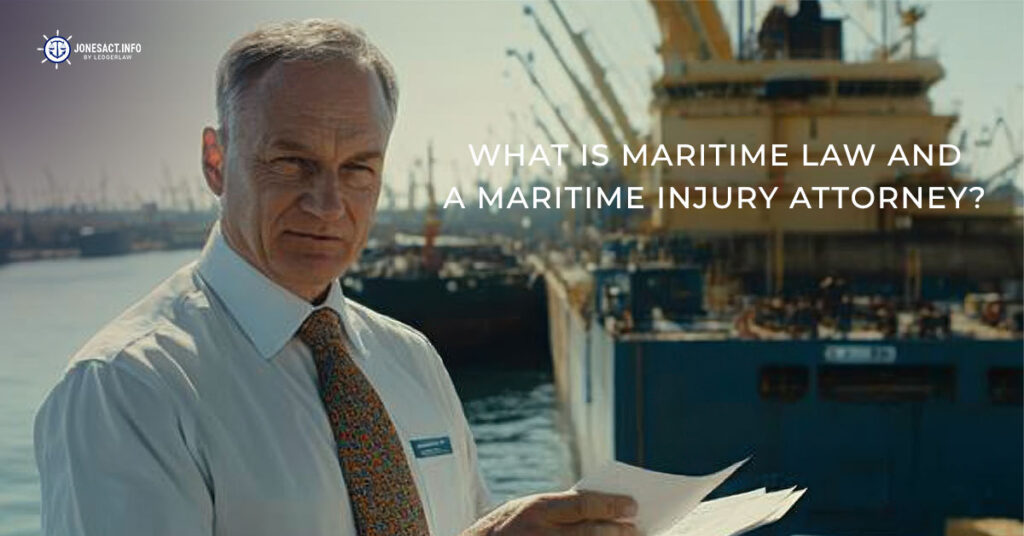
Maritime law governs injuries, disputes, and commerce on water that can be navigated. It’s completely separate from state personal injury laws. Maritime injury attorneys work on injury claims covered under maritime laws like the Jones Act (46 U.S.C. § 30104) and the Longshore and Harbor Workers’ Compensation Act.
Do I Need a Maritime Lawyer?
If your injury happened when you were working on or near navigable water, your case will usually be under federal maritime law. Here are some examples of times when you may need a maritime injury attorney:
-
Injuries on any of these: vessel, tugboat, barge, cargo ship.
-
Slipping or falling when working at the Port of Seattle.
-
Equipment struck you while you were working on or near navigable water.
-
The vessel your employer provided wasn't seaworthy and that caused your injury.
-
Longshoremen or dock workers injured during cargo operations.
-
Toxic chemical exposure.
-
Death of a family member that falls under maritime law.
-
Your employer pressures you to accept a quick settlement, or denies maintenance and cure benefits.
How To Choose Maritime Injury Attorney In Seattle:
Working with the right maritime injury lawyer is one of the most important decisions you’ll make after you’re injured.
Maritime Law Expertise:
Keep in mind that maritime law is completely separate from personal injury law. You need an attorney with specific expertise in the Jones Act and the Longshore Act. Also, maintenance and cure claims.
The fact is that a general practice lawyer who just sometimes takes on some maritime cases will almost always miss something a specialist will catch on day one. Ask attorneys specifically what percentage of their caseload is in maritime cases.
Experience and Track Record:
The types of cases a maritime injury attorney has handled matters more than how long they’ve been practicing law. Ask them specifically how many maritime injury cases they’ve taken to verdict. And what the settlements looked like. A lawyer with 10 years experience in working Jones Act claims is going to serve you better than one who’s been handling auto accident injuries for 25 years.
Lawyer Credentials and Professional Qualifications:
The lawyer handling your case should be a member of the Maritime Law Association of the United States.Other good signs that you’ve got someone who knows what they’re doing:
-
Board certifications in admiralty law
-
Published articles
-
High-profile speaking engagements at maritime law conferences
Knowledge and Industry Insight:
To practice maritime law, an excellent maritime injury attorney needs to have a solid understanding of the industry. Not just the law. They’ll know all about working conditions on a fishing trawler, and how they’re different from a container ship. They have expert knowledge of OSHA Maritime Standards. Just a couple of examples.
Location and Local Knowledge of Seattle Maritime Laws:
The Port of Seattle Economic Impact report says commercial fishing operations at the Port account for more than 8,800 jobs. The attorney you choose should know how local federal courts work.
Significant Office Resources (A Strong Legal Team):
It’s expensive to litigate maritime injury cases. Your employer is likely going to hire a large firm for their defense. So you need to have similar resources. This means:
-
Investigators
-
Maritime safety experts
-
Medical consultants
-
Financial backing to take a case to trial if needed
Accessibility and Communication:
After a serious injury, you’re going to want to make sure people are returning your calls. Make sure you know who your point of contact is, and if you’ll be able to speak directly to your attorney.
Initial Consultations and Case Evaluation:

Most reputable maritime injury attorneys will offer a free initial consultation. This is your chance to get a good idea of their knowledge. And ask tough questions.
Transparent Fee Structure:
Most of the time, maritime injury attorneys work on contingency. This means you don’t have to pay anything upfront. But be sure to ask what their percentage is. It can vary from one attorney to the next. Also ask what costs they’ll deduct before and/or after their fee is calculated. The standard is zero ambiguity.
Client Reviews, Testimonials, and Referrals:
Read online reviews. But also, ask the attorney if they’ll give you referrals to past clients who will give them a recommendation.
Personalized Attention to Your Case:
What you don’t want to do is become just another case number for your attorney. Every maritime accident or injury is different. You need individual attention.
Why Choose JonesAct.info?
This maritime law firm was built specifically to fight for maritime workers who get injured. Here’s what makes us different.
World’s Best Admiralty Lawyers
The attorneys at our firm are recognized leaders in admiralty and maritime injury law. We don’t dabble in maritime law. It’s all we do.
30+ Years of Maritime Injury Case Experience
For more than three decades, we’ve been representing injured:
-
Seamen
-
Longshoremen
-
Offshore workers
This means we’ve seen just about every single tactic maritime employers or insurance companies can throw at us. And we can handle it.
Proven Courtroom and Trial Success
A lot of firms settle any chance they get because they’re afraid of the courtroom. Not us. We have a trial record that speaks for itself. When we say we’ll go to trial, we mean it.
Personalized Legal Support
You’re not going to be just another file on our desks. A team will handle your case from day one, keeping you informed throughout every stage of the process.
Positive Client Reviews and Case Results
Our client review can tell you all you need to know about the quality of our representation. You can read their stories for yourself, and see the results.
No Win, No Fee
We work on contingency. This means if we don’t recover money for you, we don’t get a dime. Our commitment to every client.
Final thought
When you’re injured on the water, you have to find an attorney who is as committed as your employer’s legal team will be. Under 46 U.S.C. § 30106, you have just three years from the date you were injured to file your claim. Don’t let that clock run out. Do not let that clock run out. JonesAct.info is here with a free consultation.
FAQ
Frequently Asked Questions

There are no two identical cases. The value of yours depends on a lot of things: severity of your injury, how much wages you've lost, your medical costs, and how negligent your employer was.
Maritime law covers injuries and disputes that happen on navigable waters. This includes:
- Jones Act claims.
- Unseaworthiness claims.
- Maintenance and cure.
- Wrongful death at sea.
Zero upfront cost to you. We work on contingency. And only get paid if we win. We cover case expenses as an advance, they're deducted from the settlement.
Usually, a contingency fee is 33% and 40% of your settlement. This can vary, depending on if you go to trial or how complex your case is.
Immediately report the injury to your employer. Do not sign any paperwork your employer or their insurance company gives you. Then seek medical treatment. Be sure to carefully document everything, including:
- Photos and/or videos
- Names of witnesses
- Written account of what happened
Next, contact a maritime injury lawyer.
The jury in your trial assigns a percentage of fault to you and your employer. So even if you're partly at fault, you can still recover damages for the share of your employer's fault.
Jones Act claims are filed in federal district court or state court. For Longshore Act claims, you go through the U.S. Department of Labor. They both have extremely strict procedural requirements. So working with a maritime injury lawyer is your best bet.
This is what comparative negligence falls under. If your employer shares the blame, you'll receive damages based on their percentage.
Under 46 U.S.C. § 30106, three years from the date you were injured. One year for Longshore Act claims.
The exact same federal maritime law rights as residents. Your injury location and employment status matter, not your home address.