Maritime laws are complex, including both US federal jurisdictions, special clauses, and international regulations. So, what is a maritime attorney, and what exactly does he do?
A maritime attorney handles the complexities from claiming compensation to marine pollution issues. He navigates the legal frameworks in the high seas and US water territory. For a detailed discussion on maritime laws and application, reach us at (253) 201-7777.
What Is A Maritime Attorney?
A maritime attorney specializes in laws and regulations governing activities on navigable waters. He represents his clients in legal proceedings with his license and admission to the bar. He also deals with personal injury claims involving seamen and passengers, to complex commercial disputes and environmental regulations.
What is Maritime Law?
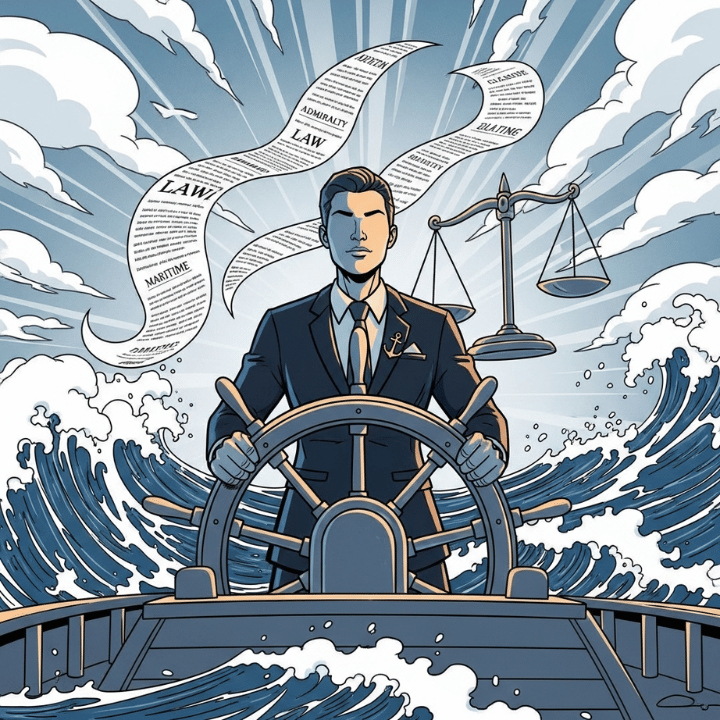
Maritime law, also called admiralty law, governs all activities on the sea and other navigable waters. Its jurisdiction extends to any matter that occurs on or is related to ships, ports, and international waters. It ensures safety, promotes commerce, and resolves disputes that arise in the maritime domain. Article III, Section 2, Clause 1 of the US government governs the maritime law.
Aspect | Maritime Law | Other Legal Fields (Civil, Criminal, etc.) |
Jurisdiction | Navigable waters, including oceans, seas, and some rivers and lakes. | Land-based activities within a specific geographic jurisdiction. |
Source of Law | Domestic statutes, international treaties, and common law principles, unique to maritime activities. | State and federal statutes, constitutions, and case law specific to the land-based jurisdiction. |
Case Types | Personal injury (seamen, passengers), cargo damage, salvage, maritime liens, and environmental pollution. | Personal injury (car accidents, slips), property crimes, felonies, and contract disputes. |
Court System | Often heard in federal courts with admiralty jurisdiction. | Heard in state, local, or federal courts, depending on the case and jurisdiction. |
Key Acts | Jones Act, Longshore and Harbor Workers’ Compensation Act (LHWCA), Death on the High Seas Act (DOHSA). | State-specific tort laws, the federal criminal code, and the Uniform Commercial Code (UCC). |
What is Admiralty Law?
Admiralty law is often used interchangeably with maritime law. The first admiralty law is the Rhodian Sea Law from 900BC.
Modern admiralty law originated from ancient maritime codes and the jurisdiction of the British Admiralty courts. In the U.S., admiralty law primarily refers to the body of law that grants federal courts exclusive jurisdiction over specific maritime cases.
Why Was Maritime Law Created?
Maritime law was created to address the unique and challenging conditions of trade and travel on the high seas. When global commerce and exploration increased, it was necessary to develop laws and codes to govern territorial waters. The primary reasons for its creation include:
- To regulate international commerce and trade.
- To ensure safety and order on the seas.
- To provide a consistent system for resolving disputes.
- To protect the rights of seamen and passengers.
- To manage issues like salvage, piracy, and collisions.
Which Courts Hear Maritime Law Cases in the USA?
In the United States, federal courts hear maritime law cases. The U.S. Constitution, specifically Article III, Section 2, extends the judicial power of the United States to “all Cases of admiralty and maritime Jurisdiction.”
It gives federal district courts the authority to hear cases that fall under maritime law. However, some maritime cases can be heard in state courts under the “saving to suitors” clause. If you need assistance with a maritime lawsuit, contact (253) 201-7777.
What Does a Maritime Attorney Do?
Maritime attorneys serve different clients and handle diverse legal issues. They provide expert legal counsel and representation in matters related to maritime activities.
General duties of a maritime attorney:
- Legal Counsel: Advising clients on their rights and responsibilities under maritime law.
- Case Investigation: Gathering evidence, interviewing witnesses, and conducting research to build a strong case.
- Litigation: Representing clients in court, arbitration, or mediation to resolve disputes.
- Negotiation: Negotiating settlements with opposing parties, insurance companies, and other stakeholders.
- Document Drafting: Preparing and filing legal documents, including complaints, motions, and contracts.
Importance of Maritime Attorneys in the Legal System:
Maritime attorneys uphold the naval standards so that commerce flows smoothly. Also, they protect individuals’ rights. In cases of maritime accidents, they help victims receive fair compensation for their injuries.
They hold negligent parties accountable, and they promote a safer environment for everyone working and traveling on the water. Their expertise in a complex and specialized field ensures that justice is served and that the unique laws of the sea are correctly applied.
Types of Maritime Legal Cases:
Maritime lawyers handle versatile cases. It includes personal injury claims, property damage, shipping and cargo disputes, etc.

Personal Injury Claims:
When an individual is injured while working or traveling on the water, they may be entitled to compensation under specific maritime laws.
Common personal injury cases:
- Jones Act claims: For seamen injured due to the negligence of their employer or a fellow crew member.
- Offshore injuries: They involve workers on oil rigs, platforms, and other offshore structures.
- Longshoremen injuries: LHWCA Act covers he injuries to longshoremen, harbor workers, and ship repairmen.
- Cruise ship accidents: Claims for passengers or crew members injured on a cruise ship.
Maritime Property Damage Cases:
Maritime attorneys resolve disputes over damage to vessels, cargo, and marine equipment. They help clients recover losses from accidents, theft, or negligence, including:
- Damage to a vessel due to a collision or grounding.
- Loss or damage to cargo during transport.
- Claims related to defective marine equipment.
Shipping and Cargo Disputes:
These disputes arise from the transportation of goods by sea. An attorney in this field will handle:
- Breach of contract: When a shipping company fails to deliver goods as per the contract.
- Freight payment issues: Disputes over the cost of transporting goods.
- Maritime liens: Asserting a claim against a vessel for unpaid services or damages.
Environmental and Pollution Disputes:
The marine environment is at stake due to many reasons. Maritime attorney deals with it, including:
- Oil spills: Handles claims for environmental cleanup and damages caused by oil spills.
- Marine pollution: Litigation cases involving illegal dumping of waste or other pollutants into the ocean.
Maritime Fraud and Financial Disputes:
The attorney deals with financial misconduct and fraud within the maritime industry:
- Fraudulent shipping contracts: Where a party misrepresents the terms of a contract for financial gain.
- Misconduct in maritime trade: Illegal financial activities related to vessel ownership or cargo.
The Jones Act and Seafarers’ Rights:
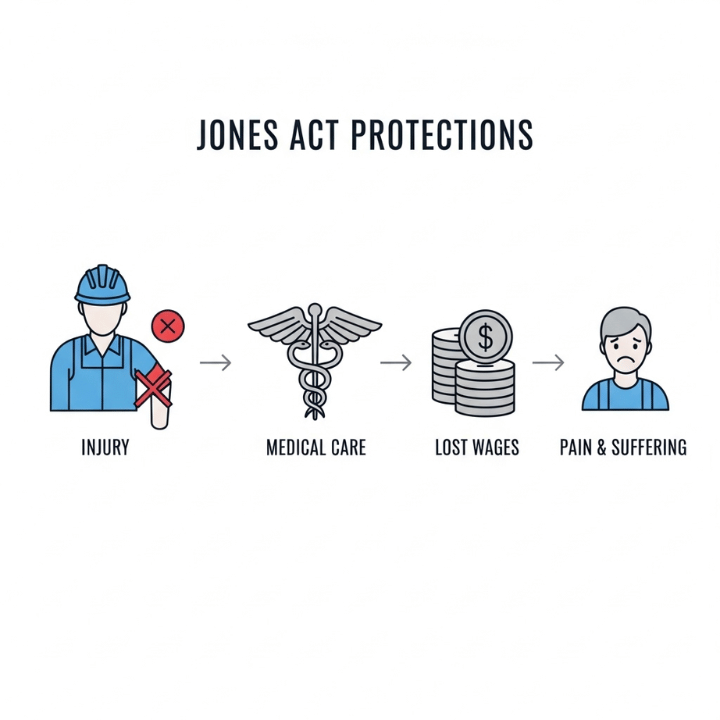
The Jones Act, or the Merchant Marine Act of 1920, is a federal law. It provides a legal remedy for seamen injured in the course of their employment. It protects the seamen, who often work in dangerous environments and are far from shore.
Key Provisions of the Jones Act:
- Seaman Status: A worker must spend 30% of their time on a vessel in navigable waters.
- Employer Liability: Injured seamen can sue their employers for negligence.
- Maintenance and Cure: Employers must provide medical care and living expenses until the seaman reaches maximum medical recovery.
- Jury Trials: Seamen could jury-trial in personal injury cases
Longshore and Harbor Workers’ Compensation Act (LHWCA):
The federal LHWCA law provides workers’ compensation benefits to maritime workers who are not seamen, such as longshoremen, harbor workers, and shipbuilders. It offers protection for the workers not covered under the Jones Act. The LHWCA provides no-fault benefits for medical expenses and lost wages.

The Education and Skills Required for a Maritime Attorney:
A maritime attorney is a specialized job that requires extensive education, knowledge, and expertise.
Educational Background:
To become a maritime attorney, an individual must complete a bachelor’s degree and get a Juris Doctor (J.D.) from an accredited law school. Aspiring maritime attorneys can specialize in admiralty law, international law, and torts.
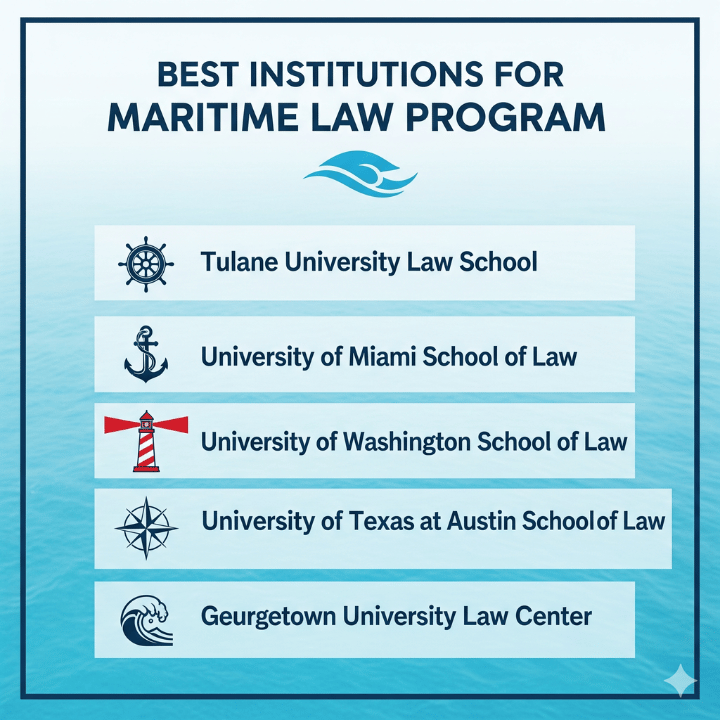
A few of the top maritime law programs in the US are:
University | Location | Degree Type/Name |
Tulane University Law School | New Orleans, Louisiana | LL.M. in Admiralty Law |
University of Miami School of Law | Coral Gables, Florida | LL.M. in Maritime Law |
University of Washington School of Law | Seattle, Washington | LL.M. (General Law) with Maritime focus |
University of Texas at Austin School of Law | Austin, Texas | J.D. or LL.M. with Maritime Law coursework |
Georgetown University Law Center | Washington, D.C. | J.D. or LL.M. with relevant courses |
Certifications and Continuing Legal Education:
Many maritime attorneys pursue specialized training programs on admiralty law and territorial water issues. Also, they stay current with the ever-evolving field. These include courses on new regulations, recent court decisions, and changes in international conventions.
- The Florida Bar Board Certification
- The California Bar Legal Specialization
- Continuing Legal Education (CLE) from Institutes
Practical Experience and Internships:
It’s crucial to gain hands-on experience. Maritime attorneys can choose internships or clerkships with law firms, government agencies (like the U.S. Coast Guard), or in-house legal departments of shipping companies. It will provide invaluable exposure to the day-to-day work of a maritime attorney.
Research and Communication Skills:
A successful maritime attorney must have excellent research skills. It’s vital to navigate complex statutes and case law. Strong communication skills help them to articulate their clients’ cases. It’s critical to negotiate with opposing counsel and explain complex legal concepts.
Compensation in Maritime Lawsuits:
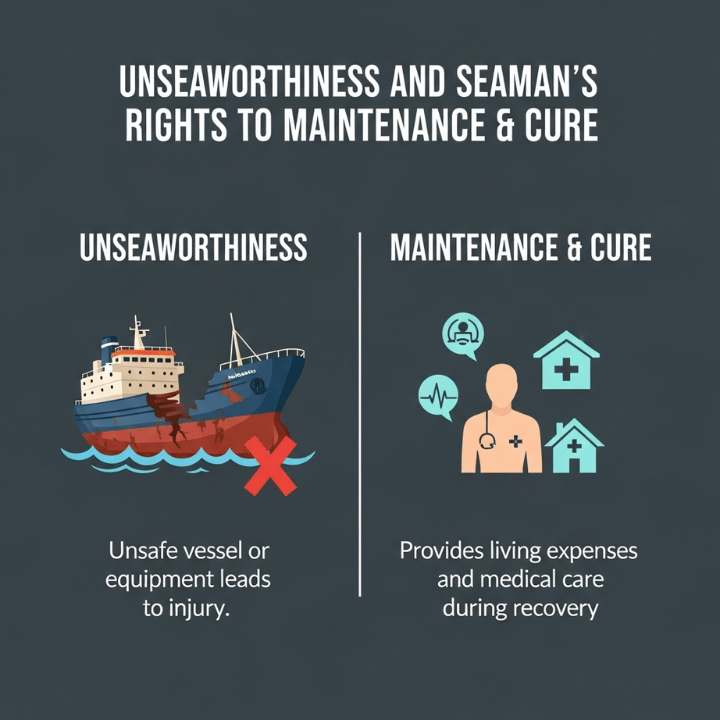
There are many types of financial compensation available for injuries in maritime regions. It includes:
Framework | Who it Covers | Basis for Compensation | Types of Damages (Compensation) |
Jones Act | Seamen—a “master or member of a crew” of a vessel. | Employer negligence. | Economic Damages: • Past and future medical expenses · Past and future lost wages and earning capacity · Lost fringe benefits (e.g., retirement, health insurance) Non-Economic Damages: • Pain and suffering • Emotional distress • Loss of enjoyment of life · • Permanent disability and disfigurement |
Longshore and Harbor Workers’ Compensation Act (LHWCA) | Anyone not covered by the Jones Act | No-fault system | Same As Above |
General Maritime Law | Seamen and other maritime workers. | Unseaworthiness. | Maintenance: · Daily living expenses (rent, food, utilities) during recovery. Cure: · Medical expenses until you reach maximum medical improvement. · Additional damages for lost wages and pain and suffering |
How a Maritime Attorney Maximizes Recovery?
A maritime attorney secures a fair and maximum settlement for their client. They use different strategies to achieve this:
- Thorough Investigation: They investigate the accident, gathering all evidence and identifying all at-fault parties.
- Expert Consultation: Consult with medical experts, accident reconstruction specialists, and economists to calculate all damages.
- Strategic Negotiation: Use their knowledge of maritime law and experience to negotiate a higher settlement with insurance companies.
- Leveraging the Law: Use specific maritime laws, like the Jones Act, to ensure their client gets the most favorable legal standing.
- Litigation Readiness: Prepare a case for trial, signal to the defense that they are serious, which often leads to a better settlement offer.
- Highlighting Future Costs: Account for future medical expenses and long-term loss of income.
- Holding All Parties Accountable: Identify all potentially liable parties to increase the pool of available insurance.
- Understanding of Punitive Damages: Pursue punitive damages where applicable, which can significantly increase a settlement.
- Clear Communication: Communicate the case’s merits to the defense, making a strong argument for a higher payout.
- Protecting Clients’ Rights: They ensure the client does not sign away their rights in an unfair settlement.
Common Clients of Maritime Attorneys:
The clients of maritime attorneys include seamen, recreational boat owners, crew members, etc.
Injured Seamen:
A maritime attorney’s most frequent clients are seamen injured while working on a vessel. They are eligible for assistance under the Jones Act and other maritime laws. Types of seamen who qualify for assistance:
- Captains and crew members
- Deckhands and engineers
- Fishermen
- Offshore rig workers
- Barge and towboat workers
Recreational Boat Owners and Passengers:
Maritime attorneys represent individuals involved in accidents on personal boats, jet skis, or other recreational vessels. It involves negligence, wrongful death, or property damage claims for the unseaworthiness of the vessel.
Cruise Ship Passengers and Crew Members:
Attorneys handle cases for injuries on cruise ships. These cases are more complex due to international law and the specific contractual agreements found on a passenger ticket.
Longshoremen and Harbor Workers:
These workers are not considered seamen under the Jones Act. They are covered under the LHWCA. The list includes:
- Longshoremen.
- Harbor workers.
- Shipyard workers.
- Temporary workers or land-based contractors.
When Should You Contact a Maritime Attorney?
If you face any injury or property damage, consult a maritime attorney immediately. It’s crucial before signing any document for settlement.
Immediately After an Injury or Accident:
Contact a maritime attorney as soon as possible after an accident. So, the attorney might conduct a thorough investigation, preserve critical evidence, and ensure all deadlines are met.
Before Signing Legal Documents or Settling Claims:
You should never sign a statement, a release of claims, or accept a settlement offer from your employer or an insurance company without consulting a maritime attorney. They may settle your claim for a fraction of its true value.
How to Choose the Right Maritime Attorney?
When looking for the best maritime attorney, consider their experience, previous cases, settlement amount, etc. It includes:
-
Experience and Specialization.
-
Case Results and Track Record.
-
Knowledge of Specific Maritime Laws.
-
Professionalism and Client Focus.
-
Financial Structure.
-
Trial Readiness.
-
Professional Affiliations.
Specialized Maritime Law Experience:
Always consider the experience and specialization of the maritime lawyer. Maritime law is incredibly complex. So, a general practice attorney lacks the required knowledge to navigate its intricacies.
Track Record of Success in Similar Cases:
Look for a law firm with a proven track record of winning maritime cases. Ledger Law Firm has handled many maritime cases with excellent settlements.
Lorem ipsum dolor sit amet, consectetur adipiscing elit. Ut elit tellus, luctus nec ullamcorper mattis, pulvinar dapibus leo.
-
1$2.5 Million Settlement: A seaman suffered a traumatic brain injury and orthopedic injuries after a fall on a poorly maintained vessel.
-
2$1.8 Million Settlement: A harbor worker sustained a spinal cord injury while operating faulty equipment at a shipping port.
-
3$1.2 Million Settlement: The family of a commercial fisherman received compensation after a fatal accident caused by the vessel's unseaworthy condition.
-
4$950,000 Settlement: A cruise ship passenger was compensated for severe injuries sustained from a slip and fall on a wet deck.
FAQ
Frequently Asked Questions

Most maritime attorneys work on a contingency fee basis. They take a percentage of the final award, typically between 33% and 40%.
The statute of limitations for most maritime personal injury claims, including Jones Act and LHWCA claims, is three years.
Maritime law follows rules and separate federal court jurisdiction. Civil law applies to various disputes on land. Maritime law governs the unique environment of the sea and navigable waters.
The Jones Act allows injured seamen to sue their employer for negligence. It protects them for compensation for their injuries, lost wages, and pain and suffering. It’s crucial to prove that their employer failed to provide a reasonably safe workplace.
Contact A Maritime Attorney Today
For a free case evaluation

EmeryBrettLedger